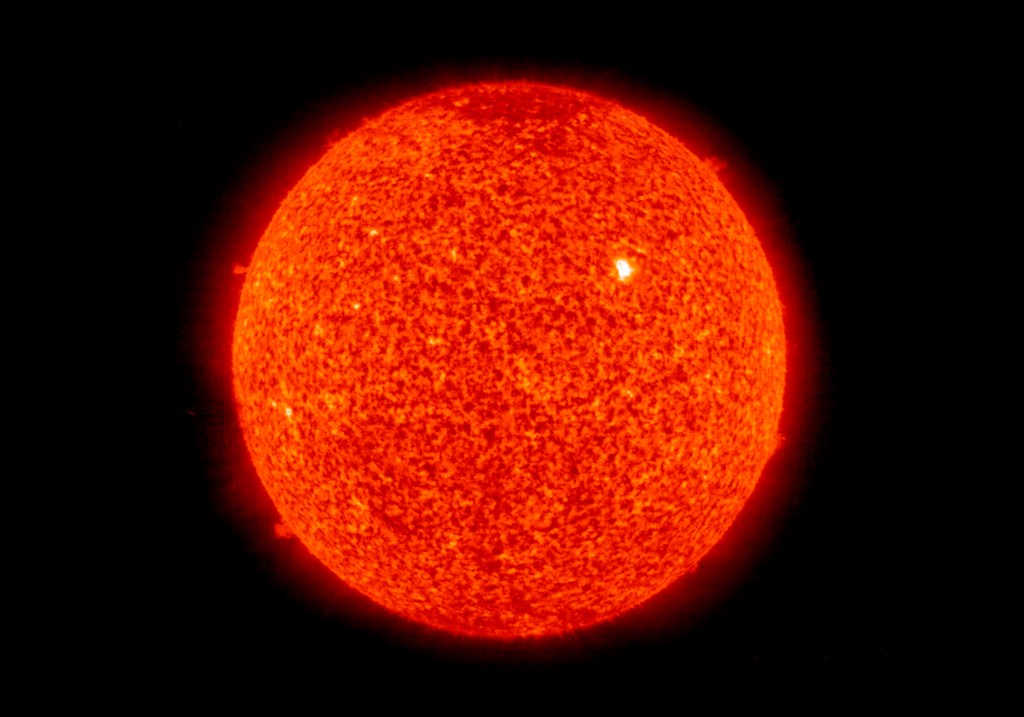
Are we facing a dangerous period of global cooling? That’s not a question that many have been asking. But reports that there has been a sharp reduction in sunspot activity raises that possibility. It has happened before. In his book Global Crisis: War, Climate Change & Catastrophe in the Seventeenth Century, historian Geoffrey Parker writes:
“The development of telescopes as astronomical instruments after 1609 enabled observers to track the number of sunspots with unprecedented accuracy. They noted a ‘maximum’ between 1612 and 1614, followed by a ‘minimum’ with virtually no spots in 1617 and 1618, and markedly weaker maxima in 1625-26 and 1637-9. And then, although astronomers around the world made observations on over 8,000 days between 1645 and 1715, they saw virtually no sunspots: The grand total of sunspots observed in those 70 years scarcely reached 100, fewer than currently [the book was published in 2013] appear in a single year. This striking evidence of absence suggests a reduction in solar energy received on earth.”