

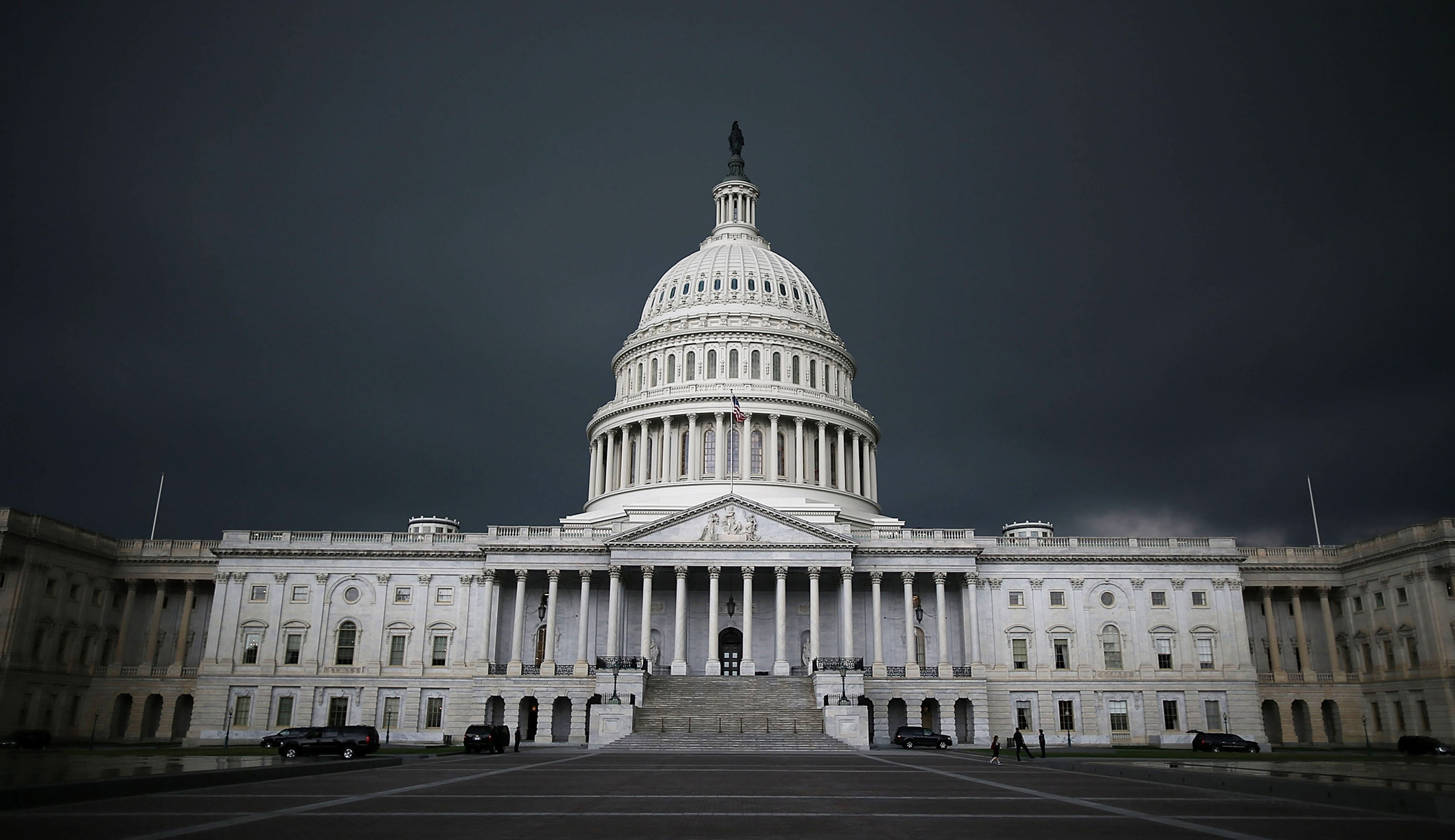
Yuval Levin, a scholar at the American Enterprise Institute and the editor of the journal National Affairs, is not only one of the most thoughtful policy intellectuals on the Right but, at a time when plenty of people across the spectrum have lost their cool, one of the most sober. His fifth book, A Time to Build, hits shelves on Jan. 21. It is among the many recent attempts to explain what, exactly, has gone wrong with politics over the past decade. Its answer, in a word, is “institutions.”
Institutions are everywhere, but they are surprisingly tricky things to define. What characteristics unite the family, a prelegal building block of society, with a corporate entity such as a university? Levin describes institutions as “the durable forms of our common life,” or “the frameworks and structures of what we do together.” The word “form” is important — for Levin, institutions are forms in the deep, Aristotelian sense of the word: The “shape of the whole” that “speaks of [the whole’s] purpose, its logic, its function, and its meaning.” Institutions stand over and above their members, molding them to fit roles and imbuing them with institutional values. A doctor, for instance, gives up part of his individuality in order to fulfill his professional responsibilities (an emergency room is not the place for self-expression). Ideally, he also internalizes the institutional mission of his profession: Do no harm.
Stay informed.Stay ahead.
Join Washington Examiner for unlimited access to the news, analysis, and commentary that matter most.
Already a member? Log in
