

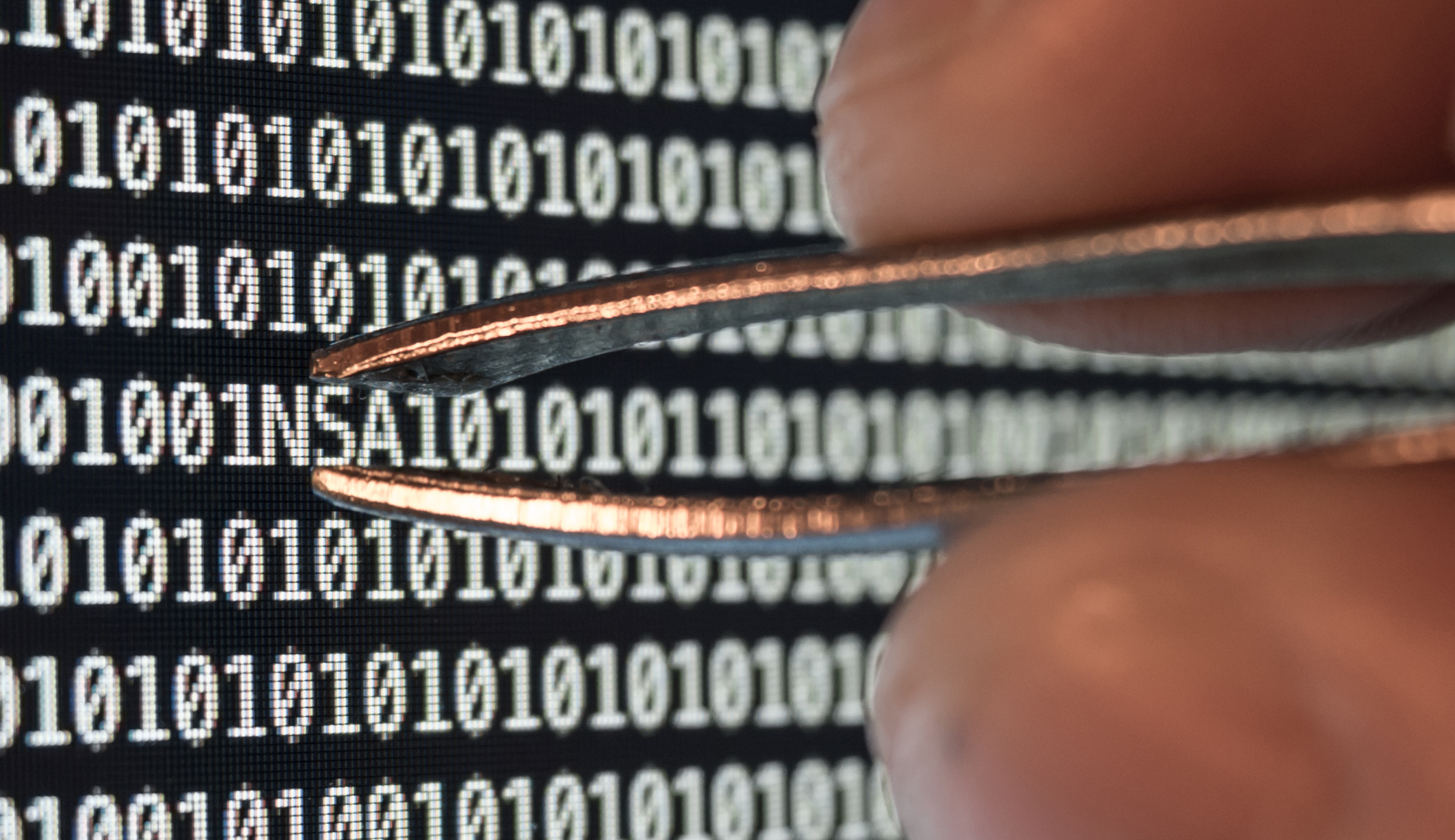
President Joe Biden’s unwillingness to acknowledge the true nature of recent cyberattacks is undermining national security and making future attacks more likely.
Consider Biden’s strategy for dealing with ransomware attacks. These attacks involve hackers who steal a corporate or government entity’s information and/or lock an entity out of its own systems. The hackers then demand a ransom payment before returning control to the entity in question.
Recommended Stories


Unfortunately, while the Justice Department has seized some ransom payments after they have been paid, Biden seems happy to absolve foreign governments of responsibility for allowing attacks in the first place.
Take the example of this May’s Colonial Pipeline hack. Disrupting the pipeline’s operation, Russian-based hackers from the DarkSide group caused major disruption to East Coast energy supplies. But as the Washington Examiner reported at the time, these hackers aren’t criminals on the run. They are tolerated by the Russian government. Indeed, Kremlin security officials are cozy toward the hackers. They have good reason to be so. In return for tolerating ransomware attacks abroad, Kremlin officials get a slice of the ransom pie.
Biden must know this from his intelligence briefings. But rather than impose costs directly on the Russian government, the president begs Vladimir Putin to confront his hacker friends. Continuing cyberoffensive activities from Russian crime groups would appear to suggest that Putin is not listening.
Biden’s cyberattack naivete extends beyond Russia.
Consider the president’s reaction to this year’s Microsoft Exchange hack. Confronted with the Chinese Hafinum group’s vast penetration of Microsoft email accounts, Biden explained that he would not impose sanctions on Beijing. He says that wouldn’t be right because Beijing was not directly responsible for the Microsoft Exchange hack.
Once again, Biden engages in a painful evasion of reality. Contrary to the president’s waffling, the intelligence community knows that Hafinum operates under the authority of the Chinese state. Xi Jinping’s regime should have faced a price. Instead, it got a free pass.
The costs of Biden’s willful ignorance and innocent weakness are significant. Biden is allowing adversaries to believe that they can attack America without consequence. Our adversaries pretend that their deniable hacker servants have nothing to do with them. Biden simply takes them at their word.
There is a better way to address this profound challenge to American security and civil society.
As the Trump administration showed, one of the more effective means of defending against cyberattacks is to take the offensive. Facing Russian cyberaggression back in 2019, the Trump administration directed the National Security Agency to penetrate Russian utility networks. The NSA then left breadcrumbs to show just how far and wide its intrusion effort had been. The Trump administration also responded aggressively to Chinese cyberoffensives by targeting servers used by Chinese hackers. The intended message: If you want to play games in cyberspace, we’re ready to win. Does this more assertive approach work?
Well, it certainly bears noting that the most disruptive ransomware attacks have occurred under Biden and not Trump. The incumbent should reconsider his cyberdefense strategy. It is defective.
