

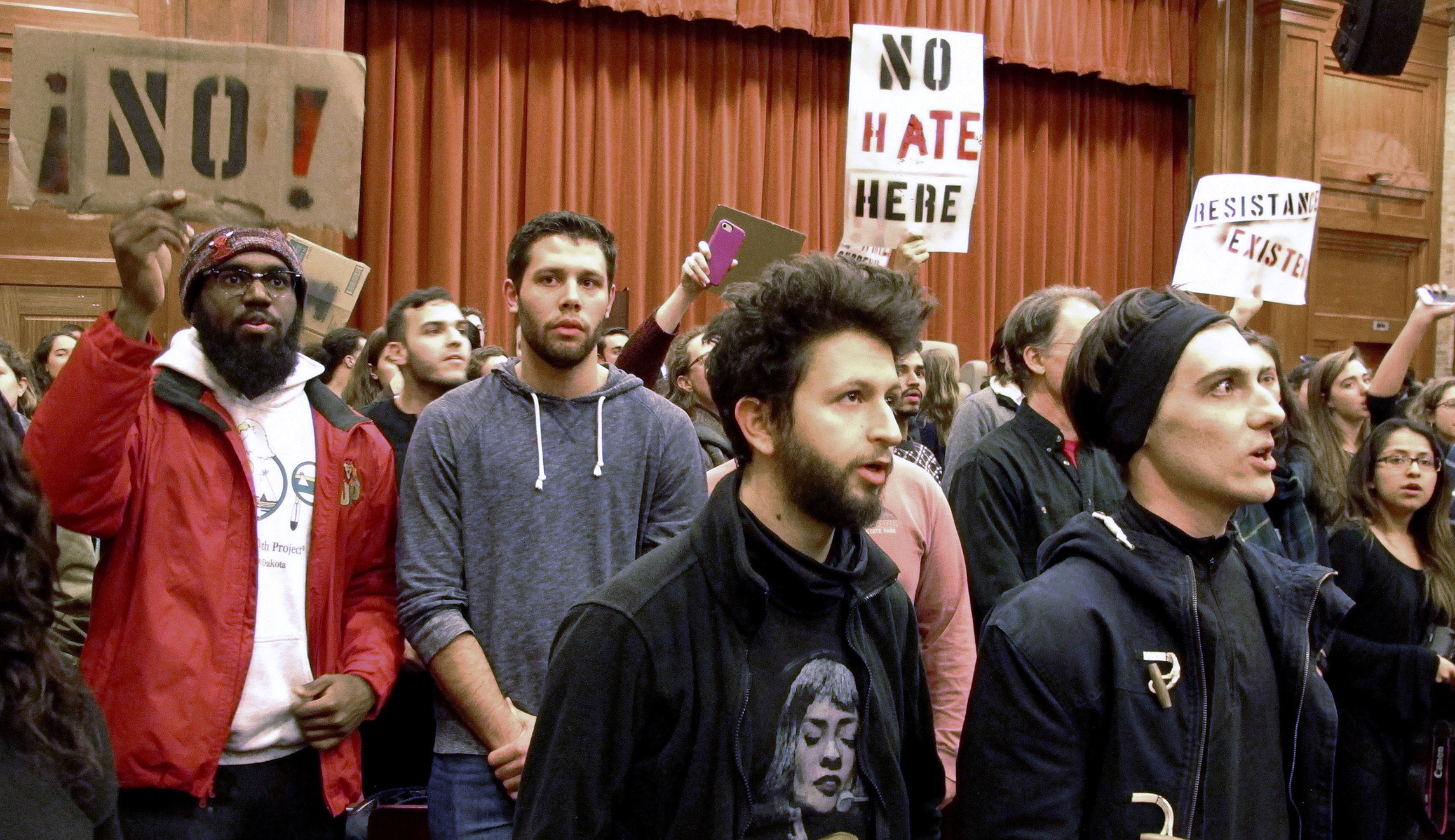
Some conservative lawmakers have sought to pass legislative Band-Aids to the campus free speech crisis in recent years, working on the state level where they enjoy control over most legislatures around the country. It’s a tempting fix, to be sure, especially as incidents have escalated. But the strategy has quietly caused some friction among free speech crusaders.
Case in point: John Hardin, director of university relations for the Charles Koch Foundation, wrote in the New York Times this week to caution against such approaches. Hardin zeroed in on Arizona, where lawmakers have floated or passed proposals that have been controversial among right-leaning proponents of campus free speech. “Just as those who shout down or silence speakers with whom they disagree contribute to the problem, so, too, do efforts by legislators to eliminate particular courses or forms of expression,” he wrote.
Recommended Stories


In Arizona, for example, state legislators considered one proposal that would have banned any course advocating for “social justice” or a particular “class of people.” While that proposal died, the legislature still passed a law that schools “may restrict a student’s right to speak, including verbal speech, holding a sign or distributing fliers or other materials, in a public forum.”
[Related: Georgia becomes 10th state to ban free speech zones on college campuses]
Hardin criticized a “model policy” for use in state legislatures drafted by the Goldwater Institute, calling it “alarmingly influential,” and noted at least four states other than Arizona have considered similar bills.
“Homogeneity and censorship in academic debate — which is to say, no debate at all — is bad for everyone, whether it arises from a campus culture or is mandated by law,” said Hardin. “The alternative is not a constructed and regulated forum, but a free, open and expansive one.”
His argument is a strong one, and it raises a pressing question for proponents of limited government increasingly empowered in state legislatures. This is a problem that needs fixing, but for conservative lawmakers elected on promises to keep big government in check, the power to exert regulatory force comes with the responsibility to exert it sparingly.
