

Activists on at least two college campuses are upset that their universities aren’t showing the “epidemic” levels of sexual assault the activists believe exist.
Recommended Stories


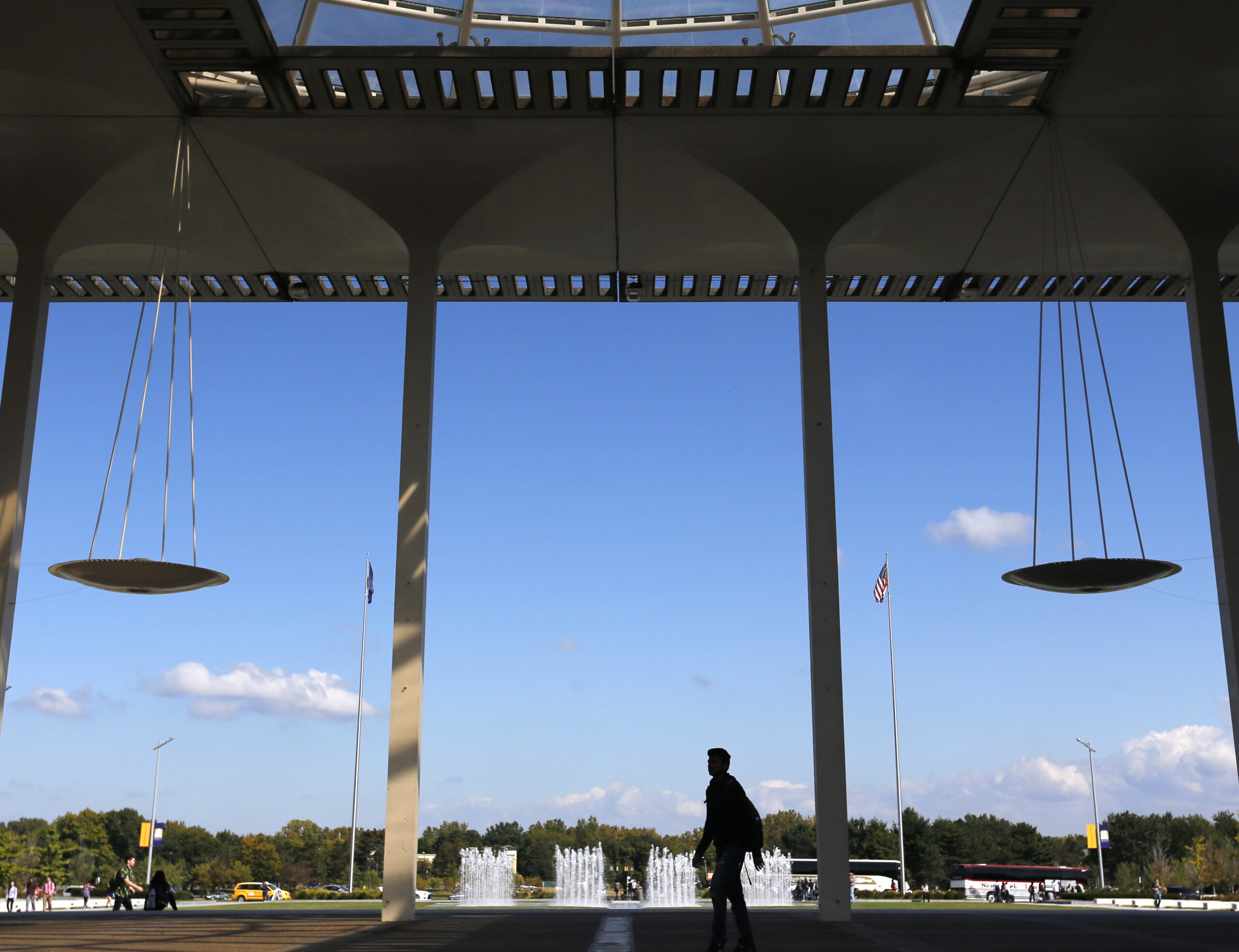
At the University of Albany, the director of the school’s Advocacy Center for Sexual Assault, Carol Stenger, bemoaned the idea of schools wanting zero reports of sexual assault. Shouldn’t schools want zero reports? At least if it means there weren’t any sexual assaults? Well, that’s not what Stenger wants.
“But how could we have a zero? There are 17,000 students here. We know the national statistics. It’s happening everywhere,” Stenger said. “If we increase that reporting, that means more people are getting assistance. And assistance is the fastest way to healing.”
On one level I can see Stenger’s point: More reports could mean more people feel comfortable coming forward.
And there weren’t zero reports at Albany in the previous school year. There weren’t the thousands of reports that Stenger seems to want in order to fall in line with debunked national statistics (the claim that 1 in 5 women will be sexually assaulted while in college), either.
In the past year, Albany had 28 reports of sexual assault, twice as many as it had before Stenger opened her advocacy center. To get the number in line with the national statistics Stenger mentions that there would need to be more than 1,700 reports (population of 17,280, about half being women, and a fifth of them allegedly being sexually assaulted). Oh, and all 1,700 of those reports would have to be true.
For the record, those 28 reports don’t break down to what alarmist national statistics say they should.
“Nine of them were from students who asked the university not to take action. Six resulted in disciplinary proceedings that led to two student expulsions and one persona non grata order against a nonstudent,” the Times Union reported. “Six were from third parties (when reached, the alleged victims either denied any violence occurred or declined to speak). Four involved assailants whose identities were unknown. Three were outside the university’s jurisdiction.”
What’s missing here is police involvement in what are, last time I checked, still crimes.
A more alarming issue going on at Albany beyond the school’s desire for more reports is that the person responsible for carrying out an allegedly fair adjudication process, Title IX coordinator Chantelle Cleary, is also an advocate for accusers.
“Her duties include compliance, prevention and education around sexual assault, but her biggest task is investigating reports of assault and completing reports that help the university make a finding of responsibility,” wrote the Times Union. (Emphasis added.)
So, her job is to find students responsible? Not find the truth? Even the Education Department thinks that’s a conflict of interest. She’s supposed to investigate, not advocate. If this is the way she operates, then accused students at Albany should immediately hire a lawyer, because they probably aren’t getting a fair investigation or hearing.
Albany isn’t the only school lamenting the lack of sexual assault reports. Stanford activists aren’t happy that the school sent out a press release noting 1.9 percent of students have experienced a sexual assault, according to a survey. That survey, like so many others, uses vague wording*. Activists are upset that Stanford chose to break down the findings, rather than lumping everything from a stolen kiss to forcible rape into the category of sexual assault.
With consent defined so narrowly, and because no one has sex in the way described above (“May I kiss you?” “Yes, may I touch you here?” “Yes, may I, in turn, touch you here?”), I’m actually surprised the rate of self-reported sexual assault isn’t higher.
Now, to be sure, Stanford included all the statistics activists wanted included. But since the school’s press release led with the 1.9 percent figure and not the preferably alarmist figure of more than 40 percent of female undergraduates (a number reached by adding all self-reported rapes and sexual misconduct, which includes stolen kisses), they were in the wrong. The school included the breakdown in the next few sentences, but who reads that far, right?
And remember, this was a self-reported survey, which found 1.9 percent of respondents (average of men, women and LGBTQ students) to have experienced a sexual assault. Another 14.2 percent, another average, experienced sexual misconduct (such as a nonconsensual kiss).
In the very next paragraph, Stanford explains that 4.7 percent of women and 6.6 percent of “gender-diverse students” (their term) experienced a sexual assault, but that 32.9 percent of female undergraduates and 30.8 percent of gender-diverse undergraduates said they experienced some other form of sexual misconduct.
Again, this was the finding of a survey students were free to ignore (though it did have a high response rate of nearly 60 percent). It is wildly out of line with Stanford’s actual crime statistics, and the official report didn’t include the results of one very important question: Why didn’t someone report the alleged incident?
Other similar surveys from around the country have found the main reason students don’t report what researchers identify as sexual assault is that the students themselves don’t view the act as serious enough to report. In other words, they might not see themselves as victims the way researchers and activists want them to.
But back to the actual Stanford crime statistics. Despite collegs having been turned into accuser-friendly places to report and get accused students punished, there were just 26 reports of rape in 2014, up from 16 in 2013. One is too many, but considering that Stanford has 16,000 students, that’s a relatively low number). It means that just 0.16 percent of the student population reported a rape, and we don’t know the breakdown of those reports. Were they all obviously true? Were they all he said/she said? A mixture of the two?
The report says there were no “unfounded” accusations, which could result from a lack of police investigation. This goes to my point yesterday that schools showing 1 in 5 rape reports to be unfounded may be outliers. Or Stanford, with zero unfounded reports, could be the outlier.
The bottom line: Activists’ beliefs don’t line up with reality, and they’re not happy about that. Their beliefs are still driving public policy, like California’s adoption of the narrow “yes means yes” consent standard that led to such a high rate of self-reported sexual assaults. But if more people learn the reality of the situation, the pseudo-court system set up to find more students responsible may be at risk, and activists don’t want that.
*Consent was defined narrowly as: “An affirmative act or statement by each person that that is informed, freely given, and mutually understood. It is the responsibility of each person involved in a sexual activity to ensure that he or she has the affirmative consent of the other or others to engage in the sexual activity. Affirmative consent must be ongoing throughout a sexual activity and can be revoked at any time. Lack of protest does not mean consent, nor does silence mean consent. Consent to one act by itself does not constitute consent to another act.”
(P.S. This part of the survey included a “TRIGGER WARNING” because it was going to use — gasp “explicit language, including anatomical names of body parts and specific behaviors to ask about sexual situations.” It also asked about sexual assault, which “may be upsetting.”)
