

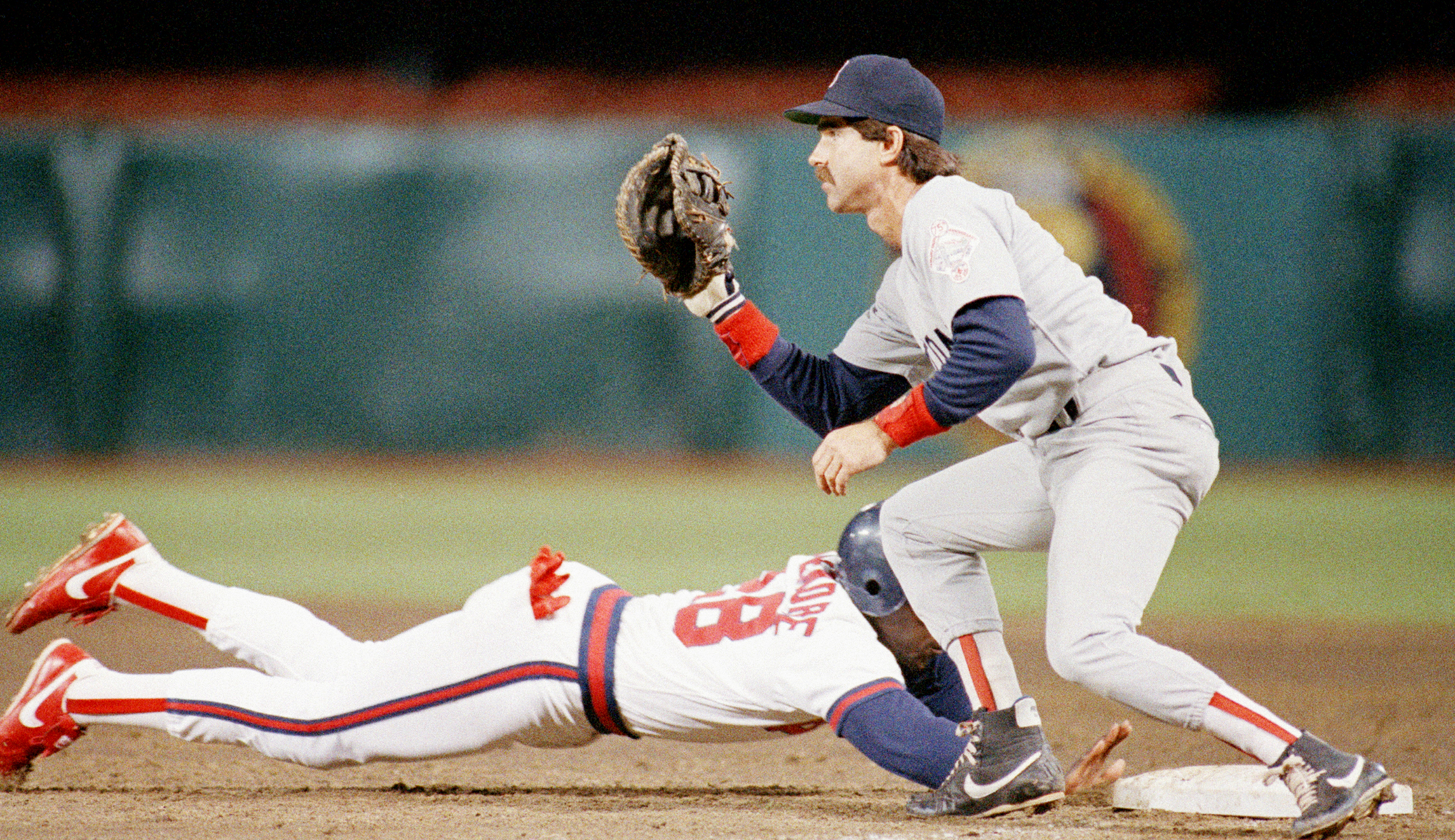
Longtime MLB player Bill Buckner passed away from dementia on Monday at 69 years old.
The first baseman enjoyed a highly productive 22-year MLB career. In it, he batted .289, amassed 2,715 career hits, made an All-Star game appearance, and made it to the World Series twice: with the Los Angeles Dodgers in 1974 and as a member of the Boston Red Sox in 1986.
Recommended Stories


It was Buckner’s latter World Series appearance which made him most prominent. Particularly, he made an error on a routine ground ball to first base in the 10th inning of Game 6 of the series which allowed the New York Mets to score the game-winning run. He quickly became the scapegoat for the eventual series loss. And although he did receive ovations at Fenway Park when he played for the Red Sox again in 1987 and 1990, he continued receiving death threats and his family was harassed, according to ESPN.
Ultimately, he had to move his family out to Idaho because of it. That said, he is a prime example of the dangers of scapegoating.
It is misguided to blame Buckner for the Red Sox failures in 1986. After all, it is a team game, and many people factored into the loss. With two outs in the inning and the Red Sox leading, pitcher Calvin Schiraldi surrendered three straight singles. Then, Bob Stanley came in and allowed the tying run to score and a runner to advance to second base on a wild pitch.
There is also the question as to why Buckner was in the game in the first place. Designated hitter Don Baylor, who clubbed 31 home runs during the regular season, was not in the lineup because no designated hitter is used at National League parks. Had he played, he would have been at first base. Or at least Red Sox manager John McNamara could have put Dave Stapleton in at first base as a defensive replacement with the team ahead in the 10th inning; it’s something he did three times in the series as the 36-year-old Buckner was never a great defender (-11.5 career dWAR, according to Baseball Reference).
Had Buckner made the play, the game would have continued to the 11th inning, and there is no guarantee the Red Sox would have won. Not to mention, the Red Sox still could have won the World Series had they won Game 7. Instead, their bullpen allowed five runs, and they lost 8-5. Still, it was Buckner who took the brunt of the blame despite going 2-for-4 in Game 7.
Other than Buckner, Chicago Cubs fan Steve Bartman is the other most prominent example of this inaccurate scapegoating. With the Cubs up 3-0 in Game 6 of the 2003 NLCS, he and other fans reached over to try to catch a foul ball, preventing outfielder Moises Alou from making the grab. Alou yelled at Bartman, the Cubs pitching proceeded to allow eight runs in the inning, and the team lost Game 7. Still, Bartman received death threats and has lived a low-profile life ever since, according to the Chicago Tribune.
In both instances, the real issues were not intelligently assessed. Instead, many took an oversimplified approach and blamed one person for the shortcomings of an entire team.
It’s the kind of approach we see in victimhood politics today. On one side, Sen. Bernie Sanders, I-Vt., and his ilk unjustly blame the “1%” and income inequality for the country’s problems. Some on the populist Right blame foreign countries and foreign people for manufacturing jobs disappearing instead of accepting automation and the economic changes which come with it.
Buckner’s life should not be defined by one play, nor should his one miscue be remembered as “the reason” the Red Sox lost the 1986 World Series. Issues are oftentimes far more complex than they initially appear, and the controversy surrounding Buckner’s infamous play is one of those complicated problems.
Tom Joyce (@TomJoyceSports) is a freelance writer who has been published with USA Today, the Boston Globe, Newsday, ESPN, the Detroit Free Press, the Pittsburgh Post-Gazette, the Federalist, and a number of other media outlets.
