


The Congressional Progressive Caucus released its annual budget proposal Thursday, proposing record high taxes that would raise taxes by nearly $3 trillion over the next decade. According to estimates from the liberal Economic Policy Institute, taxes would rise to 22.3 percent of GDP. Tax revenue has never previously surpassed one-fifth of the economy, peaking at 20 percent of GDP in 2000.
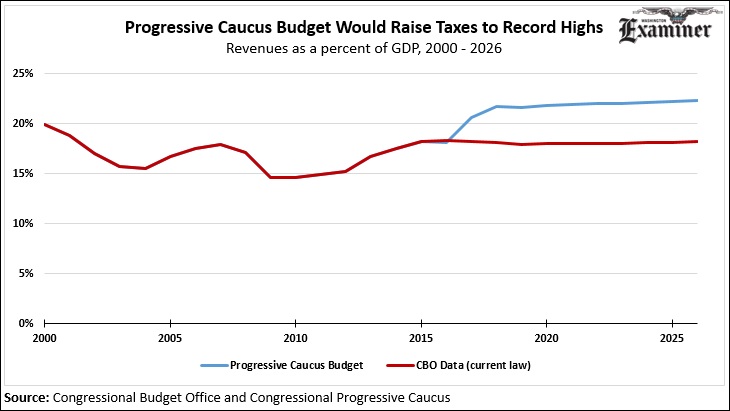
Republicans in Congress are unlikely to support the budget. Still, if the budget were enacted, how would it affect you? Here’s a brief rundown:
Recommended Stories



Income taxes
If you earn less than $250,000 a year, your income tax rates won’t change. Today, the highest income tax bracket for single filers who earn more than $415,050 in a year is set at 39.6 percent. The Progressive Caucus Budget sets a top tax bracket at 49 percent for those who earn $1 billion or more in a year. Those who earn $1 million to $10 million would see their tax rates rise to 45 percent.
Death tax
Under the proposed budget, the death tax would hit estates with a 55 to 65 percent tax rate, although individual estates under $2.5 million would be exempt, as would $5 million estates for couples.
Corporate income tax
Forces U.S. businesses to pay income tax on any income they earn anywhere in the world. This would raise taxes on businesses by $984 billion — assuming it doesn’t just chase all of them to other countries.
Financial transactions tax
The budget proposal creates a new financial transactions tax that would raise $923 billion. Stock transactions would be taxed at 0.25 percent, bonds at 0.004 percent, option premiums at 0.25 percent per year until maturity, foreign exchange transactions at 0.004 percent and futures and swaps at 0.01 percent.
Jason Russell is a commentary writer for the Washington Examiner.
