

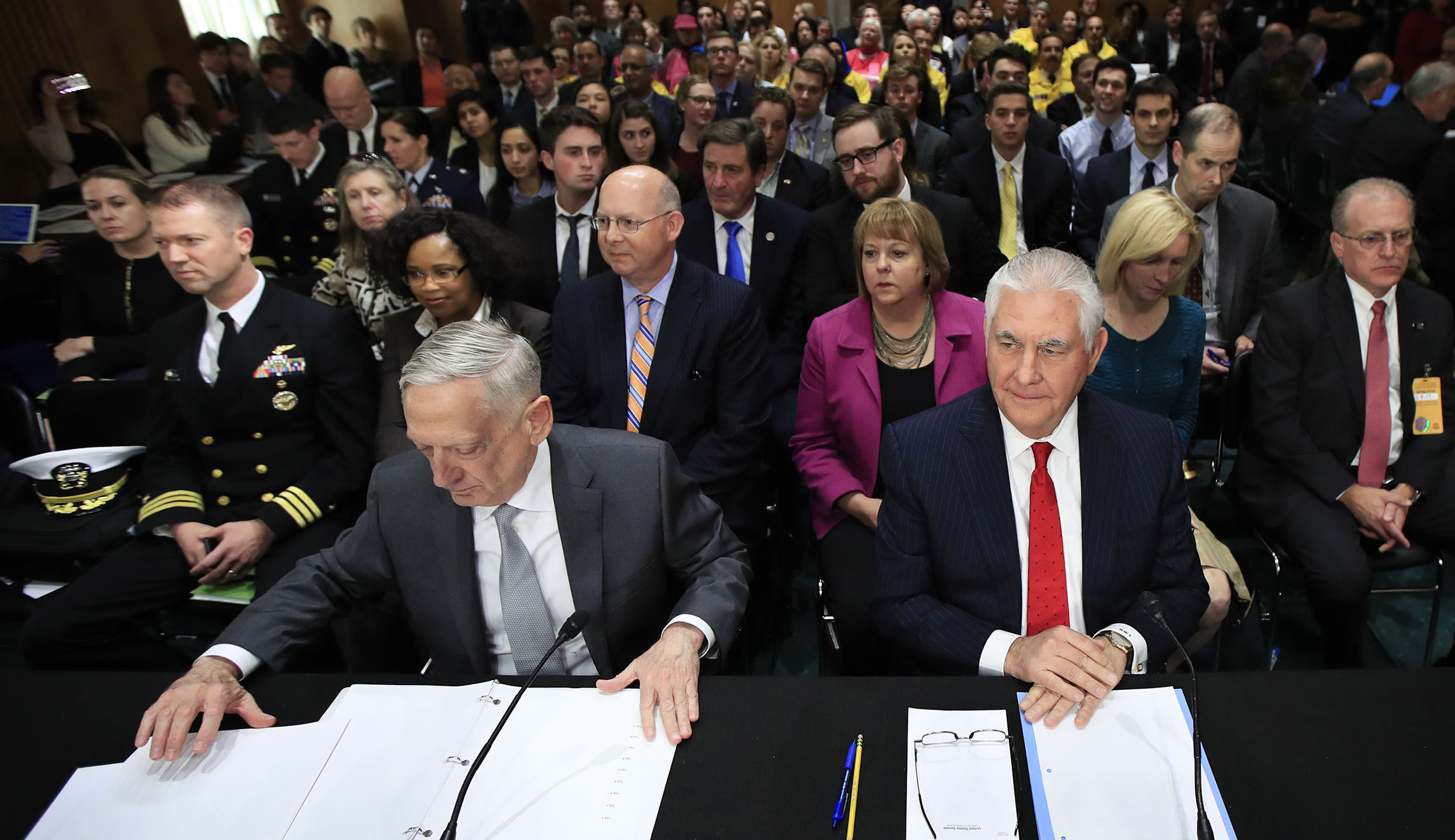
Last week, Secretary of Defense Jim Mattis and Secretary of State Rex Tillerson were called to testify before the Senate Foreign Relations Committee about the 2001 authorization for the use of military force originally passed following the Sept. 11 attacks. Sixteen years later, is this sufficient legislative authority to prosecute a global war on terrorism? The discussion with Mattis and Tillerson was the second public hearing on this issue, and one hopes will be the beginning of a new emphasis from members of Congress on just how essential reasserting the legislative branch’s war power is to America’s health as a country.
The framers of the Constitution could not have been any clearer about which branch of government holds the ultimate power during wartime. While subsequent laws like the 1973 War Powers Resolution provides the president, as commander-in-chief, the power to commence hostilities under certain conditions like retaliating for an attack upon the United States or pre-empting one that is imminent, Article I, Section 8 of the Constitution grants Congress the power to “declare war.”
Stay informed.Stay ahead.
Join Washington Examiner for unlimited access to the news, analysis, and commentary that matter most.
Already a member? Log in
