

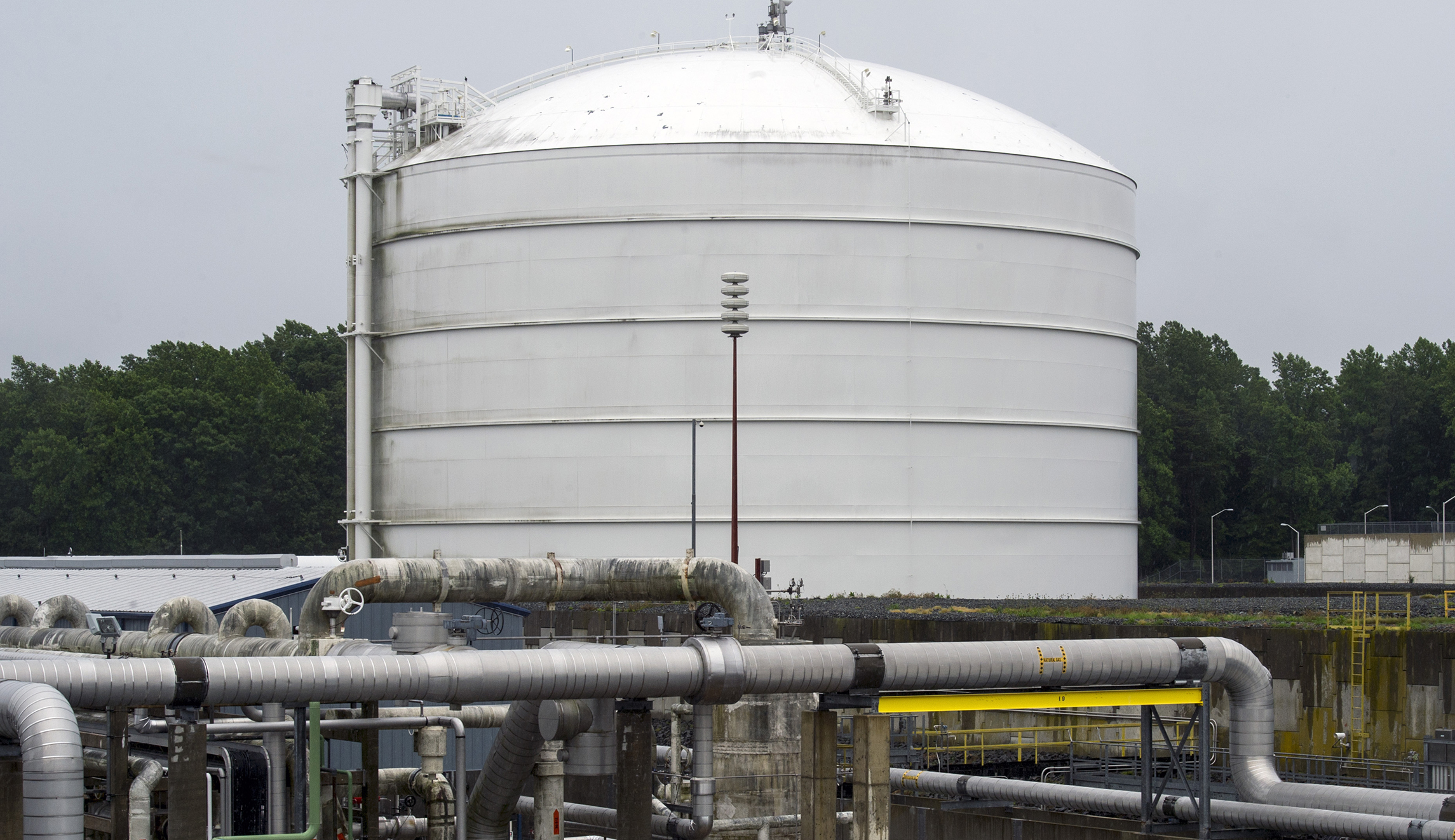
The ribbon-cutting ceremony this week at Dominion Energy’s Cove Point liquefied natural gas terminal in Maryland, just a short drive from the nation’s capital, signals another high point for the golden age of domestic natural gas production.
Cove Point’s innovative LNG storage and transportation infrastructure make it a beacon for both American energy independence and dominance, as well as economic prosperity — that is, if our public policies create an environment that encourages the U.S. to leverage its abundant natural resources responsibly.
Recommended Stories


Across the globe, U.S. LNG has seized the spotlight. China is increasingly turning to American LNG to reduce its over-reliance on coal and to clean up its air. In Europe, American LNG will play a key role in loosening Russia’s grip on the European gas market — a significant national security improvement. In addition, as Energy Secretary Rick Perry told the World Gas Conference last month, U.S. LNG is relieving energy poverty by bringing light and heat to developing nations in a world where more than one billion people still live without electricity.
And those are just the benefits to other countries. Here at home, an abundance of natural gas has created an ideal scenario in which domestic LNG helps shift global trade in America’s favor, decreasing our trade deficit. In fact, the Department of Energy recently released a comprehensive study by National Economic Research Associates that reaffirms the significant economic benefits of LNG exports. NERA’s study examined how increased exports help provide stability and predictability to the natural gas market, counteracting the traditional ebb and flow of natural gas demand due to changes in the weather. Exports provide an all-season stabilizing effect for the market and natural gas consumers.
Even better, with increased production and exports also comes a significant uptick in job creation.
U.S. workers are needed not only to extract this valuable natural resource, but also to build the facilities and infrastructure necessary to transport and export it. A recent analysis from global consulting firm ICF projects that LNG exports will add between $50 and $73 billion to the U.S. economy annually and between 220,000 and 453,000 American jobs between 2016 and 2035.
But despite strong evidence that increased U.S. LNG exports are a win for U.S. global competitiveness, our economy and our workforce, the current administration is pushing to implement costly steel tariffs that will discourage domestic energy production and infrastructure investment. When pipelines and export facilities are too expensive to build and staff, LNG exports will fall, creating a ripple effect felt throughout the U.S. economy.
As executives at Chevron and Total pointed out at the World Gas Conference, the natural gas and LNG export sectors rely heavily on steel, and while they try to use American steel when possible, imports are still necessary where American-made steel is not an option. CEOs agree that international trade skirmishes introduce significant levels of risk to the industry’s success, leading to negative perceptions of future economic growth in the U.S. natural gas/LNG sectors and jeopardizing global demand.
This is a disturbing scenario, considering it could endanger our dominant role in global natural gas production at a time when our competition is increasingly fierce. Although we are currently the world leader in natural gas production, allies like Australia and Canada are hot on our heels. Both have a large resource base, are reliable trade partners, have the skilled workforce required, and are well-situated relative to importing countries.
LNG export facilities like Dominion’s Cove Point represent a remarkable, multi-dimensional opportunity for the U.S. to become a global energy heavyweight while at the same time growing our economy, restoring our balance of trade, and providing hundreds of thousands of jobs for hardworking Americans. Every effort should be made to ensure we seize the opportunity and not put it in harm’s way with expensive and wholly unnecessary tariffs and quotas.
Charlie Riedl is executive director of the Center for Liquefied Natural Gas.
