

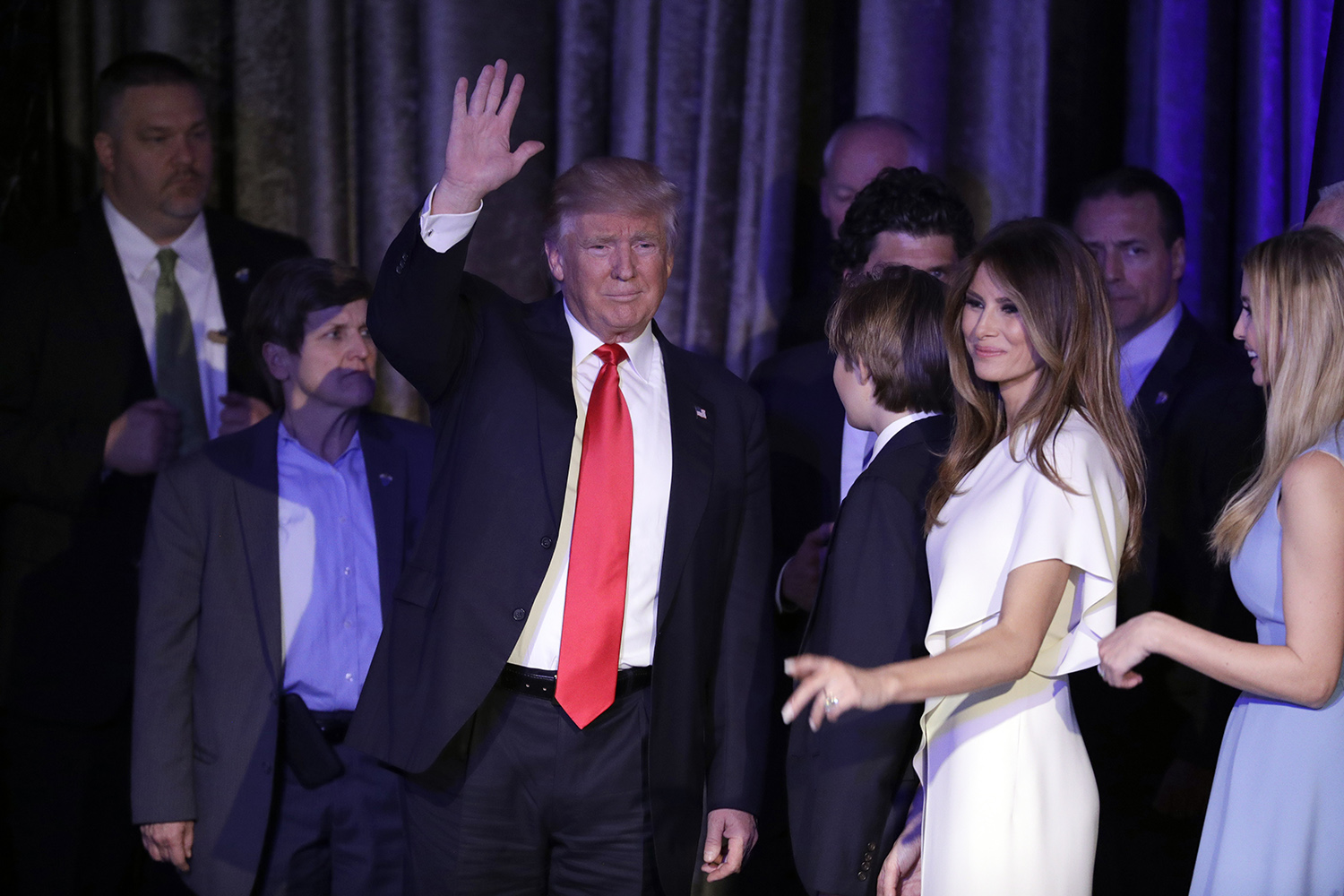
President-elect Donald Trump’s stunning victory was a massive rebuke to pundits, forecasters and pollsters. His win turned decades of conventional wisdom on its head about the nature of the electorate and how presidential elections are won and lost. Here’s what voters taught American people on Tuesday:
Don’t put too much trust in polls and voting models
Recommended Stories


In fairness to pollsters, every survey comes with a margin for error and there’s always a possibility that pollsters could make mistakes. As a result, any election forecast model that’s based largely on polling data is also subject to error. When a model says that there’s a 20 percent or 30 percent chance of something happening, there’s still a realistic shot that it can happen. That having been said, political observers have tended to rely on both polling averages and forecast models to predict the outcome — the thinking being that in a presidential election with so much polling, massive, systemic errors are less likely. Trump proved, however, how possible they really are.
The Obama coalition was more about Obama than it was a stable new Democratic coaliton
When Hillary Clinton first announced her candidacy last April, I wrote: “one fundamental question will determine the outcome of the 2016 presidential election: Is the coalition of voters that President Obama put together in his 2008 and 2012 victories indicative of a permanent change in the American electorate that favors any Democratic candidate? Or were the super-sized margins Obama enjoyed among groups such as minorities and young voters specific to the first African-American president?”
In the end, the answer was that the Obama coalition wasn’t there for Clinton. According to exit polls, Clinton underperformed Obama among 18-29 year olds by 5 points, among blacks by 5 points, among latinos by 6 points and among Asians by 8 points. The candidate who would have been the first woman president actually did 5 points worse among unmarried women than Obama.
Don’t get cocky
The Clinton campaign was at one point so confident in its victory, that it was putting resources into winning states such as Arizona and Georgia. But when analysts look back at this election, they’ll view this as a massive blunder. In hindsight, it’s now clear that Clinton should have devoted the bulk of her time to shoring up her “firewall” in rust belt states — Michigan, Pennsylvania, and Wisconsin — to lock down the potential for a Trump upset.
A lot of things that we thought really mattered in elections are less important than we thought
Going into this election, the belief was that a winning campaign would do well in the “set pieces” of the general election — such as the conventions and the debates. At the same time, dominance in data, microtargeting, sophisticated get out the vote efforts were supposed to boost candidates, and make the difference in close races. But the expert consensus was that the Democratic convention was much more successful than the Republican one, and that Clinton dominated the debates. Meanwhile, Clinton was praised for having a masterful political machine and GOTV operation, compared with Trump’s complete lack of GOTV. In the end, however, Trump was able to lean on the RNC and rely on organic enthusiasm to get his voters to the polls.
