

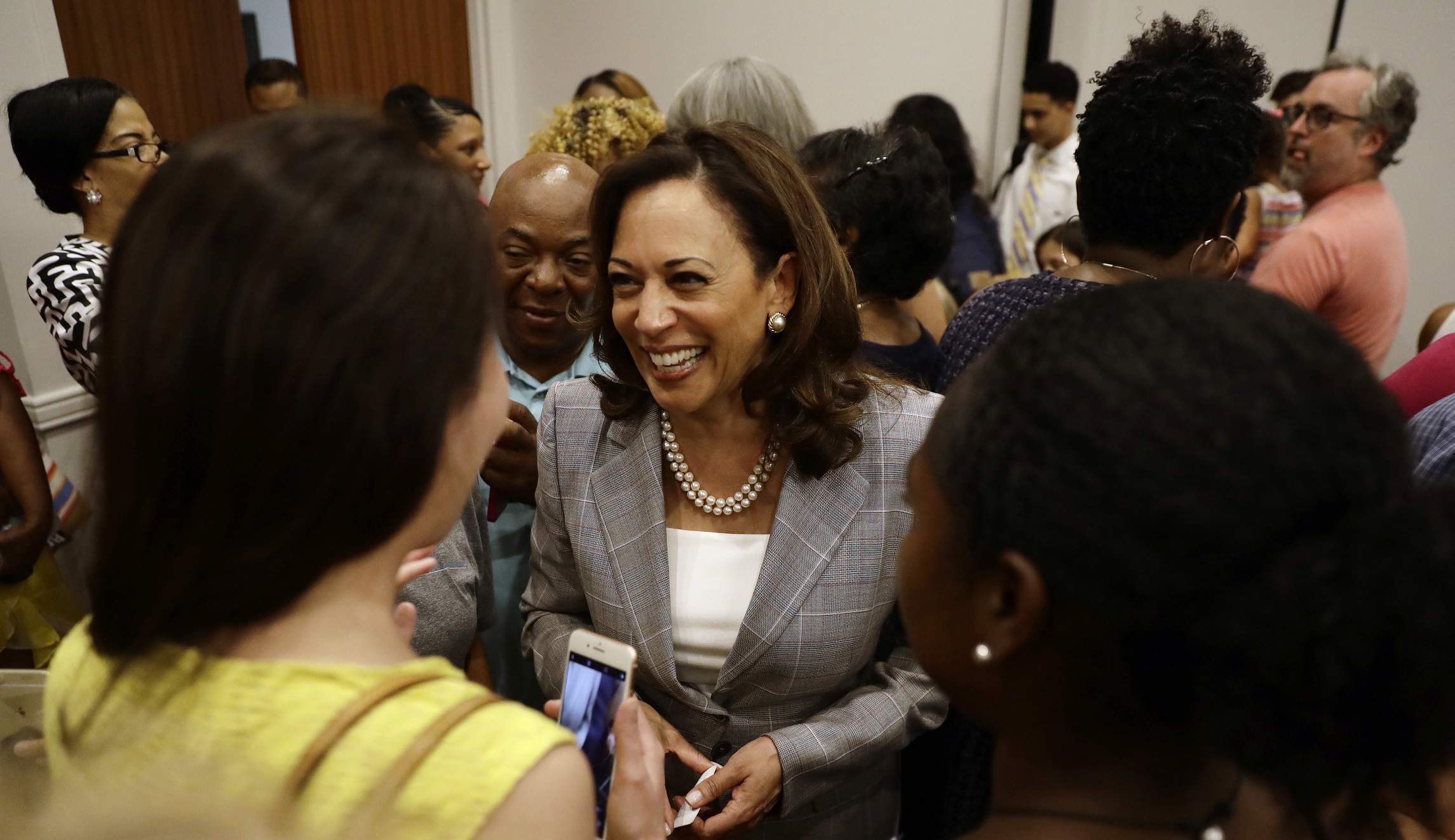
On Tuesday, Sen. Kamala Harris was selected to be her party’s vice presidential candidate. Eight years earlier, to the day, Rep. Paul Ryan was tapped for the same job, and I started work as his spokesman. Because of the COVID-19 pandemic, Harris and her team will have a totally, utterly, and completely different experience than we did, and that is unfortunate — for the candidate and for the country.
Some of the basics will be the same. The vice presidential nominee, if successful, has three real moments of attention and responsibility: the rollout, the convention speech, and the vice presidential debate.
Recommended Stories


Harris’s rollout has gone relatively well, with all the right people informed without a leak to the media, and generally positive coverage. The next test will be a wave of opposition research, some of dubious truth and quality, some potentially damaging. I know the conventional wisdom is that Harris has already been vetted since she ran for president herself, but I have faith in the Republican Party’s army of opposition research ninjas. Frankly, some issues or information that didn’t cut much ice with Democratic primary voters will look a lot different in a general election.
The convention speech and the vice presidential debate will still happen, and they will still be televised and watched by millions of voters. Depending on the course of the race, there is a potential for pivotal moments in either, particularly given Biden’s age.
But what will make this campaign a pale imitation of past runs will be the lack of travel and the inability to connect with and learn from voters all over the country directly. In 2012, we were on a plane almost every day, often a few times a day. We’d loop, over the course of a week or two, from contested states in the west, such as Colorado and Nevada, down to Florida, up to North Carolina and Virginia, across to Ohio, Michigan, and Wisconsin, then back out west.
The crowds got larger as the election got closer. Early on, we’d have small events in high school gymnasiums and do round-robins of interviews with local television stations. Later, the rallies would be big enough to be carried live on TV. By October, Mitt Romney and Ryan would meet up each weekend for what we called “Friday Night Lights,” after the governor’s favorite TV show: massive events with speeches to tens of thousands of supporters in farm country in Ohio, or Daytona, Florida, or Red Rocks, Colorado, capped off with massive fireworks shows.
One day started in a hotel in Times Square and ended traipsing through a cornfield to the local barbecue joint in Dubuque, Iowa. On another, we woke up somewhere in Florida, flew to Pittsburgh for an airport rally, motorcaded into eastern Ohio for another rally, then flew to New Jersey for a few fundraisers and ended the day in Omaha, poised for a round of events in western Iowa the next morning.
The sheer velocity meant that when we paused for a few days in the same place (for debate preparation in Bend, Oregon, or Wintergreen, West Virginia, or for the Republican National Convention in Tampa, Florida), it was a little unnerving.
More importantly, we got to see and feel and taste America, from the dense sugary Cuban coffee at Versailles in Little Havana to the cinnamon buns as big as your head at Johnson’s Corner, Colorado, to the ribs at Montgomery Inn in Cincinnati.
And everywhere we went, the candidate got to talk to average people: normal customers out for a Friday night dinner at Chili’s or children selling lemonade on a street corner or people attending the Iowa State Fair or an Ohio State football game. There are few better ways to appreciate the scale, scope, breadth, beauty, and diversity of America than travel on a presidential campaign.
That’s the real loss for Harris and, perhaps, for our country.
Michael Steel (@Michael_Steel) served as press secretary for former House Speaker John Boehner from 2008 to 2015. He also served as the press secretary for Paul Ryan during the 2012 presidential election.
