

Russia is watching our every move. And that’s a good thing.
You may not know it from reading the news, but in specific cases the United States can actually benefit by exploiting Russia’s habit of snooping.
Recommended Stories


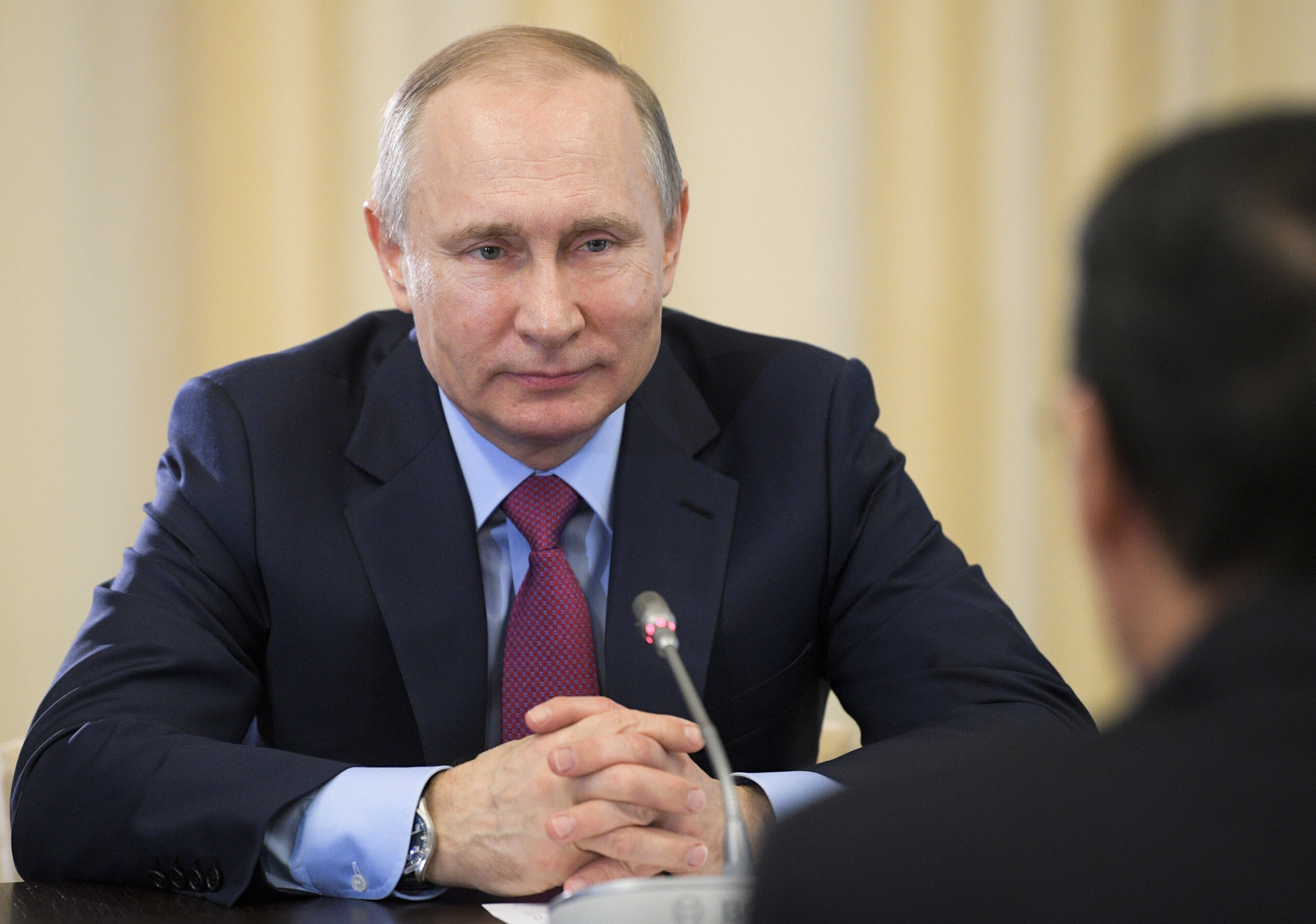
Russian President Vladimir Putin and Defense Minister Sergei Shoigu held a joint meeting recently taking half their time to extol the gains the Russian military made in 2016. The other half of their speeches, however, detailed just how much they have been observing NATO military exercises and U.S. nuclear modernization programs.
President Putin stated “we need to be very astute in tracking any changes in the balance of forces and military-political developments in the world, especially along the Russian border… to neutralize potential threats our country may face.”
Comrade Shoigu then commented on NATO budget figures, the four combat battalions NATO plans on placing in the Baltics near Russia’s border, the rate of “NATO’s intelligence activity” in surveillance flights, and even the types of tanks and uniforms the British used in their military exercises.
This is great news for the United States and NATO because the Russians tipped their hand by detailing exactly which allied actions concern them and what weapon programs they are watching. Now that the United States and NATO have a glimpse into the Russian mind, they can more effectively tailor our deterrence messages.
Successfully deterring Russian attacks on Europe requires that many things go right, the first of which is the United States and NATO sending the right deterrence message in a way that Russian leaders like Putin and Shoigu will receive and interpret correctly. This is difficult to do, even under the best of circumstances.
Deterrence requires knowing what messages an adversary receives, takes seriously, and acts on. General Petr Pavel, Chairman of the NATO Military Committee, believes the West need only review the available evidence of the past few years to see that, “Russia respects power. Russia sees the liberal approach, democratic approach, discussion, compromise, as a weakness. And I believe that … as Russia keeps this attitude we have to show our determination. We have to show strength.”
If Putin and other Russian leaders speak and understand the language of military power then the United States and NATO must recognize that Russia will view allied words and actions through this prism whether we like it or not.
So what kind of deterrence message can the United States, and specifically President Donald Trump, send Russia in the coming days to signal U.S. resolve? First, the United States and NATO must respond forcefully to Russia’s continued violation of the INF Treaty, which prohibits a certain class of nuclear weapons, with the goal of deterring future violations and assuring allies within range of the prohibited Russian nuclear weapon system. By researching and procuring air and missile defense systems, along with the addition of battalions of heavy armor vehicles, U.S. and NATO actions will signal to Putin that he can only lose security by continuing down the current path.
Second, we know the Russians are watching the early stages of U.S. nuclear modernization programs, and fully funding these weapon systems in the coming years will send a clear deterrent message to Russia that they cannot tip the balance of nuclear forces in their favor. The United States can and should accelerate the modernization pace on the B-61 nuclear bomb and the nuclear certification for the F-35 fighter aircraft, which will eventually be stationed in Europe. In addition, NATO allies must be assured there are credible U.S. capabilities backing up NATO’s Article 5 commitment that an attack on one is an attack on all.
Third, the United States and NATO should openly exercise these capabilities, since the Russians are so fond of watching, so the Alliance gains better proficiency in military cooperation and information-sharing under stressful conditions.
Russian leaders are watching and listening. But that is only a good thing if we send the right message.
Matthew R. Costlow is an analyst at the National Institute for Public Policy.
If you would like to write an op-ed for the Washington Examiner, please read our guidelines on submissions.
