

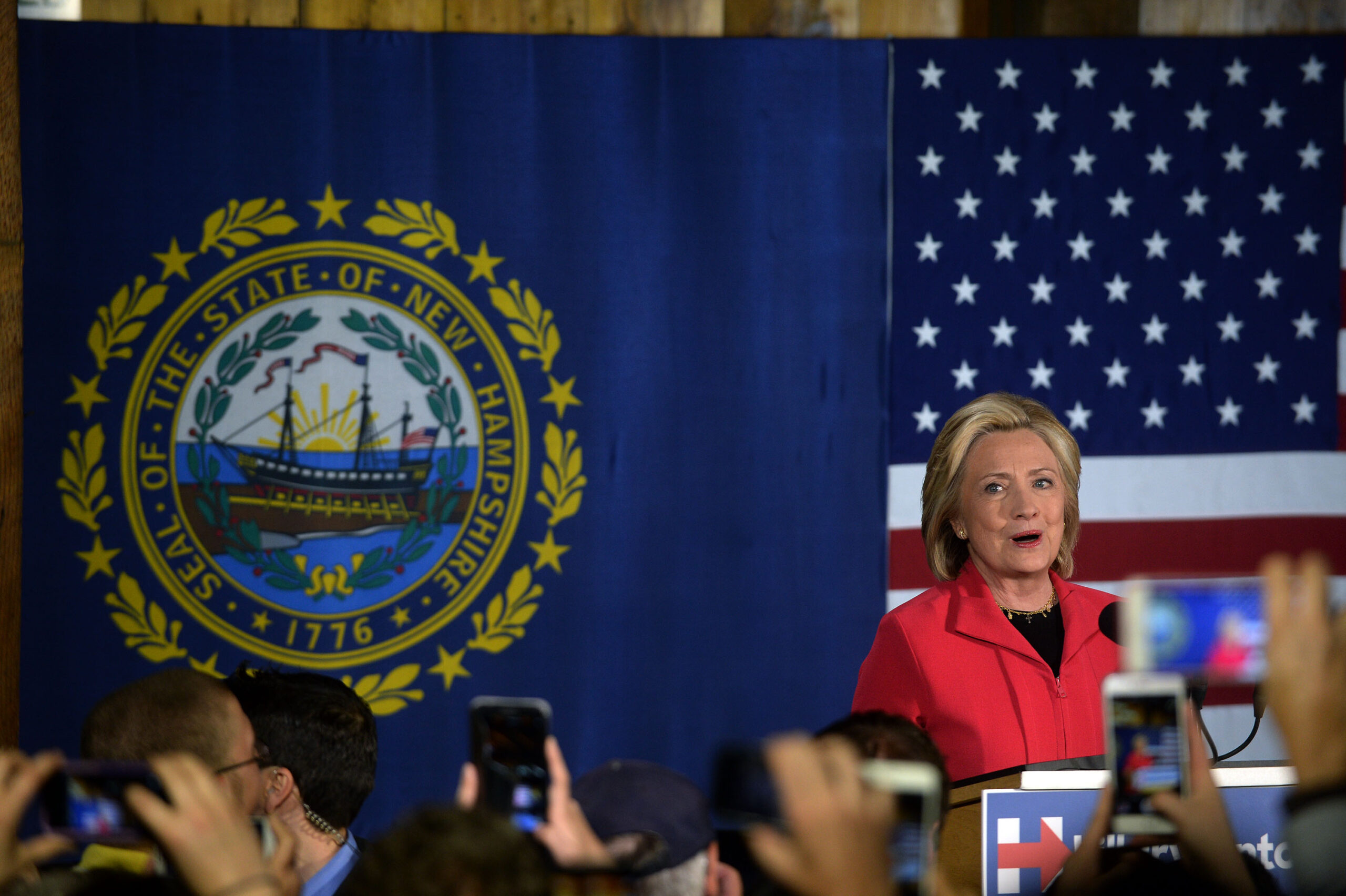
Anyone who has covered a presidential campaign at the primary stage noticed something different about Hillary Clinton’s news conference in Concord, N.H., Monday.
Recommended Stories


With reporters standing behind a barrier rail, the conference began not with Clinton but with press aide Nick Merrill, who had a list of journalists who would be recognized. “OK folks, we’re going to start, take a few questions, with Dan Tuohy, Union Leader,” Merrill began. After Clinton responded to Tuohy’s question, Merrill jumped in again, recognizing Anne Gearan of the Washington Post. And then Merrill inquired: “Where’s James Pindell? You have a question, James?” And so it went.
The normal way for a campaign to work, certainly at this early stage of the campaign, would be for the candidate to come out and say, “I’m going to take some questions” and then take some questions. While a press aide would likely be standing nearby, there would be no middleman, and no list of reporters who would and would not be allowed to ask a question. Even the President of the United States, who does work off a list at formal news conferences, calls on reporters himself, without an aide standing beside him to announce who will be allowed to speak.
The Clinton system is just one small way in which the former secretary of state is conducting her campaign as if she is already the president. At the same time, though, it left some members of the press with the impression that her campaign is still in the training stage, that Clinton is not yet ready for an unscripted exchange of information with the press. It’s an ironic turn for a candidate who has argued since 2007 that she is so experienced that she would be ready to serve as commander in chief from the very first day of her term in office.
Fox News’ Ed Henry, who was standing near Clinton but was not called on, later complained about the way the campaign handled the news conference. “One of her aides had sort of pulled me to the front, suggesting that I was likely to get a question,” Henry explained on Fox Tuesday. “She goes through her list — and they’ve got a careful list of who they’re going to call on — and then she just turns and walks away.”
After Clinton ended the 18-minute news conference, Henry said, he tried to approach Clinton for another question — not at all an unusual circumstance in candidate press appearances — but a Secret Service official told him to move back.
Henry said Clinton’s press aides later explained that he had already gotten a question a couple of weeks earlier, when, after Clinton had ignored the press for an extended period of time, Henry interrupted a Clinton appearance to ask whether she would talk to reporters. “That wasn’t exactly a question,” Henry said on Fox. “That was a request to actually talk to the media.”
What happened Tuesday wasn’t by any stretch of the imagination a hugely important event in the course of the campaign. But coupled with another development — the Clinton campaign’s refusal to let pool reporter David Martosko of the Daily Mail cover the day’s events — it suggests just how controlling the Clinton team plans to be when it comes to the press and, by extension, the public itself.
The incident also points to a factor that makes Clinton different from any other candidate. As a former first lady, she has Secret Service protection. If she chooses, she can use her protective detail to shield her from the press as well as from actual threats. Monday’s events suggested it might be a very long and frustrating campaign for those who would like to see a greater flow information between candidate, the press, and the public.
