

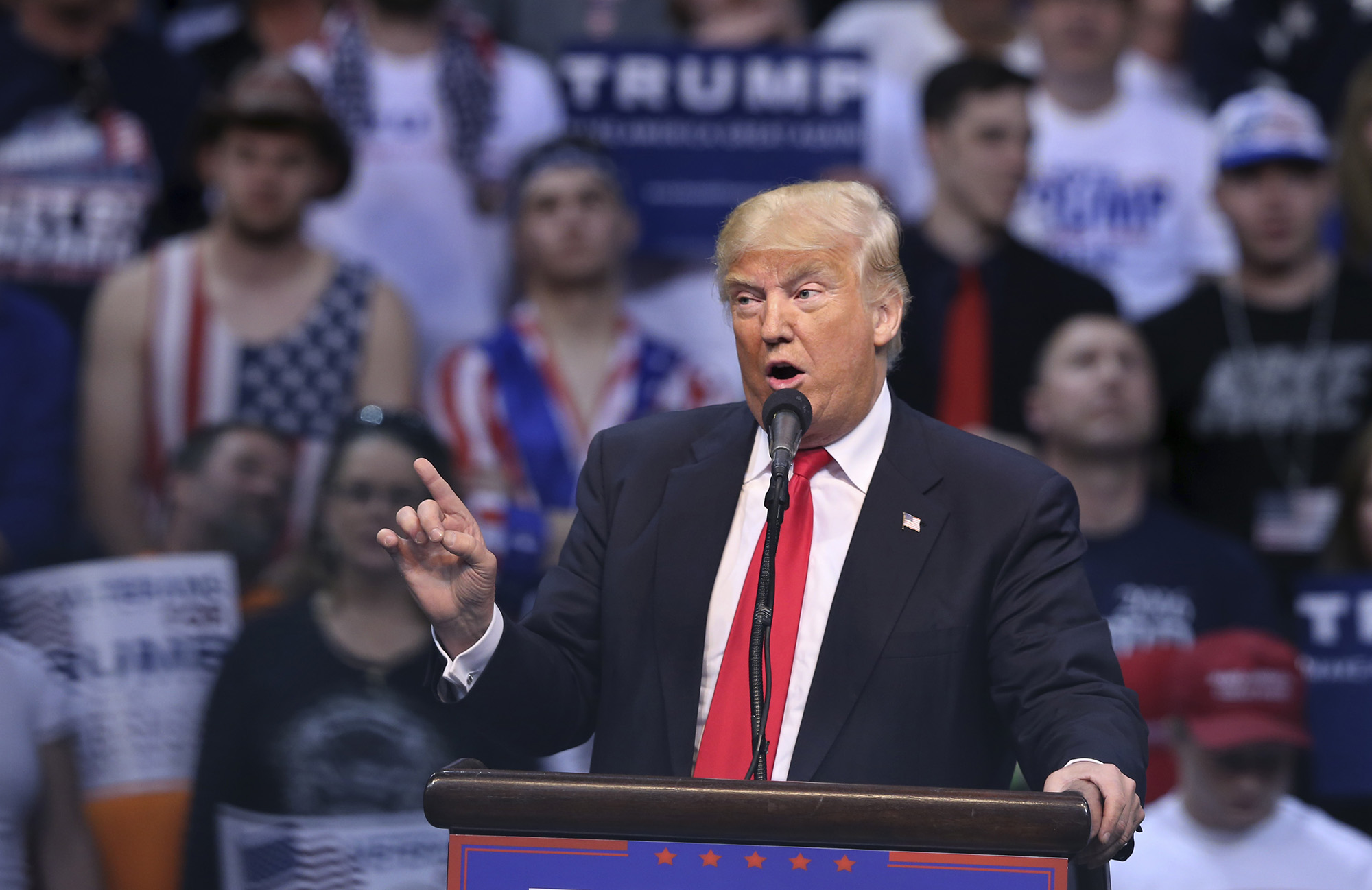
At this point, the effort to keep Donald Trump from getting 1,237 delegates and a convention majority is appearing desperate. It’s still not completely hopeless, though.
Recommended Stories


The key question last night was not whether Trump would sweep all five states (that was assumed, and frankly he had to), but how well he would do in getting his unpledged district delegates elected in Pennsylvania. He only got 31 of them, which is a bit worse than the 33 I had been assuming. He more than made up for this by doing a bit better than I expected in Maryland and Connecticut. But the bottom line is that he remains in the same general ballpark as before his New York win, except that he’s 15 or so delegates ahead of expectations.
If you include those 31 unbound Trump delegates from Pennsylvania districts, plus the 51 he will get in New Jersey, all 34 delegates from West Virginia, and 38 of the 96 (roughly 40 percent) from New Mexico, Oregon and Washington put together, Trump gets to 1,110 delegates. (Unless things change dramatically, Trump will still probably get no delegates in Nebraska, South Dakota and Montana — but obviously a win in any of those will make him the nominee for sure.)
So the only states not being counted here are Indiana and California.
To stop Trump from there requires both a convincing Cruz win in Indiana, and keeping Trump from getting much more than 100 delegates in California. The former seems a lot more easily attainable than the latter. Perhaps that is the motivation behind Cruz’s special announcement today, at his 4 p.m. event in Indianapolis. If he is announcing Carly Fiorina as his presumed running mate, then surely California is a factor.
Even so, under the most optimistic scenario, Trump will be close enough to 1,237 delegates that he can become the nominee if he can persuade a sufficient number of the other unbound delegates who don’t already support him. But the scenario outlined here would at least prevent a Trump nomination from being a fait accompli before the convention begins.
