

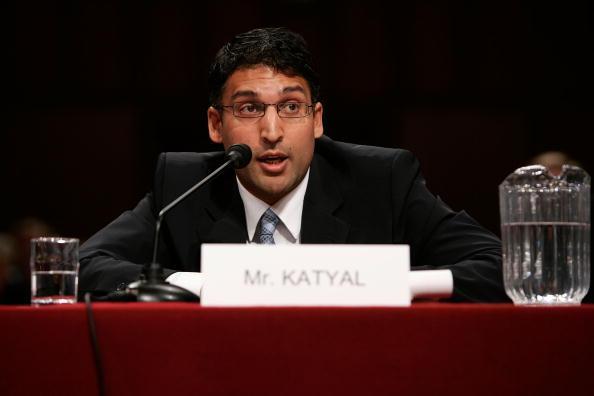
Neal Katyal, the former acting solicitor general who defended Obamacare unsuccessfully in the 11th Circuit Court of Appeals, explained in an interview published over the weekend why he believes the U.S. Supreme Court should leave the law intact. To do otherwise, he argued, “would be the Supreme Court saying: ‘Look, we’ve got the power to really take decisions, move them off of the table of the American people, even in a democracy.’ ” He added: “The challengers are saying that this law is unconstitutional, which means even if 95 percent of Americans want this law, they can’t have it. And that’s a really profound thing for an unelected court to say.”
Katyal’s bizarre argument puts him at odds with an entire library’s worth of Supreme Court jurisprudence — everything from Marbury v. Madison to Brown v. Board and beyond. Importantly, he fails to make a distinction so fundamental that it hardly seems worth mentioning — namely, that some laws are constitutional and others are not. This distinction, and not some curious, extraconstitutional desire for majoritarian rule, determines when judges should get involved in thwarting duly enacted legislation.
Recommended Stories



One reason the Constitution establishes federal courts is to make this distinction, and use it to prevent unwarranted expansions of government power. The Founding Fathers understood this. “No legislative act … contrary to the Constitution, can be valid,” Alexander Hamilton wrote in Federalist No. 78. “[T]he courts were designed to be an intermediate body between the people and the legislature, in order, among other things, to keep the latter within the limits assigned to their authority.”
The Supreme Court’s striking of laws has proven controversial at times — particularly in cases where judges appear to have acted capriciously. Hamilton did warn that the courts should not “substitute their own pleasure to the constitutional intentions of the legislature.” Many conservatives would say this happened in the Roe v. Wade abortion case, which even retired liberal jurist John Paul Stevens has said “create[d] a new doctrine that really didn’t make sense.” Many liberals would say something similar of Bush v. Gore, which ended the Florida recounts in the 2000 presidential race and sealed its outcome.
But the possibility that the Supreme Court can err does not nullify its legitimate role of protecting Americans from government overreach. Judicial review, and the court’s ability to strike down unconstitutional laws, was an essential part of the last century’s triumphs in the area of civil rights, which we hope Katyal does not want to undo.
As for Katyal’s hypothetical — that “95 percent of Americans want this law” — this has never been remotely applicable to Obamacare. At the moment, 56 percent want it repealed, according to the latest Rasmussen poll, but this should not concern the justices. The Supreme Court should neither uphold the law nor strike it down based on its level of popularity. Rather, it should decide by weighing the law against the Constitution, which limits government power and maximizes citizens’ freedom.
