

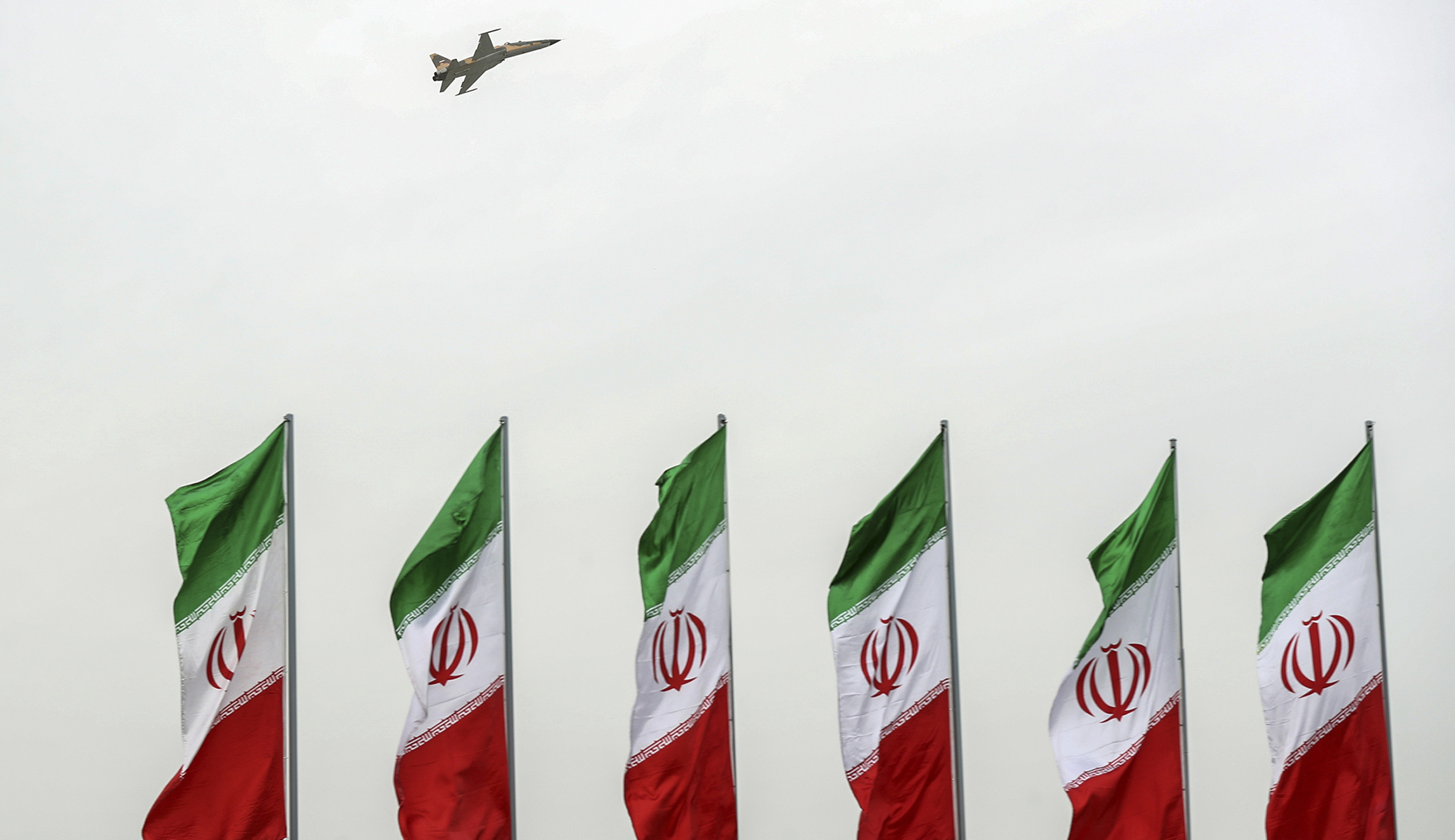
Don’t assume a looming war based on the New York Times’ report on military briefings to the White House on Iran.
Those briefings almost certainly represent standing contingency plans. Individually known as an operation plan or OPLAN, these plans are developed for potential security issues around the world. Refined as needed or directed, each OPLAN involves Pentagon war-planners and their area combatant command equivalents. The plans provide senior national security officials with understanding of how the Pentagon could deploy U.S. military forces during a crisis.
Recommended Stories


Consider, for example, if an Islamist coup somehow occurred in Pakistan or if China seized a Japanese island or if Iran fired a ballistic missile at a U.S. military base. In each case, the U.S. would need to act quickly. The OPLAN structure allows for that efficiency of effect: It provides a baseline of planning so that no one has to start from scratch in the event of a crisis.
The New York Times report indicates as much. Noting that the White House was briefed on a plan involving 120,000 U.S. forces being deployed to the Middle East, the Times thus confirmed that this wasn’t an invasion plan. After all, any invasion plan for Iran would necessarily require far greater numbers. It would also require a vast military logistics train.
So, what are we looking at in the 120,000-person plan?
It’s probably a theater contingency plan for Iran — a plan to provide the Pentagon’s regional Central Command with a force-level boost to deter and defeat Iranian external hostile action in the region. However, there is no evidence the plan has been activated.
On the contrary, President Trump continues to offer Iran an off-ramp.
