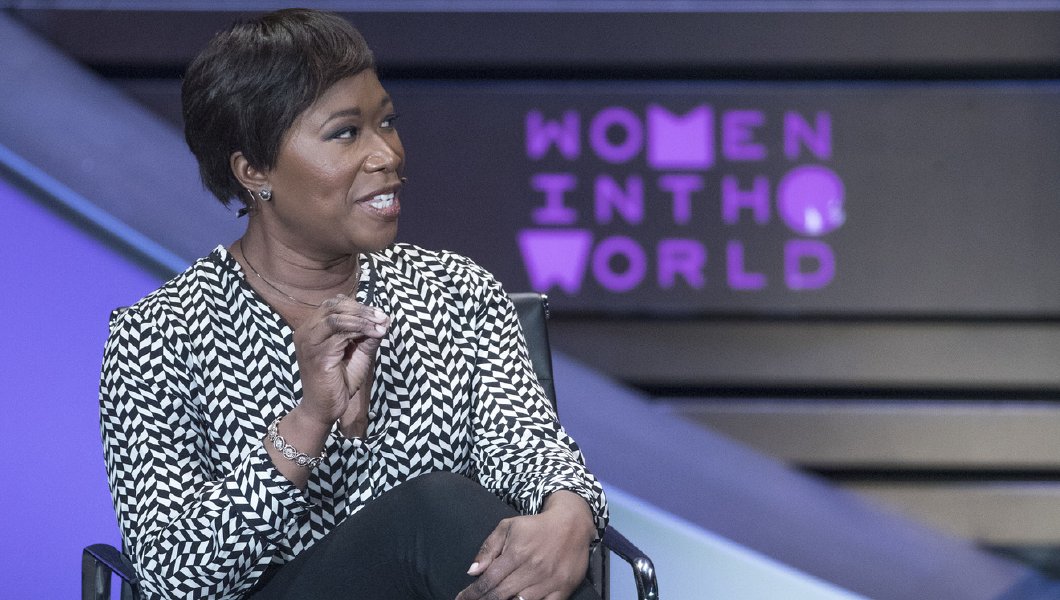
There was this idea after President Trump won in 2016 that the national press would take a step back to re-evaluate its blind spots.
For an industry that managed somehow to misunderstand everything about his rise to power, including the part where he was able to rally public opinion against newsrooms, a period of serious self-reflection seemed long overdue.
Recommended Stories
It’s May 1, 2018, and many in the press still don’t get it.
Since just last Friday, there have been at least three high-profile examples of members of the news media taking a hard pass on holding their own to account, which is the exact sort of swampy behavior Trump and his supporters rail against when they talk about this industry.
On Saturday, for example, MSNBC’s Joy Reid issued a nonapology apology after it became clear that she could no longer hide behind her absurd contention that a shadowy cabal of cyber criminals hacked her long-defunct personal blog to make it appear as if she once authored a handful of rather viciously anti-gay articles.
“I genuinely do not believe I wrote those hateful things because they are completely alien to me. But I can definitely understand based on things I have tweeted and have written in the past why some people don’t believe me,” she said this weekend. The problem isn’t that she once wrote “problematic” articles. It’s that she lied, doing possible damage to the good reputation of innocent and honest parties along the way.
Rather than hold Reid accountable for her obvious lie and her nonapology apology, many of her media peers are praising her weekend remarks. “Everyone of us will walk in [Reid’s] shoes some day [sic] – filled with remorse and regret over something we have said or done, but I predict that few will do so this eloquently,” said MSNBC’s Nicole Wallace. “Sending support and admiration to you and your amazing panel and team [Reid].”
MSNBC’s Rachael Maddow said elsewhere, “Brains, guts, heart and soul – beloved Joy Reid has always been a treasured and brilliant colleague, but I’ve never been prouder to work with her than I am now.”
“Big Love to [Reid] AND her brave panel for taking this issue head on and moving our understanding of LGBTQ issues forward,” added MSNBC’s Ali Velshi.
When it comes to holding public figures accountable for their actions, the courage of these self-styled brave truth-tellers extends only so far.
Then there’s the separate problem of the more than 60 female NBC staffers, including MSNBC’s Andrea Mitchell, Mika Brzezinski, Kelly O’Donnell, Stephanie Ruhle, and Maddow, who have circled the wagons for retired anchorman Tom Brokaw, who stands accused of multiple acts of sexual misconduct.
“Tom has treated each of us with fairness and respect,” they said in a statement. “He has given each of us opportunities for advancement and championed our successes throughout our careers.”
This isn’t difficult: That Brokaw has behaved honorably some of the time does not also mean he has behaved honorably all of the time. Also, that’s some A-plus work, asking the hard questions of a well-known and powerful media figure. Way to speak truth to power, folks.
Lastly, there’s the issue of the New York Times refusing to explain the sudden resignation this week of metro editor Wendell Jamieson. All we know is that he is out for some “mistakes.” The Times’ insistence on discretion is curious, considering it has zero problems whatsoever reporting on abrupt resignations and firings at competing news organizations, including Vice Media and Fox News. The Times even won a Pulitzer this month for its work digging into the many reasons for Bill O’Reilly’s eventual ouster from his cable news perch.
I guess it’s a bit harder when it’s your own backyard.
These examples are far worse than hypocritical or annoying. They lend credence to the allegations that the major news media are neither trustworthy nor fair.
It’s a bit rich to say we ask the tough questions, no matter how uncomfortable, only to tell everyone it’s time to “move on” when the story involves a respected media colleague. No one is going to believe or trust us until we address the problem of our selective demands for accountability.
