

I posed this question to the Cancun taxicab driver who was giving me a brief tour of the old Mexican town a few years ago: “If your dreams come true, where will you be working next year?” The convention I was attending had taken an afternoon break, and I was glad to get a bit of fresh air while learning some local history. “My dream,” he said, “is to get a minimum wage job in the United States. If that happens, I’ll be highest paid member of my family.”
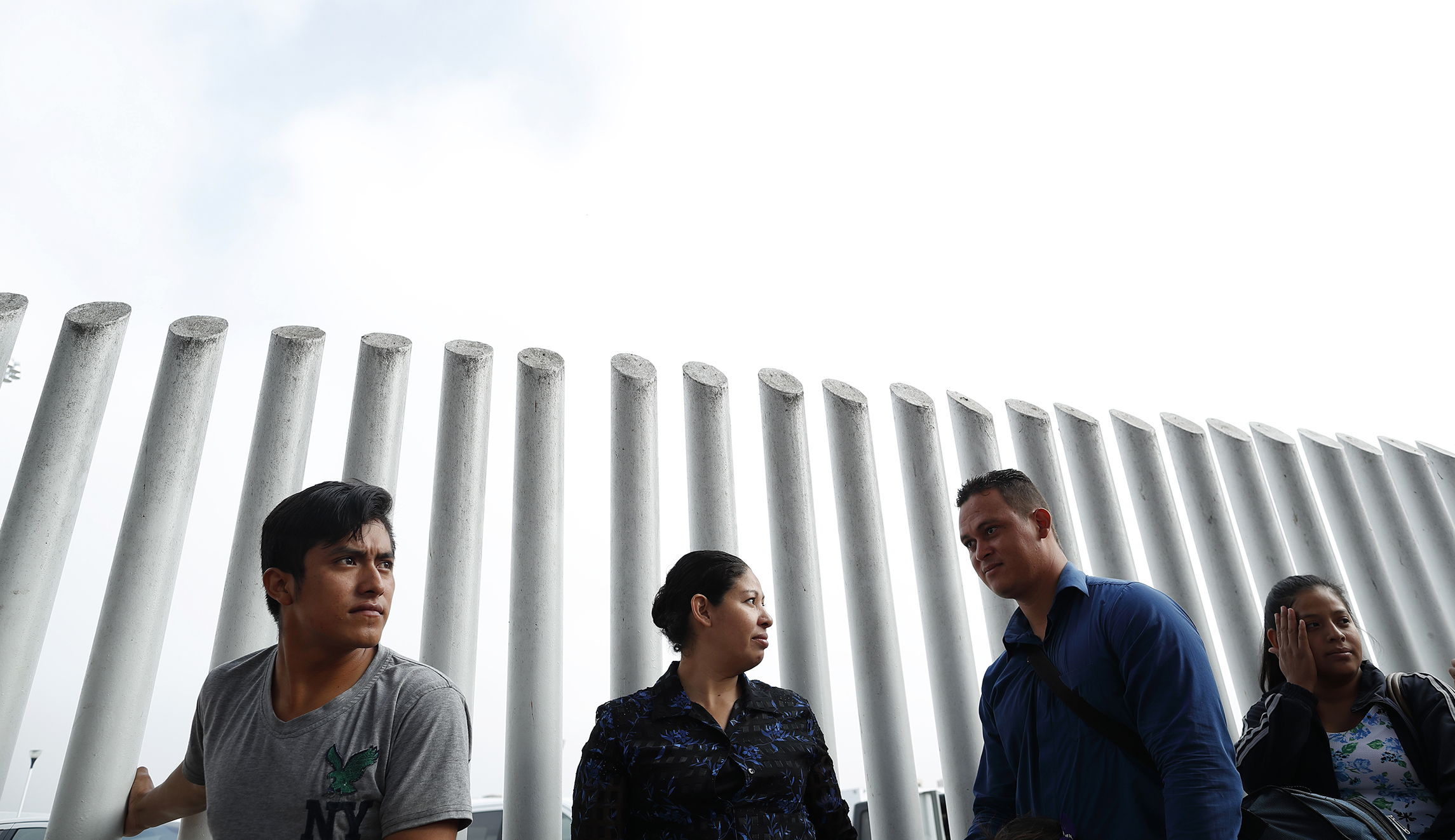
I thought about that Cancun conversation recently while reading about some of the 5,000 people who had made their way from Central America through Mexico to the U.S. border, only to be greeted by barbed wire, military personnel, and for some desperate ones, tear gas. Members of this caravan, as we call it, are also looking for a better life, a life that beckons from the U.S. side of the line.
Recommended Stories


Each asylum seeker has a personal story. They and the thousands more already waiting at the end of the line may be dreaming of what it could be like to earn $7.25 an hour in a secure place with the promise of more.
Many American workers, meanwhile, worry about competition for jobs. That’s understandable and surely valid in some specific cases. But there were 7 million unfilled U.S. jobs in September, according to the Bureau of Labor Statistics, even more openings than people unemployed.
I can’t help but compare the words of the Cancun cab driver with a concern I hear constantly from business people and government officials in my travels: their inability to find entry-level workers.
In an effort to fill some of those 7 million job openings, employers have taken some very creative actions to entice more people to work. In some cases, past criminal records that would have disqualified a person from employment are being reconsidered and set aside. In other cases, individuals who test positively for drugs are welcomed to the payroll by organizations that, in the past, would have disregarded them. High schools are expanding cooperative education programs that place students in high-opportunity vocations, and apprenticeship programs are flourishing across some of the 50 states.
In spite of this effort, we have willing employers struggling to find labor on one side of the border, and willing, asylum-seeking workers on the other side.
Placed in an analytical framework, that’s called a disrupted labor market — one where U.S. wages, in most cases well above the minimum wage, would apparently attract qualified workers to fill the jobs were it not for one very big obstacle.
Of course, not each and every asylum seeker is qualified. But if some respected organization screened members of the caravan, gauged their skills or criminal histories, and granted certification to those who are job-ready, a large number of qualified job seekers would soon emerge.
What if, instead of stringing more barbed wire and closing the door more tightly, we modified our immigration laws to allow for employer and community sponsorship for temporary workers? What if local chambers of commerce, their member organizations, and private employment firms were allowed to recruit at the border and to offer jobs and migration assistance for vetted and qualified workers — the same kind of assistance now routinely offered to people already living in the U.S.?
Would this be better than what we have now?
Bruce Yandle is a contributor to the Washington Examiner’s Beltway Confidential blog. He is a distinguished adjunct fellow with the Mercatus Center at George Mason University and dean emeritus of the Clemson University College of Business & Behavioral Science. He developed the “Bootleggers and Baptists” political model.
