

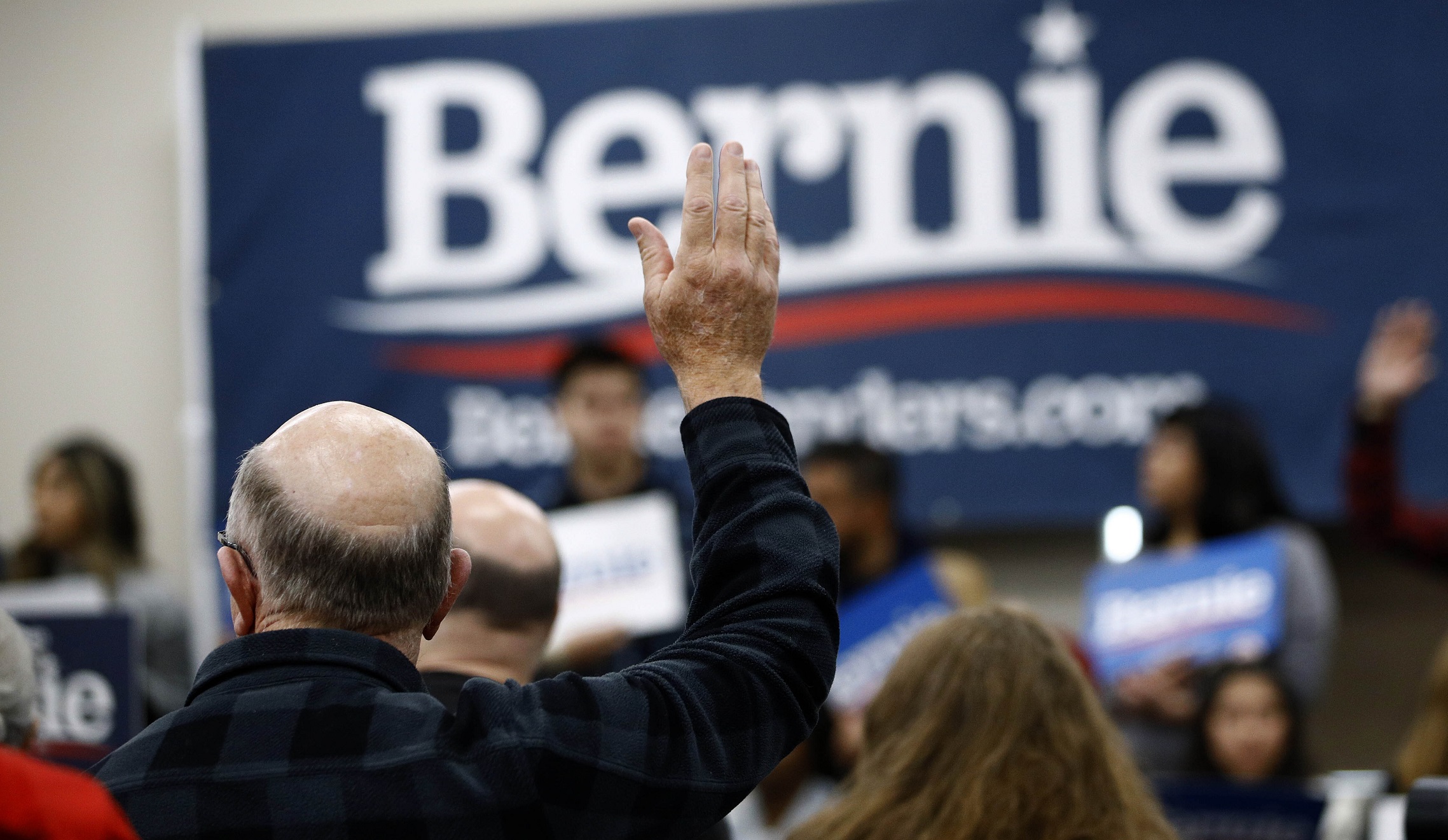
I would say Bernie Sanders can’t beat President Trump in 2020. But seeing as how Trump has already proved anything is possible in politics, let’s just say it’s very unlikely.
Others disagree. Vox’s Matt Yglesias argued on Wednesday that Sanders can unify the Democratic Party and beat Trump. It’s a debate worthy of consideration. Were Elizabeth Warren’s progressive supporters to unify behind Sanders, he would be the easy front-runner for the Democratic mantle.
Recommended Stories


But let’s imagine we’re now in the summer and Sanders has just secured the delegates he needs for the nomination. Suddenly, the campaign objective shifts from appealing to the very small number of Democratic loyalists who vote in primaries to securing independents and disaffected Republicans.
First issue: How does Sanders sell his plans to increase spending by tens of trillions of dollars a year? Sanders says he’ll just get the rich to pay more. But that claim belies the fact that America’s income tax system is already one of the most progressive. And Sanders necessarily assumes that the rich will keep working and managing their affairs in the same way even if they face newly punitive tax rates on their incomes and estates. In the end, math means Sanders will either have to abandon the majority of his spending commitments or raise taxes sharply on the middle class. Thus follow the obvious Trump campaign ads framing Sanders as the Titanic of fiscal credibility.
This concern bears even more relevance if the economy remains as strong as it is at present. After all, that economic confidence will give Trump a reelection narrative along the lines of “you might not like everything I do, or most of what I say, but just look at the economy. You really want to trust that to a socialist?” A strong economy would also allow Trump to portray Sanders pledge to hike corporate taxes as a recipe for exporting American jobs abroad.
Social policy poses other challenges for Sanders. Although he is adored on the Left for his longstanding credibility as an ardent voice in favor of socialized medicine, I suspect this would hurt rather than help him in a general election. Yes, socialized medicine can be provided at a lower per capita cost than private healthcare. So in effect, Americans would save money in a socialized medical system — at least in the beginning.
But American aversion to “Medicare for all” is rooted in another substantive truth. Namely, the very well-justified suspicion that a government-run healthcare system means longer waits for less personalized care of substantially lower quality, along with far less innovation in new treatments. And let’s see how Sanders fares telling centrist union workers — those so instrumental to securing Trump’s 2016 election — that he’s going to shred their health plans.
Want more?
Well, for one, Sanders’s open desire to destroy the fossil fuel industry is also unlikely to play well with voters in energy-economy states or with voters across the nation who benefit from American energy independence and low energy prices.
Sanders would also have to grapple with voter opinions on his revolutionary foreign policy. His Russia policy makes Trump look like Vladimir Putin’s biggest critic. The senator from Vermont wants to decrease defense spending dramatically and pursue diplomatic avenues of counterterrorism.
Yglesias references polls which appear to support Sanders here, but a second look indicates most voters want a more robust counterterrorism policy than the Democrat offers.
These things might sound good to some Democrats, but not all. Nor are they likely to find much favor with centrists. The simple truth, as measured by a relative and longstanding peace from global war, by ever more goods at ever more affordable prices, is that the U.S.-led liberal international order has made American lives and those of global citizens much safer, wealthier, and better. To challenge that premise is a dangerous gambit.
Note the example of Jeremy Corbyn in Britain, who shares Sanders’s worldview. His foreign policy views helped drive voters into the arms of the Conservative Party, securing Prime Minister Boris Johnson a nearly unprecedented electoral victory last month.
As I say, perhaps I’m wrong. Perhaps Sanders would capture the public imagination as the Democratic heir to Trump’s 2016 populism. But I suspect not. In the end, I suspect Sanders’s nomination would secure a Trump landslide. Not because voters love Trump, but because the more voters learned about Sanders’s socialism, the more they’d oppose him.
