
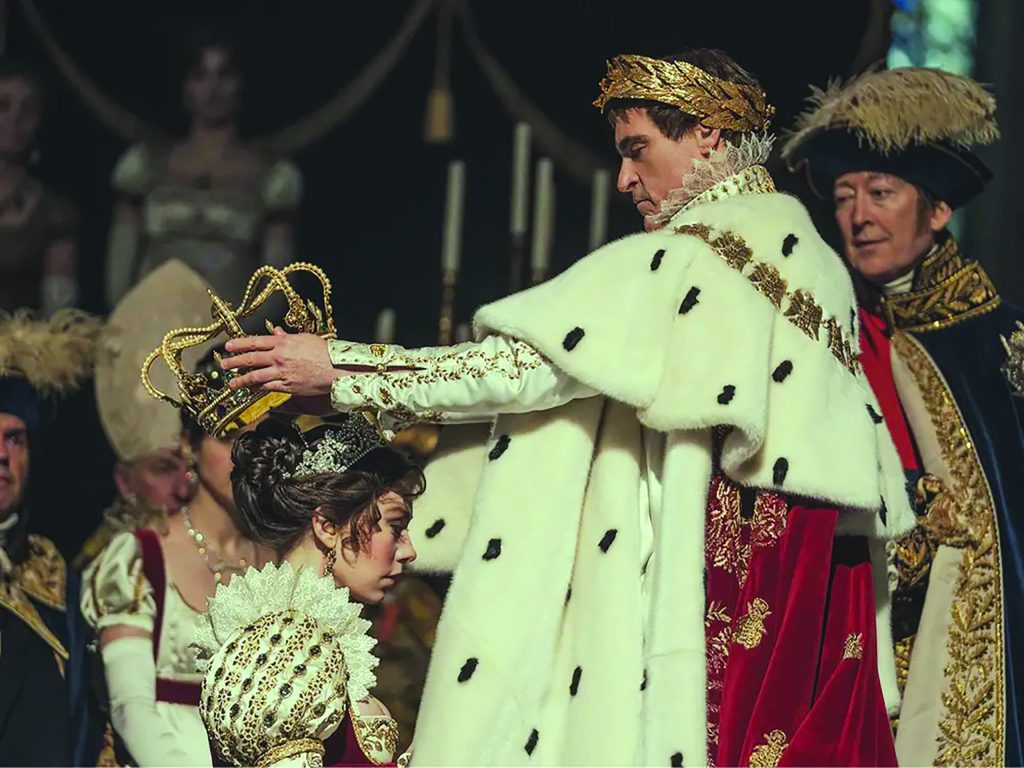
Defending his Napoleon from grumbles caused by early rumors of historical inaccuracy, director Ridley Scott snapped that “when I have issues with historians, I ask: ‘Excuse me, mate, were you there? No? Well, shut the f*** up then.’” Scott had a point, or so it seemed. This is the man who made a movie about a gladiator whose death in the arena restores the Roman Republic. And in the words of Aristotle, “σπουδαιότερον ποίησις ἱστορίας ἐστίν” — “it slapped” (loosely translated). Not only is it always right first and foremost to judge a work of art on its own terms, but also Scott in particular has earned the benefit of the doubt many times over. So I set out to watch Napoleon not to carp about whether he had really fired cannon at the Pyramids during his invasion of Egypt but to see if it was good.
I regret to report it is not good. It is bad. It is bad bad.
Real journalism.Trusted by millions.
Unlimited access to in-depth reporting, expert analysis, and the stories that shape our country.
Already a member? Log in