
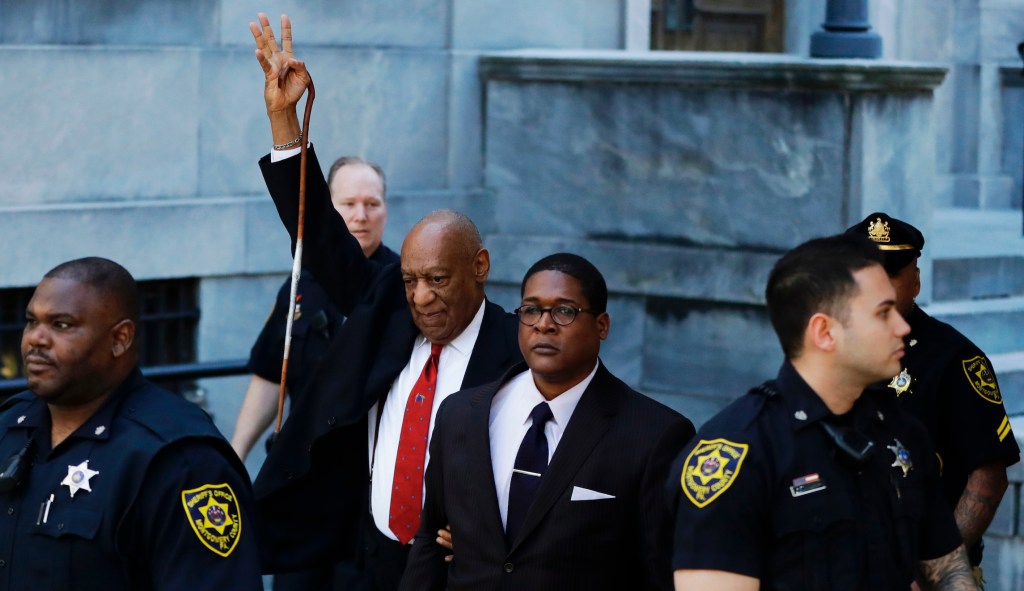
The conclusion of Bill Cosby’s long-running assault case is not so much vindication for Cosby as it is a vindication of the right to due process. More than a decade ago, a district attorney investigating one of the many sexual assault claims against Cosby determined that there was insufficient evidence to prosecute him. But that district attorney had an alternative to criminal prosecution. He believed that Cosby’s testimony could be compelled in the accuser’s civil suit if there was no chance such testimony would run afoul of Cosby’s Fifth Amendment privilege against self-incrimination. So he made a public announcement that the case against Cosby was closed.
Cosby’s accuser filed her lawsuit, and Cosby was then forced to give testimony. After all, he had been publicly assured that the criminal case was resolved. In the course of that testimony, he confessed to having, in the past, provided sedative drugs to women he wanted to have sex with. Years later, that inculpatory testimony would then be used by a new district attorney, who successfully brought criminal assault charges against Cosby.
Real journalism.Trusted by millions.
Unlimited access to in-depth reporting, expert analysis, and the stories that shape our country.
Already a member? Log in