

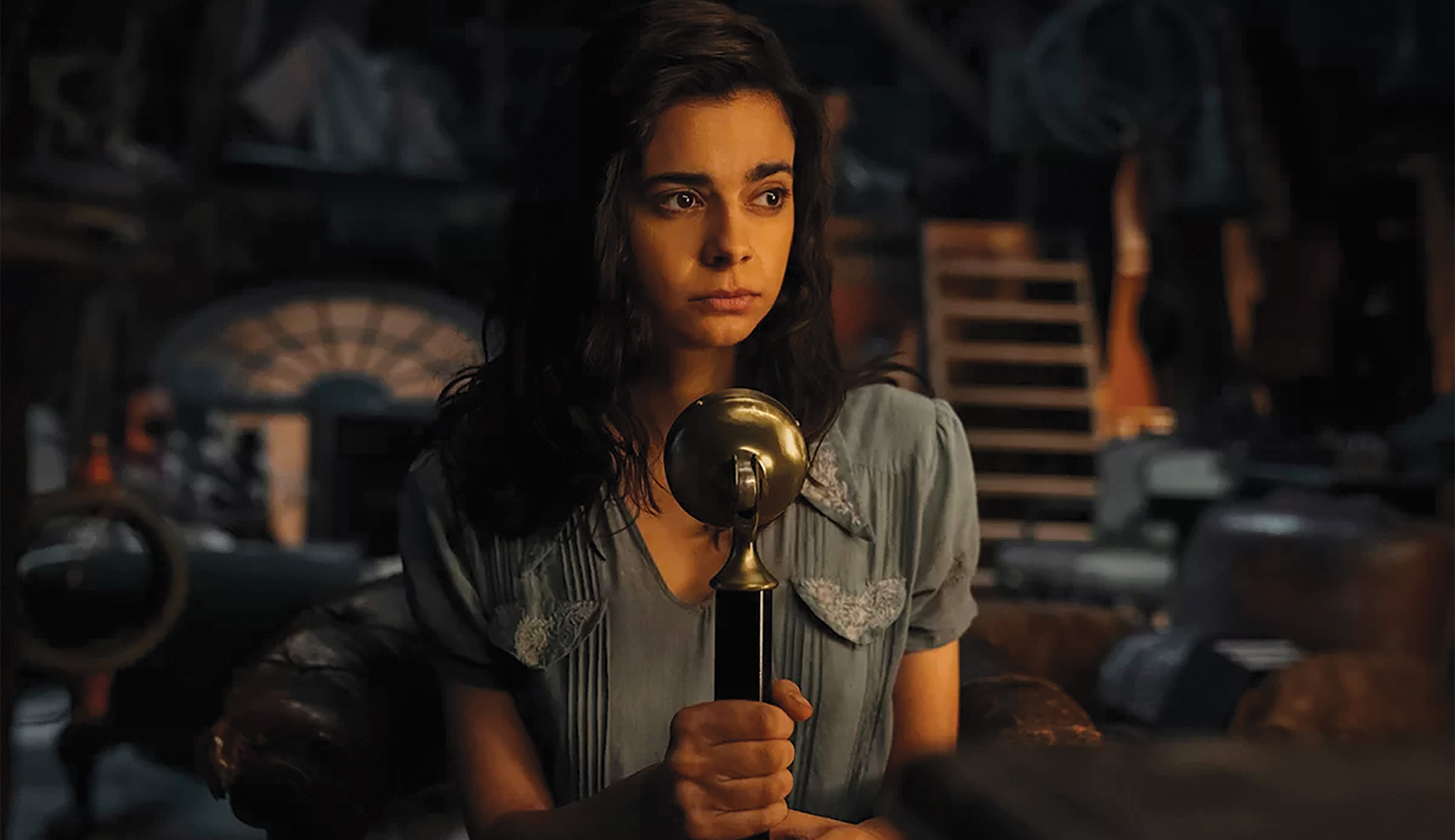
The jokey headlines write themselves: “A Little More Light, Please,” “Stumbling in the Darkness,” and “All the Bad Television We Cannot Unsee.” I will refrain, with regret, from adding to the list and state merely that Netflix’s adaptation of Anthony Doerr’s 2014 novel is a clumsy squandering of serious promise. One more, you say? Oh, all right: “All the Potential We Cannot Realize.”
Like its Pulitzer-winning source material, All the Light We Cannot See is set in wartime France, in the port city of Saint-Malo. There, on the top floor of an otherwise abandoned house, Parisian refugee Marie-Laure LeBlanc (Aria Mia Loberti) reads Jules Verne into a shortwave radio while awaiting the return of her missing father and uncle. Because the 16-year-old has been blind since childhood, her days are necessarily circumscribed: Nazis prowl the streets, and American bombs have begun to fall. Yet Marie’s transmissions are about more than simply passing the time. Read in a particular order, Verne’s pages provide aid to the French Resistance. “You are sending messages in code,” one character tells Marie, “that will help to win the war.”
Stay informed.Stay ahead.
Join Washington Examiner for unlimited access to the news, analysis, and commentary that matter most.
Already a member? Log in
