

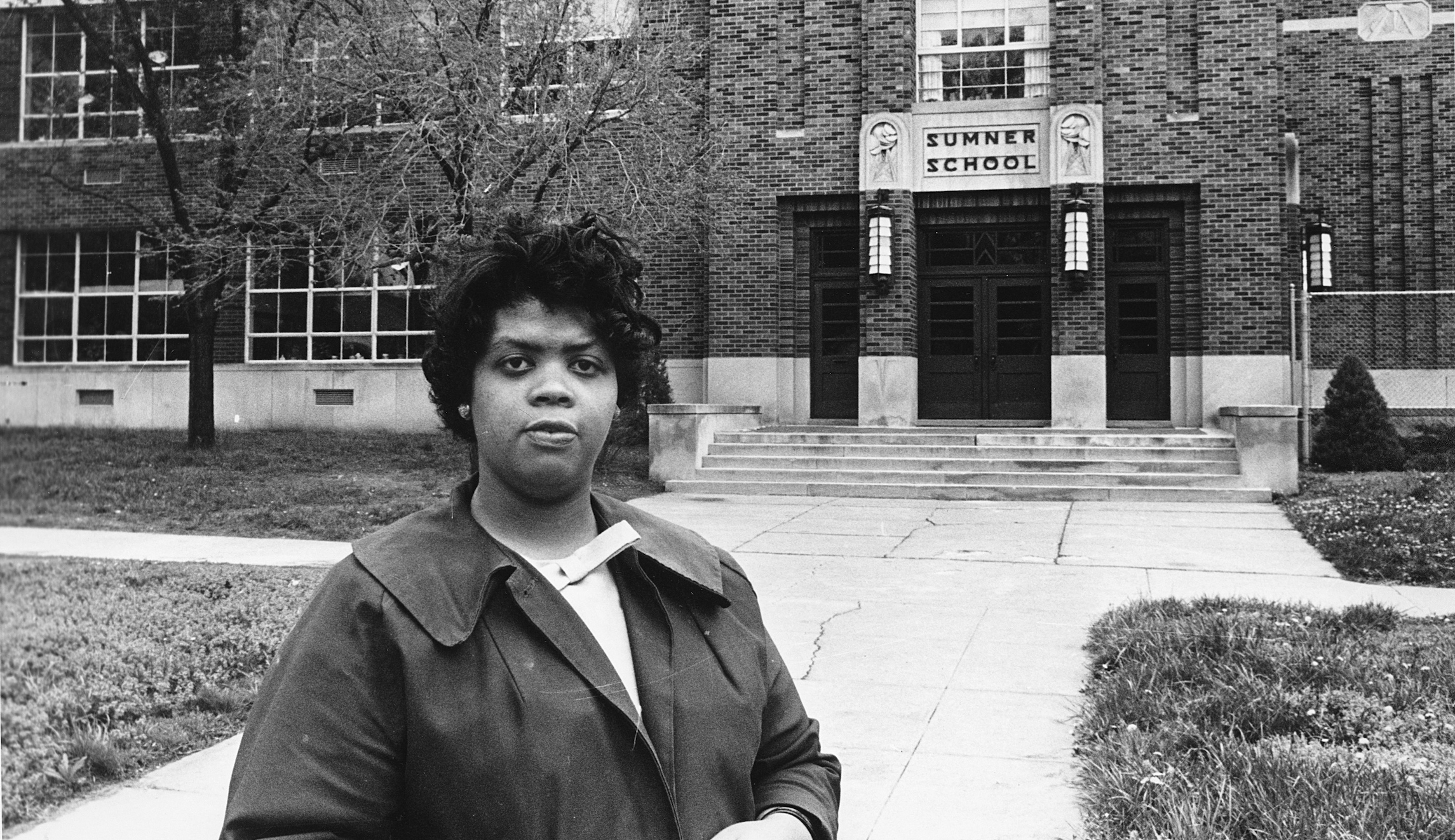


On this day in 1954, the Supreme Court
issued
a unanimous decision that would ring through the decades. Brown v. Board of Education is a household name, deeply ingrained in the popular conscience as a turning point in the
civil rights movement
and a death blow to
racial segregation.
But many forget that Brown was about much more than desegregation. It was about
school choice
as a civil right: whether Oliver and Leola Brown were entitled to send their daughter to a school that met the needs of their family. The Browns didn’t come to court because all-black schools couldn’t adequately educate their daughter. It wasn’t institutional racism per se, but a basic parental concern for little Linda’s commute that set the stage for one of the most famous Supreme Court decisions in U.S. history.
HOW THE SUPREME COURT COULD BE FORCED TO WADE INTO BIDEN DEBT CEILING FIGHT
Matt Halvorson, the founder of the Rise Up for Students blog,
explains
why. Contrary to “the popular narrative,” the Browns didn’t think the local all-black school in any way ill-served their daughter. Leola Brown actually attended that same school, saying of the experience, “We got a fantastic education there.” The problem for little Linda was getting there — her mother
recalled how
“[s]he had to go five blocks … through the [dangerous] railroad yard, and then cross the busy Kansas Avenue,” only then to take a bus. Concerned for his daughter’s safety, Oliver Brown attempted to enroll Linda at the local all-white elementary, a mere four blocks from the family home. It was only after the school board denied Linda admission that her father would enlist the NAACP to file suit.
Oliver and Leola Brown
believed
“they should be able to choose the school they felt was best for their daughter,” not some self-interested school board, and this is fundamentally the same proposition that motivates the modern school choice movement.
The school choice movement now
represents
a nationwide drive to empower parents to choose the best learning experience for their sons and daughters, whether that be public school, private school, charter school, or home school. The goal is to give students and their families the ability to reject public schools that are unsafe or ill-fit for their unique situation. Just as their frustration at not being able to choose a safe and convenient learning environment made Oliver and Leola angry enough to sue, it is a similar sense of parental concern that motivates the drive for school choice. Like today’s parents, the Browns wanted some semblance of control over where their daughter went to school.
Unfortunately, the Supreme Court’s decision in Brown v. Board of Education was markedly unresponsive to the original concerns of the Brown family. Chief Justice Earl Warren would ultimately
rest
the constitutional conclusion on the notion that racially segregated schools were “inherently unequal,” “generat[ing] a feeling of inferiority [in Black children] as to their status in the community.” Though consonant with the larger mission of the NAACP, this holding ignored the original impetus for the Browns’ lawsuit.
But even if the court missed the point, we shouldn’t. As the drive for school choice gains momentum in statehouses across the country, we would do well to remember its origins not as some abstract social policy, but as a civil right. The school choice movement carries on the legacy of Brown v. Board of Education, and on the anniversary of that victory for parental rights, we owe thanks to Oliver and Leola Brown.
CLICK HERE TO READ MORE FROM RESTORING AMERICA
Charles Brandt is a J.D. candidate at the George Washington University Law School and a writer with Young Voices.
