

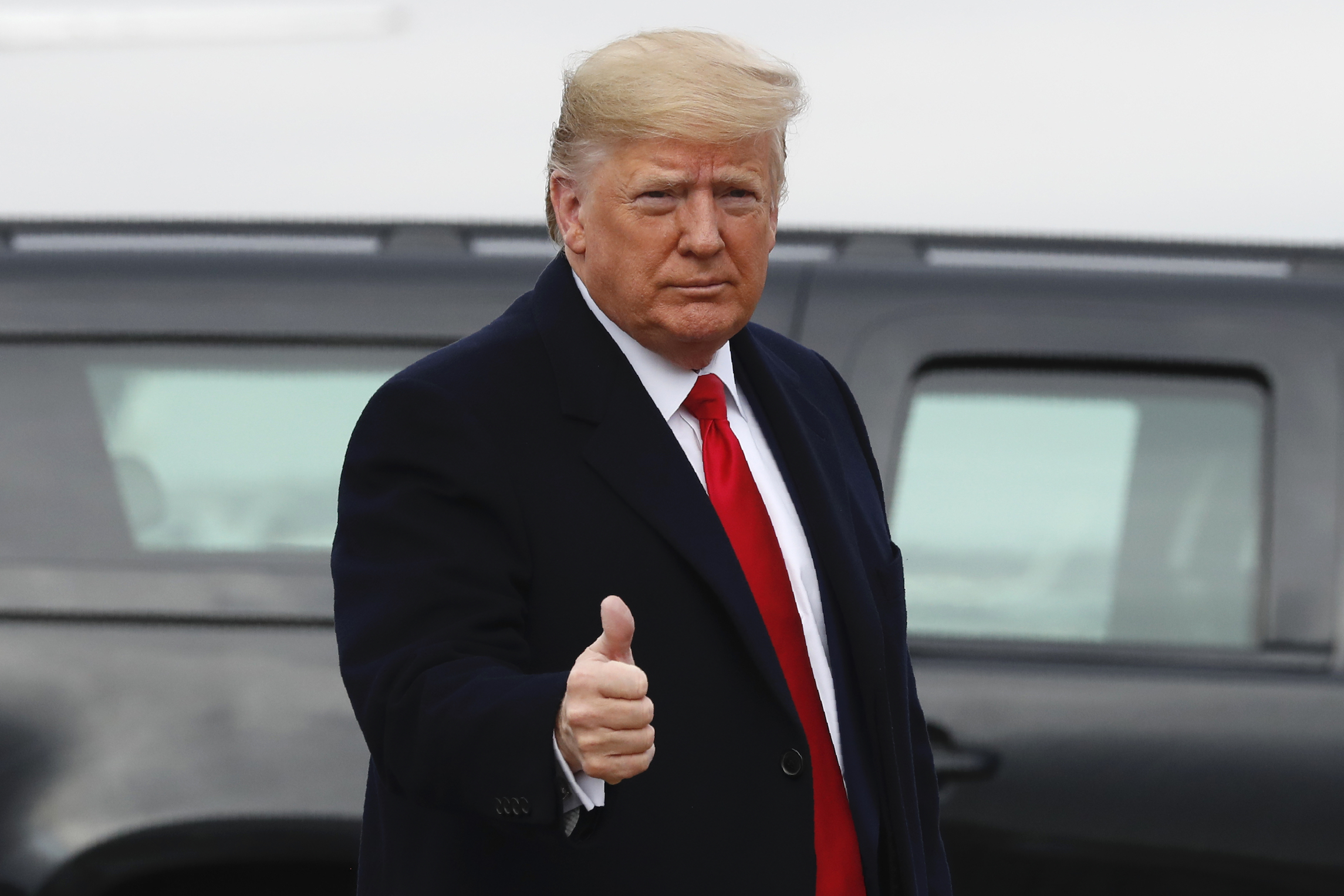
On the weekend before the 2012 election, analyst Henry Olsen — then of the American Enterprise Institute; now of the Ethics and Public Policy Center — depressed conservatives everywhere with the prediction that on the Tuesday following, Mitt Romney would narrowly lose the presidential election.
Romney would lose, he argued, because he had failed to convince the working-class whites of the country, whose standards of living had declined during previous decades, that he cared about them and their woes. Olsen was right, and he and Republicans were excited and thrilled four years later when longtime celebrity and neophyte candidate Donald Trump won the presidency in the Electoral College by peeling away states, cities and neighborhoods in the suffering blue-collar regions of the Midwest that Republicans had not won in years.
Recommended Stories



Once Trump had won, Olsen wrote a book called “The Working Class Republican,” with a picture on the cover of our 40th president. He expressed the hope that Trump, once in office, would follow the lead of former President Ronald Reagan, who while a conservative in most other ways followed the lead of former President Franklin D. Roosevelt in finding ways large and small to help blue collar workers. Those workers rewarded both men, serving as the core of their great coalitions, and that helped them to landslide re-elections and fame.
Olsen’s hopes brought him some flattering blurbs from fellow think-tankers, but they failed to work out in real life. One reason was that Reagan and Roosevelt were genial people who didn’t inveigh, didn’t tweet, and whose rallies lacked violence. Another was that Reagan and Roosevelt led international legions against tyrannical regimes that enslaved and killed millions, whereas Trump disdained coalitions, showed no care for freedom, and got along well with tyrants themselves.
But another, and more political reason, is that Reagan and FDR were masterful builders of great coalitions, who sought and won votes from all kinds of states and from all kinds of people. They spread their nets as wide as was possible, trying to get those who voted against them to vote for them next time, and some of these voters did just that.
Trump, on the other hand, has tried something different: attacking people who were on his side for small points of difference, and whipping the signs of disdain among those who opposed him into full-throated and murderous rage. A note of grace after his surprise election would have shocked the whole country into seeing him differently, and made the enraged and often obscene protests that came after look silly.
But he did not follow the example of Thomas Jefferson, who after one of the nastiest campaigns in history said in his inaugural, “We are all Democrats, we are all Federalists” and left office eight years later with the opposite party extinct. Instead, Trump delivered an angry oration described correctly by former President George W. Bush as filled with “weird s—t.”
While Trump was venting, Democrats all over the country were in full battle mode by the end of November, thinking already of 2018 and 2020, recruiting the women and veterans (and sometimes the women who also were veterans) and other candidates who took forty House seats away from Trump’s party in the most recent midterms. They may next take the presidency from him two years from now.
Trump was hailed two years ago for attaching the working class to the Republican Party, which was an achievement. But if in the course of this he drives out all others, he will have done them no favor at all.
