

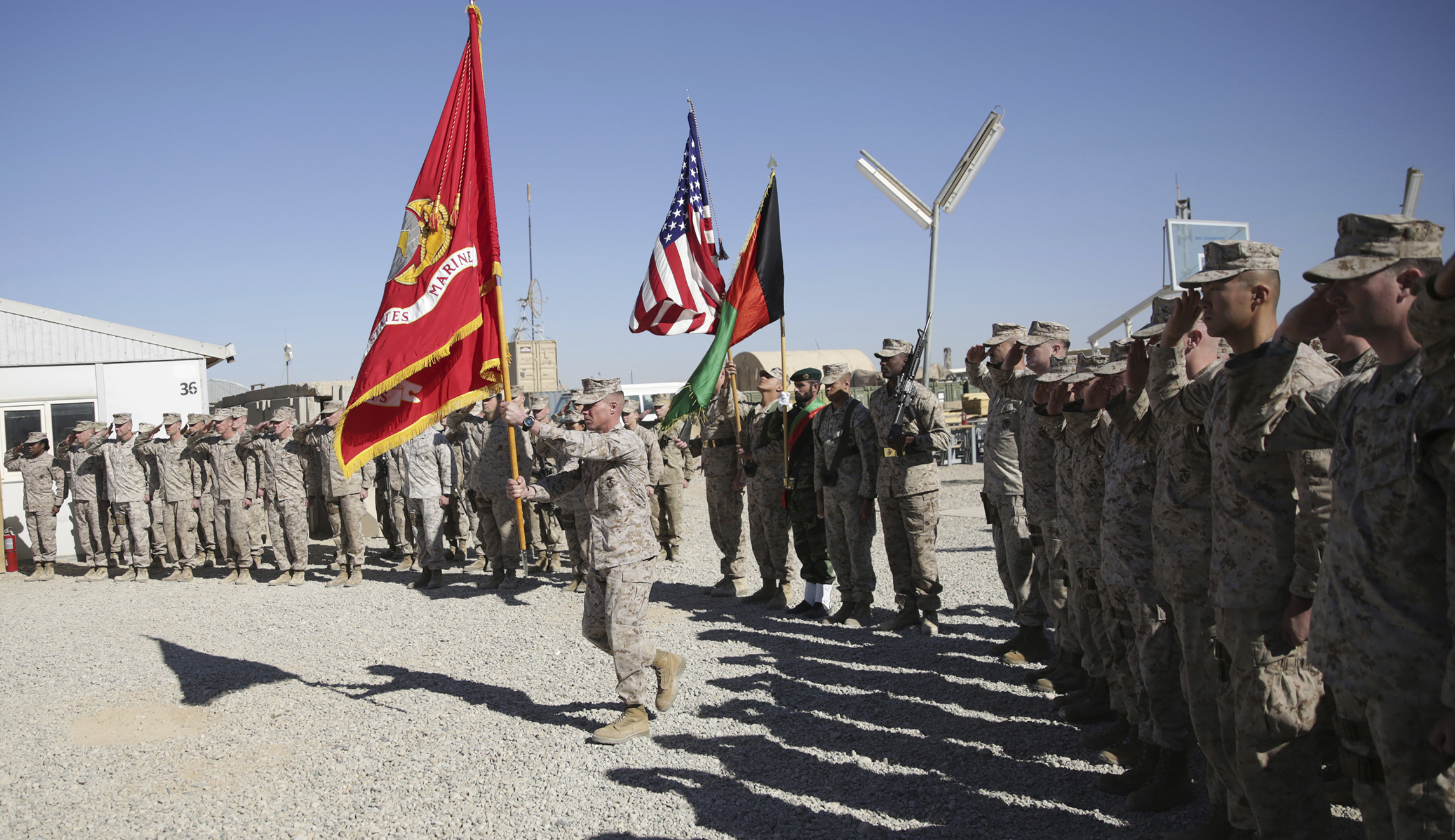
If you thought President Trump’s decision to pull all U.S. ground forces from Syria came as a shock to many in the Beltway, reports that the president has ordered the Pentagon to begin a planned drawdown of 7,000 American soldiers from Afghanistan was a gut check to the bipartisan foreign policy establishment. There is a lot of noise in Washington right now, and Trump is undoubtedly under significant pressure from status quo politicians and commentators to change his mind.
But Trump ought to cover his ears, ignore the loud protests, and stick with his plan.
Recommended Stories


The public are not only exhausted with America’s misadventure in Afghanistan, but they also understand a critical point most of the swamp doesn’t: maintaining U.S. national security and executing a realistic counterterrorism strategy is not synonymous with maintaining an endless military campaign on Afghan soil.
U.S. policy in Afghanistan over the last decade and a half has relied on the flawed premise that U.S. security is inextricably tied to Afghanistan’s domestic tranquility. The logic was an appealing one for those in Washington who advocated for more, rather than less, U.S. military investment. The “we have to fight the terrorists over there so we don’t fight them over here” slogan is a political talking point meant to scare the public into perpetually riding the Afghanistan merry-go-round.
Defending the U.S. homeland from terrorist attacks does not require placing a sizable U.S. troop presence on the ground in perpetuity. If this were the case, Washington would need to deploy troops in every part of the world that terrorists live, from the tribal badlands of Pakistan to the apartment blocks outside Paris — a ridiculous and counterproductive premise that would sap America’s wealth, rent out the U.S. military to countries unable or unwilling to take care of their own security, and further deteriorate the military’s current readiness problems. That no terrorist attack against the homeland has emanated from Afghanistan has less to do with how many American soldiers are in the country as it does to the incredible improvements Washington has made with respect to its intelligence gathering, reconnaissance capability, and law enforcement coordination.
To say America’s mission in Afghanistan has been a metaphor for financial insolvency and strategic misdirection would be underestimating the situation. After all, what have trillions of dollars in U.S. taxpayer money and the sacrifices of tens of thousands of American soldiers really gotten us in Afghanistan?
According to Gen. Joe Dunford, the chairman of the Joint Chiefs of Staff, not much.
During a Senate Armed Services Committee hearing on Dec. 4, Dunford admitted that the war in Afghanistan remained a “stalemate,” the same term he used a year earlier to describe the situation. The public has every right to ask their political and military leaders to explain why more of the same in Afghanistan would produce better results. Trump is well within his rights to question those inside and outside his administration over what more time, troops, and resources would actually accomplish.
Washington may be up in arms about a potential troop drawdown from Afghanistan, but the president should know that a majority of the public, including nearly 70 percent of military veterans, agree that it’s time for America’s brave young men and women to return home. Trump should keep in mind one more thing: Those chirping in his ear for a longer U.S. military presence are some of the same people who believed Afghanistan could be transformed into a Central Asian version of Germany, where democracy flourishes, terrorism is eliminated, and Afghan politicians elevate the interests of their constituents over the interests of their wallets and career.
Next year, Afghanistan will have been at war for 40 consecutive years. As depressing and cynical as it may sound, Afghanistan could very well be in some type of armed conflict for another 40 years. It is not the U.S. military’s job to pacify it, nor does Washington have the power to pull off this miracle — only Afghanistan’s power players and Kabul’s neighbors can do it.
In an ideal world, Washington would have pulled out of Afghanistan in 2002, when Osama bin Laden’s al Qaeda organization was bludgeoned to smithereens and Taliban fighters were desperately throwing up their hands in surrender — or more recently in 2011, when U.S. Special Forces eliminated bin Laden once and for all.
After 17 years, now is the time for our troops to come home. Better late than never.
Daniel DePetris (@DanDePetris) is a contributor to the Washington Examiner’s Beltway Confidential blog. He is a fellow at Defense Priorities.
