

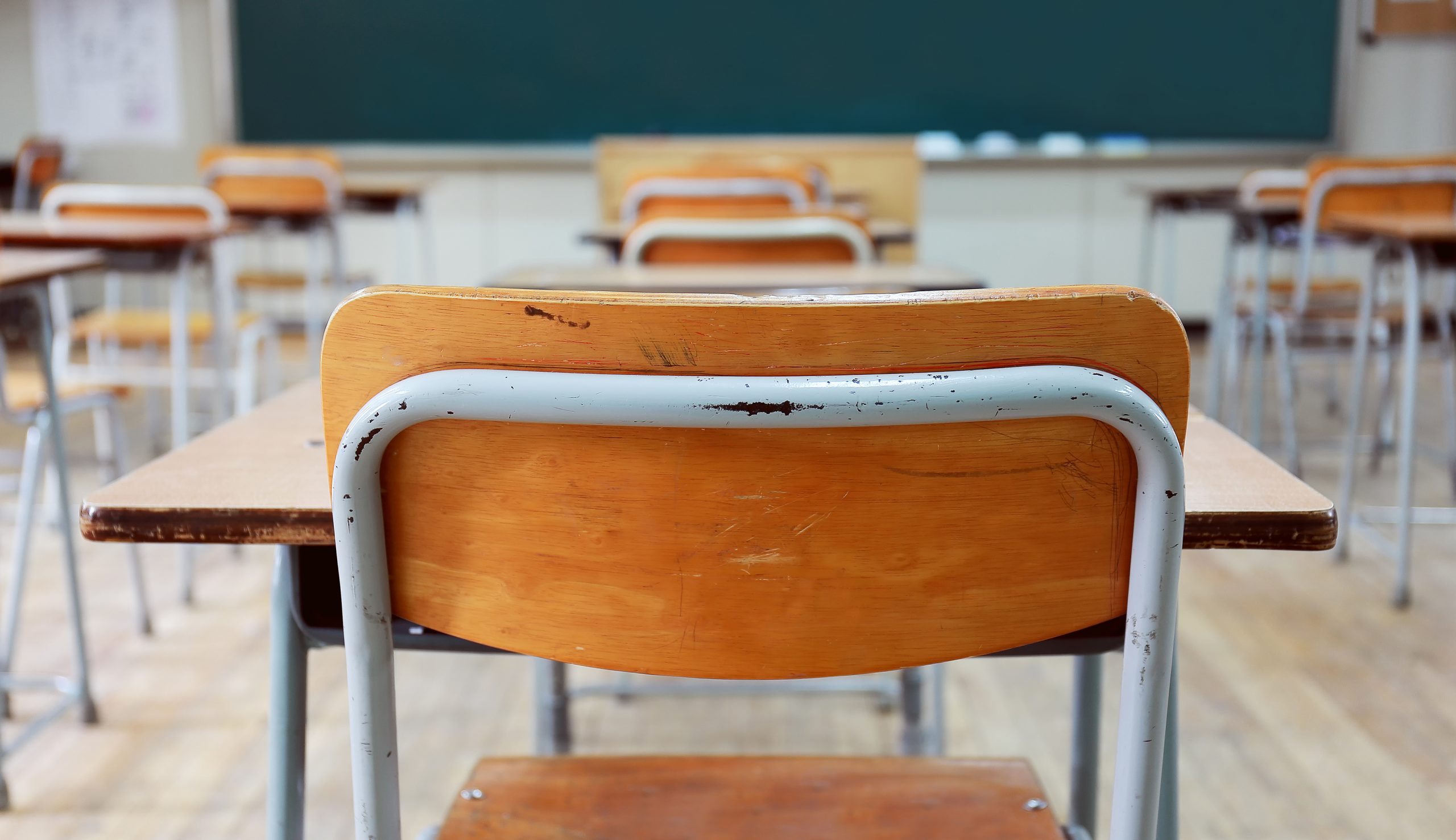
When teachers unions declare that they are being “sent to the slaughter” by being told to go to school (and when politicians funded and endorsed by these teachers unions acquiesce, to the dismay of parents), it’s a safe bet that school closures are not based on science, but on politics and hysteria.
Right now, millions of students and their parents are suffering because their children have to go to school on Zoom. Remote schooling isn’t homeschooling, and it isn’t almost like real schooling. It is a pale imitation of in-person schooling. Millions of children these days are expected to spend 8 a.m. to 3 p.m. mostly staring at a screen, without friends and without in-person interaction with teachers. Hundreds of thousands are skipping out on much of this.
Recommended Stories


The students who spend their days in front of screens largely hate it. Multiple times a week, I talk to parents who tell me how remote schooling in the spring sapped their children’s spirits. Those lucky enough to have their children learning in person say that they see their children spring back to life now that school is open.
“I used to like school, but now I hate it, even though my teacher is really nice,” John Brody, a student in Northern Virginia, testified at the local school board meeting earlier this week. “I feel like I’m not learning as much. Every day I ask, ‘When do I get to go back to school?’”
“I have a brother in” special education courses, one eighth grader testified. “I watch him struggle every day and cry. He can’t finish his work alone, so I have to go, and I have to leave my time and help him. My mom works, and it’s a struggle.”
Remote learning is harming children. The American Academy of Pediatrics has said that school districts need to figure out how to get children back into school physically. “Schools are fundamental to child and adolescent development and well-being.”
If you suggest sending children back to school, a lot of people really freak out. They say you are trying to kill the students and teachers. But a reasoned approach suggests something quite different.
First off, saying “reopen schools” doesn’t mean “return to normal.” Some schools don’t have room for all their pupils, and so, they can’t fully reopen. Masks are a good idea. The schools I know of that are open have lane-markings in the hallway, upwards stairwells and downward stairwells, cohorts/pods, as much outdoor instruction as possible, no sharing of Play-Doh or anything similar, and countless other precautions.
And after a month, the evidence suggests that school (particularly with precautions) isn’t that dangerous.
The most exhaustive study to date of U.S. schools finds a student infection rate of 0.22% — about 1 in 500 students attending in-person (full-time or hybrid) schools has been confirmed or suspected positive in about one month of schooling. Most of those are suspected (not confirmed) cases.
When it comes to staff, it’s 0.15% (1 in 666) confirmed positive and another 0.35% suspected positive.
These data will change as the school year advances, but they conform to what other studies have found and experts have suspected. People in the United Kingdom found that after a month of school, almost no students had contracted the coronavirus at school. What infections they saw had been mostly teacher-to-teacher.
Science magazine published an op-ed earlier this week by British child-health experts, concluding that “children and adolescents are at much lower risk from symptomatic coronavirus disease” and “relative to their risk of contracting disease, children and adolescents have been disproportionately affected by lockdown measures” — especially school closures.
“We’re not seeing schools as crucibles for onward transmission,” Sara Johnson, an associate professor of pediatrics at the Johns Hopkins University School of Medicine, told the Washington Post. “It’s reasonable to say that it looks promising at this point.”
The effort to justify school closures has, tellingly, relied on misrepresentations of the facts. Media outlets led readers to believe that teachers were dying from the coronavirus because of teaching when those teachers had been infected before school ever began.
The other actions by the officials closing schools also suggest they aren’t motivated by fear of contagion, but by less noble motives. Los Angeles Health Director Barbara Ferrer said she’d keep schools closed until “after the election.”
Finally, the very same politicians who are shutting down public schools (and trying to shut down private schools) supposedly because they are unsafe are simultaneously authorizing and subsidizing “learning hubs,” with teachers and students in public-school classrooms. In other words, union teachers get to stay home, while non-union teachers get paid to do in-person schooling for those who can afford it.
This isn’t the way you act if you are actually motivated by a fear of classroom contagion.
Sure, many schools don’t have the room to let in every student, but maybe they can let in the students who need it most: those with learning disabilities, special needs, or inadequate room or technology to learn remotely. Let in younger children, who are both less likely to get and spread the virus and who can’t handle online learning as well. State and federal governments should pony up for renovations to make buildings safer, especially new HVAC systems that suck out old air and bring in new air.
Take the steps necessary to give our children the best possible education, since that’s our most important job as adults.
