

After a blistering primary victory, President Trump managed to reclaim the good graces of the GOP establishment by releasing two short lists of his top Supreme Court nominees were he to win the presidency. The lists assembled by the Heritage Foundation and the Federalist Society earned Trump the endorsement of Sen. Ted Cruz and, more importantly, convinced enough of the Republican establishment that Trump could have his wacky wall and Twitter tirades but would still abide by conservative tradition when push came to shove.
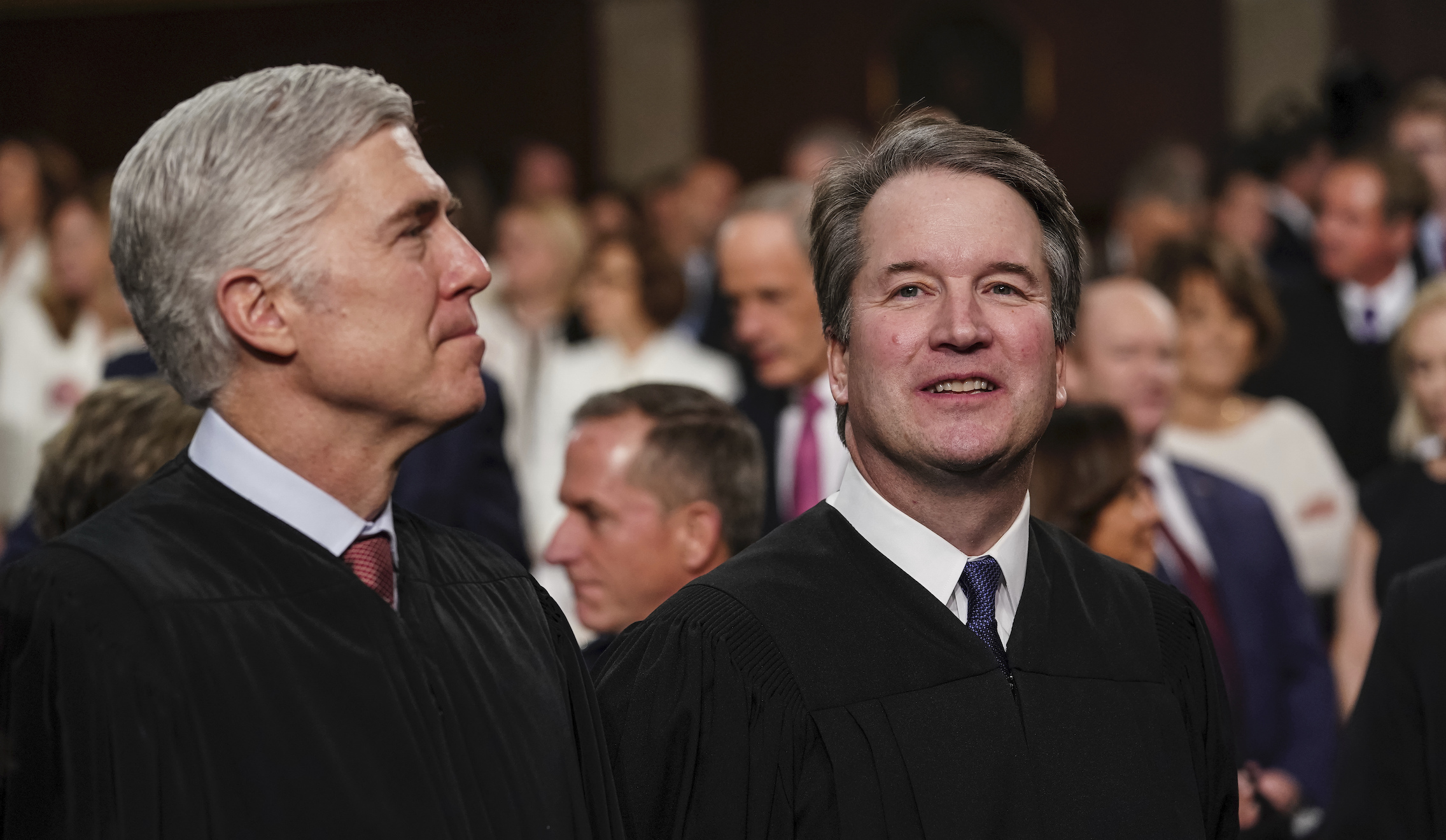
Three years later, we have Supreme Court Justice Neil Gorsuch, arguably the finest addition to the bench since Clarence Thomas nearly three decades ago, and Brett Kavanaugh. Kavanaugh was not on the original list that was released during the election but was later added to a list Trump released during his presidency with a nudge from Anthony Kennedy.
Recommended Stories


In an interview with the New York Times editorial board, Sen. Bernie Sanders claimed that he would consider publishing a list of his own. The second-place Democratic candidate called the idea “reasonable” and noted that his wife supported it.
Just as with Trump, a measured list of establishment-approved judicial picks could bolster Sanders’s perceived electability among skeptics. Although the socialist’s base and fundraising are the strongest of the Democratic primary, Sanders has failed to expand his national support past a simple quintile of the primary vote. A list of judges with acceptable, liberal jurisprudence could provide a boon to his polling among Democrats worried he’d tap candidates ideologically wedged between Karl Marx and Vladimir Lenin.
Sanders could stand the most to gain from releasing such a list, but there’s no reason why every candidate in the race shouldn’t embrace radical transparency when it comes to the judiciary. After all, presidential hopefuls can make all the legislative promises they please with zero practical odds of achieving them, but the judiciary is different. Picking judicial nominees is one the strongest and most influential powers of the presidency, and voters deserve to know how each candidate would wield it.
After our exceptional economy, Trump’s judicial nominations and confirmations shepherded through by Senate Majority Leader Mitch McConnell remain the best case for his presidential reelection. It doesn’t even seem fully likely that Trump would have won the White House in the first place without those lists signaling the importance and direction of the federal judiciary under his presidency. Trump’s 2020 competitors ought to give their own side of the aisle the same gift, their own Supreme Court short lists outlining their visions for one-third of the federal government.
