

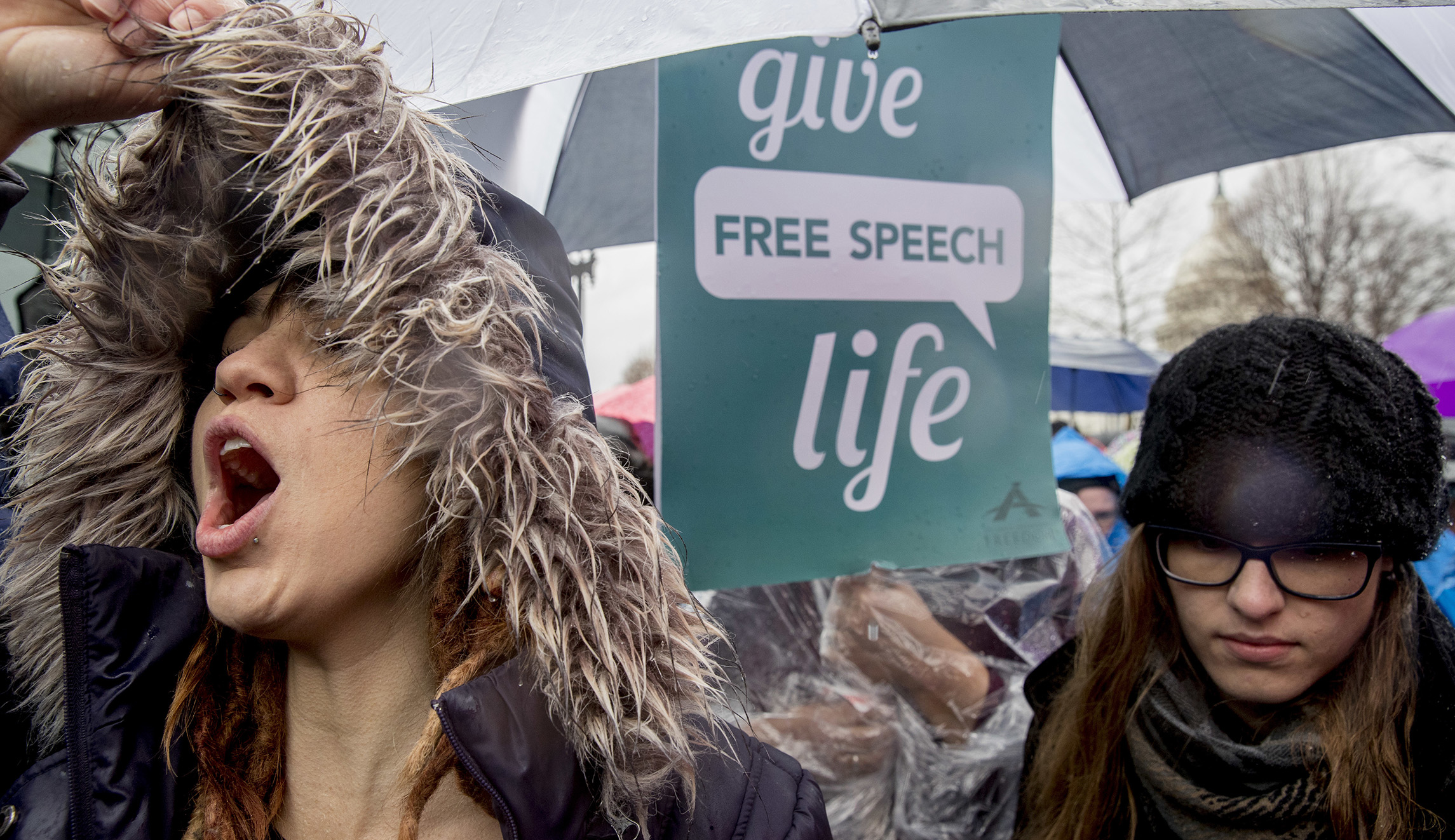
On Tuesday, the Supreme Court heard oral arguments in National Institute of Family and Life Advocates v. Becerra, a case about two controversial ideas: abortion and free speech. The justices will analyze whether the disclosures required by the California Reproductive FACT Act violate the free speech clause in the First Amendment. This won’t be the first time the justices have heard an emotionally-charged case about abortion of course — Gonzales v Carhart comes to mind — but it’s rare to find one that juxtaposes issues that are central to the modern day conservative platform intertwined in such a rare way.
The court already determined abortion rights — not just in the most infamous case, Roe v. Wade, but in its ugly step sister, Planned Parenthood v. Casey. What distinguishes the compelled speech issue in NIFLA from the “informed consent” law the Supreme Court upheld in Casey is not only different, but, if the case is upheld, will have significant repercussions not just for the abortion issue but free speech in advertising and the public square.
Stay informed.Stay ahead.
Join Washington Examiner for unlimited access to the news, analysis, and commentary that matter most.
Already a member? Log in
