

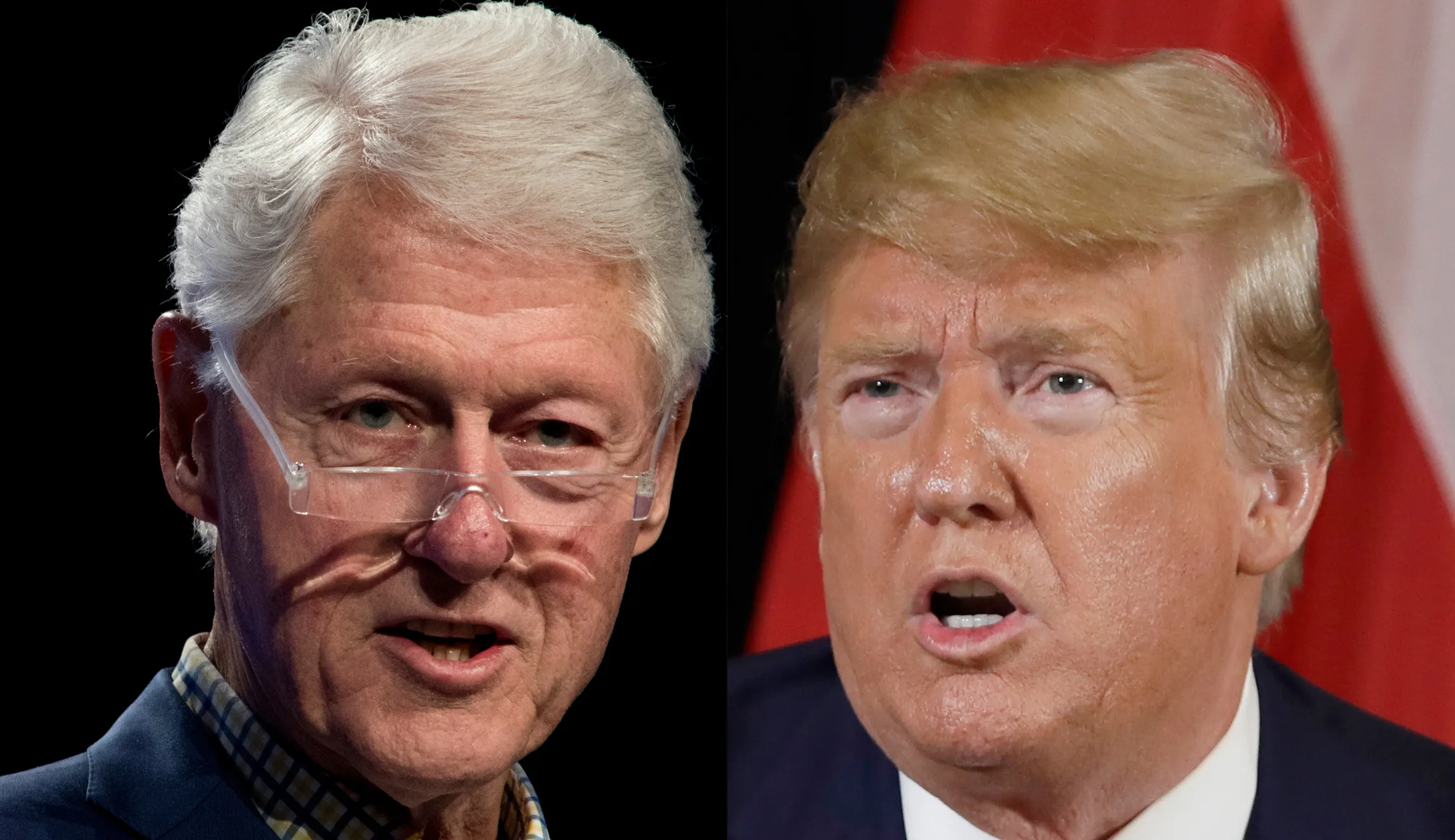
President Bill Clinton was impeached for actual crimes, perjury, and obstruction of justice that he had committed as set forth in a detailed report to Congress drafted by an independent counsel.
The Trump impeachment inquiry is very different. If President Trump is impeached, it appears the basis will be an alleged abuse of power based on a transcript of a phone call with Ukrainian President Volodymyr Zelensky and whatever comes out of House committee investigations of that and a related whistleblower complaint. There will be no independent counsel investigation or report (the law providing for one was subsequently repealed).
Recommended Stories


Under the Constitution, a president may be impeached by the House and removed from office by a two-thirds vote of the Senate for “treason, bribery, or other high crimes and misdemeanors.” Abuse of power is the commission of an unlawful act done in an official capacity or using an office for personal gain. Some scholars say it is not a “high crime or misdemeanor,” but in the Watergate impeachment investigation, one of the draft articles of impeachment of President Richard Nixon was for abuse of power for engaging in conduct violating the constitutional rights of citizens, impairing the due and proper administration of justice and the conduct of lawful inquiries, or contravening the laws governing agencies of the executive branch and purposes of these agencies.
In the Clinton impeachment, Article IV accused him of abuse of power for refusing to respond to certain written requests for admissions sent by the House Judiciary Committee and willfully making false and misleading sworn statements. But the House voted against this article.
The alleged impeachable offense of Trump occurred in the middle of a call with Zelensky when he says, “I would like you to do us a favor … our country has been through a lot and Ukraine knows a lot about it. I would like you to find out what happened … Crowdstrike … the server, they say Ukraine has it …”
The reference is to the company the DNC hired to investigate hacking into its computers during the 2016 elections. Zelensky mentions Rudy Giuliani, who in his capacity as private attorney for Trump had been in touch with one of his assistants. After this, Trump says, “I heard you had a prosecutor who was very good and he was shut down,” and then he says he will have Giuliani call him “along with the Attorney General. Rudy very much knows what’s happening.”
At one point, Zelensky mentions that he will be replacing Ukraine’s ambassador to the United States. Trump replies with some comments about the former U.S. ambassador to Ukraine under President Barack Obama, “The former ambassador from the United States, the woman, was bad news … The other thing, there’s a lot of talk about Biden’s son, that Biden stopped the prosecution and a lot of people want to find out about that so whatever you can do with the Attorney General would be great … ”
The transcript shows no crime. It shows no abuse of power.
Democrats are upset that the Justice Department is now investigating the 2016 election hacking, the discredited Steele dossier that falsely accused Trump of colluding with the Russians, and the Ukrainian connection to that entire episode. With Vice President Joe Biden running for president, it is also now a problem that he threatened to withhold funds from Ukraine unless the president at that time fired the prosecutor investigating the Ukrainian company where Biden’s son was serving as a director.
There may be crimes in what is being investigated by the Justice Department. The fact that Biden might be Trump’s opponent next November does not make Trump’s request to Zelensky to assist the investigation a crime or an abuse of power. At worst, the mention of Biden in the call showed poor judgment.
Much has been made of the “whistleblower” complaint about this call. It reports hearsay that Trump “sought to pressure the Ukrainian leader to take actions to help the President’s 2020 reelection bid” and that there might have been an effort to hide the transcript and cover up the president’s request and comments. The released transcript refutes both concerns for any impartial reader.
The rest of the report appears to be a grievance list of career personnel who don’t like the president’s style, politics, or policies. In the coming days, one or more of the anonymous sources may step forward and testify to something more serious. Until then, this looks like a fishing expedition and a political show.
House Democrats may vote articles of impeachment regardless. That would be a mistake. Impeachment is intended only for serious crimes or abuses of power by a president with a broad public consensus for removal from office.
Clinton was impeached for committing crimes undermining our justice system, including lying under oath to a grand jury, witness tampering, and covering up evidence. But lacking broad public consensus for removal, the Senate did not convict and remove him.
Without more evidence, the public consensus certainly won’t materialize in this case either.
Bill McCollum is a former Florida congressman and attorney general. He was a House manager in the impeachment trial of President Clinton.
