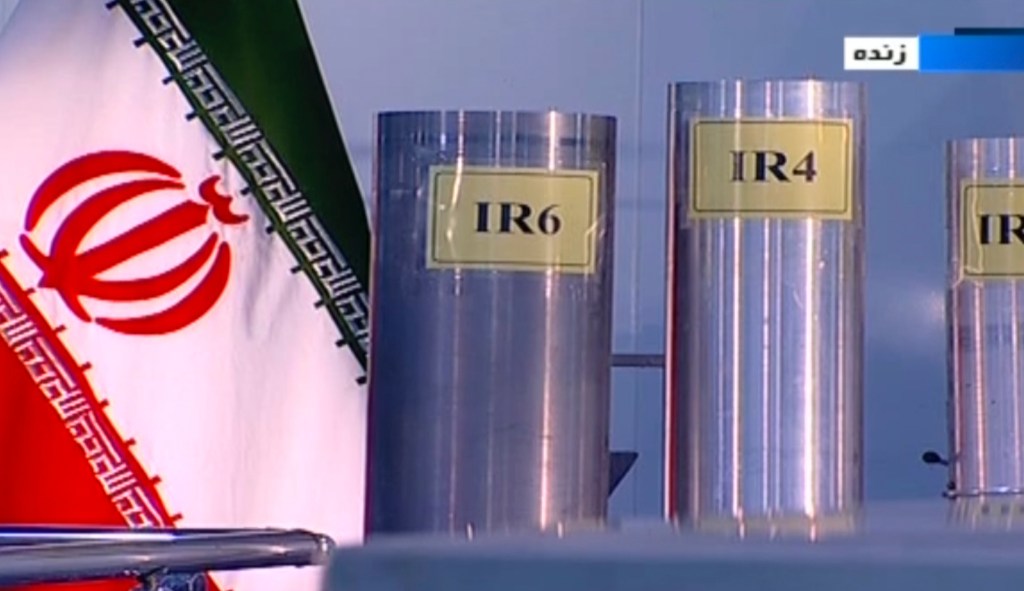
The Iran nuclear issue presents a fundamental challenge to the progressive foreign policy agenda of presidential candidate Bernie Sanders. The insistence of Sanders to reenter President Barack Obama’s Iran nuclear deal will require him to sacrifice key elements of his foreign policy program or risk making the volatile Middle East much worse.
In the weeks and months prior to the signing of the Iran deal in June of 2015, longtime U.S. allies Saudi Arabia and other Gulf countries openly declared their intent to match the nuclear enrichment capabilities permitted to Iran under the proposed deal. A potential U.S. agreement on Iran’s nuclear program unnerved some U.S. allies, especially Saudi Arabia, and threatened the proliferation of nuclear capabilities across the Middle East. For Saudi Arabia, Obama’s deal represented a rapprochement between the United States and Iran and thus the betrayal by a longtime ally.
Recommended Stories
Saudi Arabia perceives Iran as an existential threat. The Iranian imperialistic, revolutionary agenda exacerbates instability inside Saudi Arabia and on its northern and southern borders (in Iraq and Yemen, respectively). A Saudi-led coalition is attempting to thwart that instability in Yemen. Saudi Arabia believes any rapprochement between Iran and the U.S. would weaken the kingdom and heighten that threat.
Obama recognized the link between Saudi security concerns, nuclear proliferation, and the U.S.-Saudi alliance in a 2015 interview with the Atlantic. He stated: “The protection that we provide as [the Gulf countries’] partner is far greater deterrent that they could ever hope to achieve by developing their own nuclear stockpile.” The administration subsequently attempted to alleviate Saudi concerns and head off nuclear proliferation in the Arabian peninsula by offering Saudi Arabia a record $115 billion defense package in 2016. Obama also provided logistical and intelligence support to the Saudi-led intervention in Yemen.
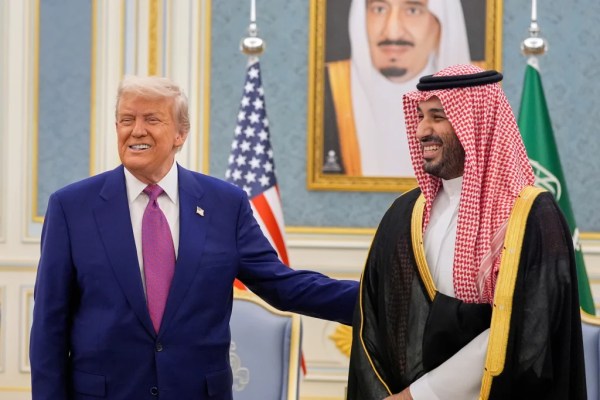
The Trump administration withdrew from the Iran deal in 2018 but maintains a similar level of commitment to Saudi Arabia. Despite congressional objection, Trump sold $8.1 billion worth of weapons to Saudi Arabia in 2019 and continues assisting the intervention in Yemen. The administration also deployed U.S. troops to Saudi Arabia in the wake of an attack on the kingdom’s oil infrastructure.
Sanders intends to reenter the nuclear deal on Day One of his presidency. The deal represents the methods and outcomes Sanders wants in a future U.S. foreign policy. It achieved a solution to the Iranian nuclear program through diplomacy, consensus, and the partnership of six world powers.
Sanders and his advisers believe the Trump administration’s withdrawal from the Iran nuclear deal was a reckless act. They also believe the maximum pressure policy on Iran pursued by Trump is dangerous and aggressive. The policy is directly responsible for bringing the U.S. and Iran to the brink of war.
However, if Sanders desires the nonproliferation of nuclear weapons in the Middle East in conjunction with reentering the Iran nuclear deal, he must betray some of the core principles of his foreign policy agenda. For example, he would have to preserve the U.S. alliance with Saudi Arabia and continue to militarily support it.
Supporting the U.S.-Saudi alliance presents a quandary for Sanders. The alliance represents everything that Sanders despises and works against.
According to Sanders, the historic U.S. reliance on military solutions, the military-industrial complex, and authoritarian regimes creates, perpetuates, and exacerbates conflict, human rights violations, military expenditures, and troop deployments. Sanders campaigns on the idea that the U.S. must focus on pursuing diplomacy, consensus building, and partnerships to facilitate the emergence of a freer, more democratic, more just, and ultimately more peaceful world.
Bernie cannot have his cake and eat it too when addressing the Iran nuclear issue. To achieve reentry to the Iran deal and maintain nonproliferation of nuclear weapons in the Middle East, the U.S. must maintain its alliance with Saudi Arabia.
Sanders must recognize the limits of his foreign policy beliefs and objectives. He must reform his approach to the Iran nuclear issue to prevent a much bigger catastrophe.
Eric Bordenkircher, Ph.D., is a research fellow at UCLA’s Center for Middle East Development. His twitter handle is @UCLA_Eagle. His views do not necessarily represent the position of UCLA or the Center for Middle East Development.