

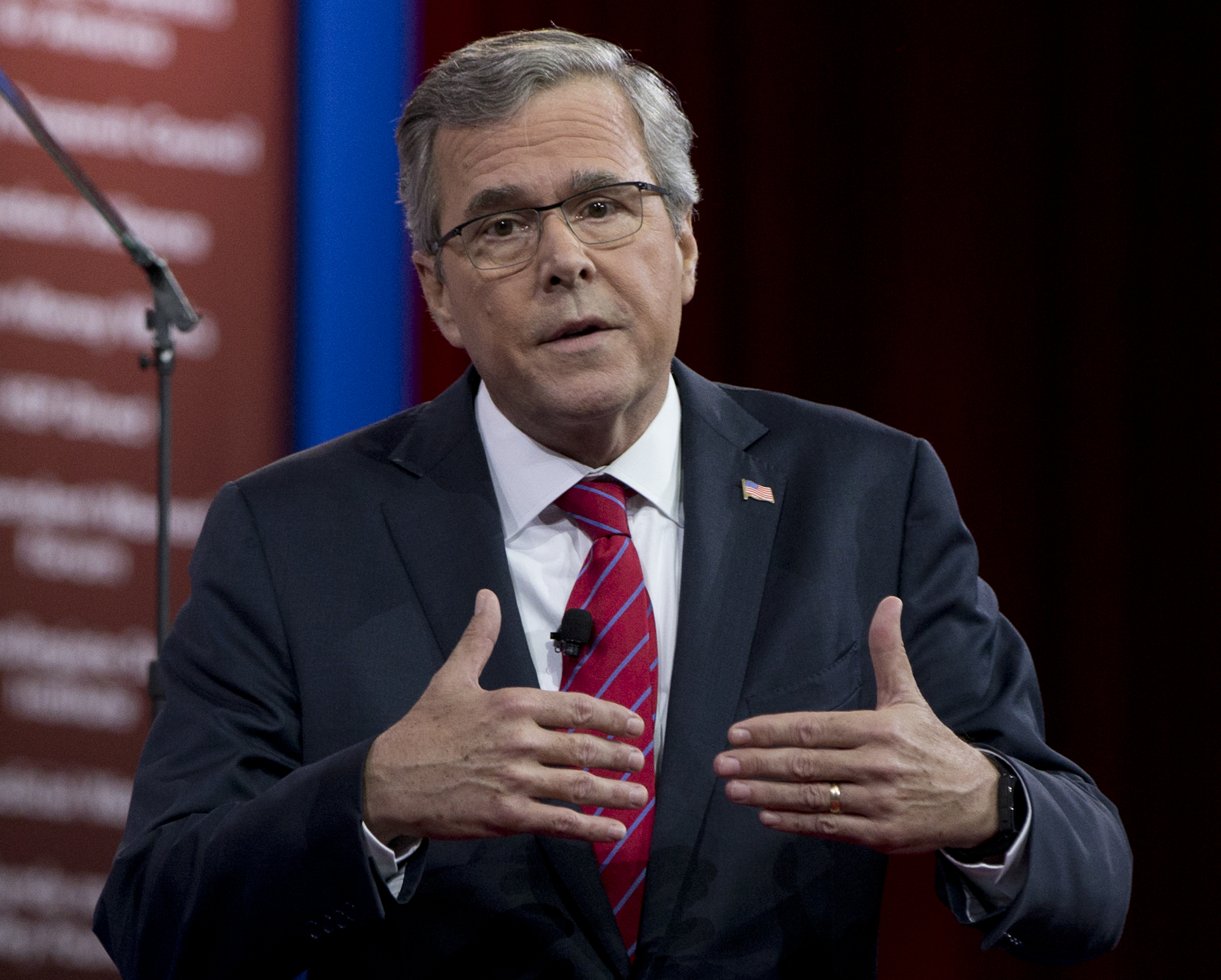
Talking 2016 with Republican activists around the country, it’s hard to overstate how hungry many of them are for a presidential candidate who is new. They didn’t want Mitt Romney to come back for another run. They don’t want someone who ran in 2008 or 2012. And many of them count former Florida Gov. Jeb Bush in the old category, not because Bush himself has run before but because his family has been running for president since 1980.
Recommended Stories


But all that yearning for newness will collide with the Republican Party’s traditional respect for order and succession. In the past, the GOP has made a habit of nominating the man who seems to be next in line for the job. Often that is the candidate who finished second the last time, which is by definition not someone new.
One place where the conflict is already playing out is the key early primary state of South Carolina. In a new poll of Republican base voters conducted by Clemson University political scientist David Woodard, Bush leads the field, although very narrowly, while Wisconsin Gov. Scott Walker has shot up from out of nowhere to a virtual tie for the lead.
The numbers are Bush 18 percent and Walker 17 percent. And each is appealing to voters with wildly different views of the race.
The poll’s name recognition numbers tell the story. Woodard found that 99 percent of the Republicans surveyed have heard of Jeb Bush. Just 58 percent have heard of Walker.
So for Walker, whom far fewer people know than Bush, to end up in a virtual tie at the top means a lot of South Carolinians are really taking to the Wisconsin governor. “While only 58 percent of those surveyed knew who Scott Walker was, a significant number of them made him their choice for the presidential nomination,” writes Woodard. “Walker’s strong initial showing indicates that he could do very well in the presidential primary, especially as he gains in name recognition.”
But those are the voters who want something new. Just as strong among South Carolina Republicans are those who value order and succession. For them, backing Jeb Bush is a natural progression from their earlier support of George H.W. Bush and George W. Bush.
That’s especially true in the donor class. “I would say there is a sense of loyalty of people who contributed to George H.W. and George W.,” says Barry Wynn, a former South Carolina state party chairman. “I don’t think I’ve talked to anybody who was involved in those financial efforts who’s not ready to saddle up again for Jeb. I don’t see any of them giving any money to Rubio, Walker, and the new class.”
That sense of succession has been around South Carolina for a long time. Back in 2008, at a John McCain rally in Columbia, I asked a number of important political figures — all of whom had supported George W. Bush in the bitterly contested 2000 primary with McCain — whether looking back they still believed they were right to choose Bush. They all said yes. They explained to me that they had strongly backed Ronald Reagan, and then moved on to Reagan’s designated successor, the elder Bush, and then naturally supported Bush’s son W. The line of succession was intact.
Those are the people now contributing to Jeb in South Carolina. Beating that will be a tough job.
Still, there are a few signs of dynastic weakness. In Woodard’s new poll, 25 percent of South Carolina Republicans surveyed had a negative opinion of Jeb — a number among the highest in the field. “Historically, candidates with negatives over 25 percent do not do well in the primary election,” notes Woodard.
But the negatives might not matter come February 2016. Barry Wynn notes that every Republican he talks to prefaces his or her presidential preference by saying what they really want is someone who can win. New, old — that doesn’t matter as much as who can win. And that means even those who want something new and those who prefer orderly succession can be convinced to change their minds. South Carolina wants to go with a winner.
If, after Iowa and New Hampshire, that is Jeb, South Carolina will back the dynasty. If it’s Walker, order and succession could go out the window. “When you get to South Carolina, it’s time to get serious about who can win,” says Wynn. “You can play around in Iowa, you can play around in New Hampshire, but South Carolina needs to point the way.”
