

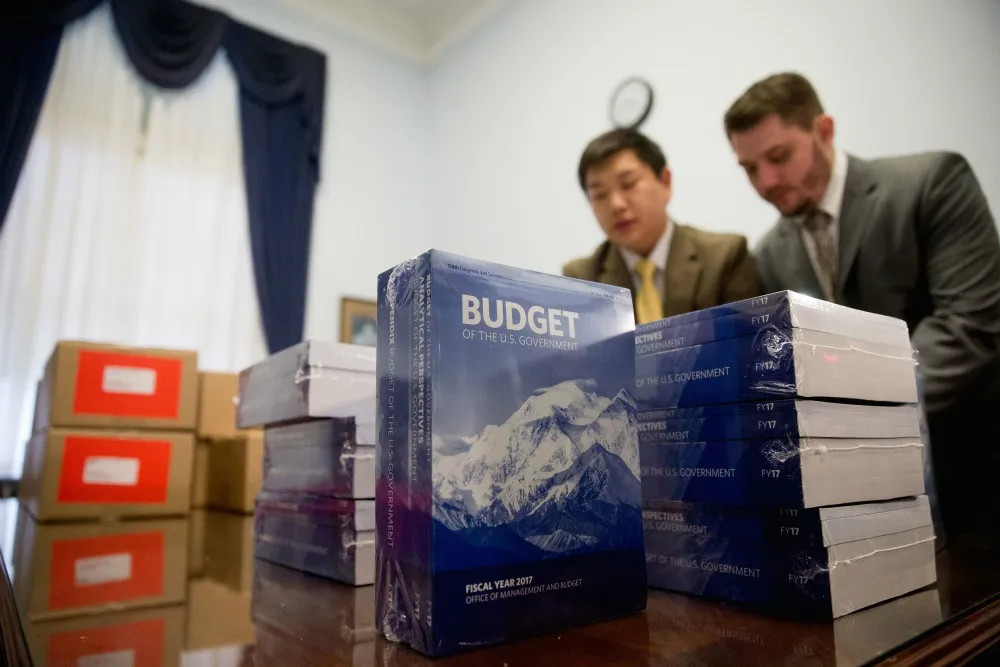
President Obama’s annual budget proposal was released Tuesday. It was the first time in history a president proposed a budget that would spend more than $4 trillion in a fiscal year. Congress is unlikely to accept the budget as proposed, but here are details on the budget in six graphs.
Record-high Taxes
Recommended Stories


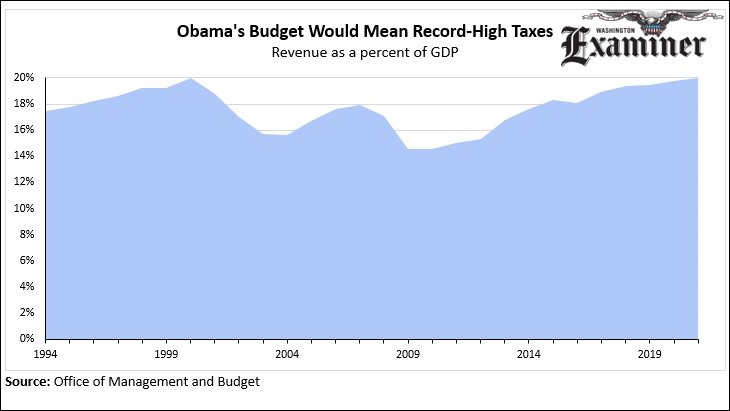
The federal government will collect more tax dollars in 2016 than it has ever before: $3.3 trillion. Under Obama’s budget, that would rise to a new record high: $4.6 trillion. Those are raw numbers that aren’t adjusted for inflation. But even if you compare taxes as a portion of the economy, Obama’s budget would raise taxes to a historic high of 20 percent of GDP. Bill Clinton’s penultimate budget, FY 2000, was the only other time in history tax receipts were so high.
Doesn’t Balance
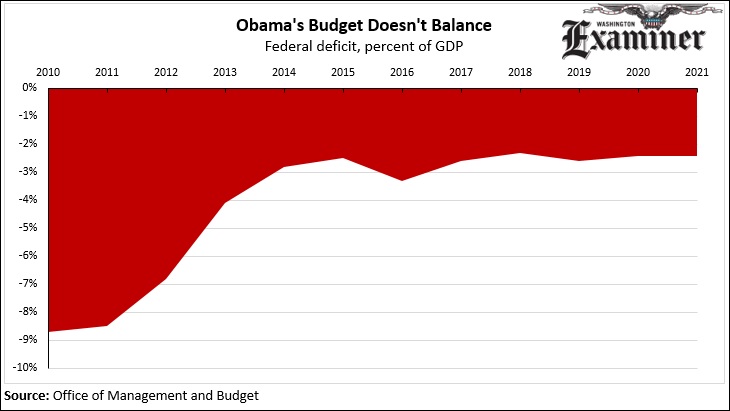
You might expect record high-taxes would lead to a balanced budget. Not so. The deficit, as a portion of GDP, would fall from 2016’s 3.3 percent, but level out at 2.4 percent by 2020 and 2021. In raw numbers, that means a $5.5 billion deficit. Tax revenues rise almost two percentage points under Obama’s budget from FY 2016 to 2021, but spending also rises by one point, so a deficit remains.
More debt
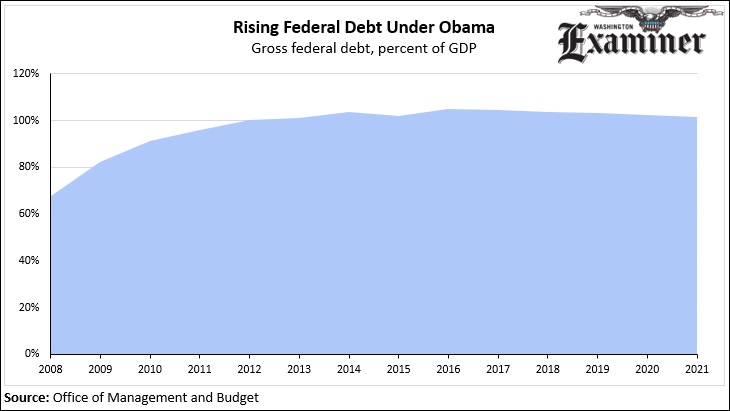
A deficit means more debt. Under Obama’s budget, gross federal debt would continue to rise, surpassing $20 trillion by the end of 2017. Even if everything in Obama’s budget were passed into law and projections were perfect, debt would still reach $23.2 trillion by the end of 2021. If you compare federal debt with the size of the economy, debt actually grows more slowly than the economy. Gross federal debt as a percentage of GDP would fall from 105.2 percent in 2016 to 101.4 percent in 2021. Still, that is well more than the debt level Obama inherited: 67.7 percent of GDP at the end of 2008.
Defense Cuts
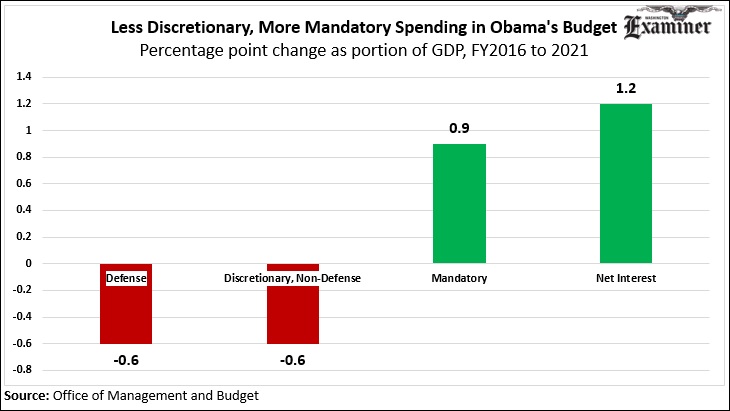
Although federal spending rises under Obama’s budget, that doesn’t mean everything gets a boost. In fact, defense and nondefense discretionary spending are both cut by 0.6 percentage points as a portion of GDP from 2016 to 2021. The spending hikes in Obama’s budget actually come from mandatory spending, like entitlements, and debt interest payments. Mandatory spending rises by 0.9 percentage points, while net interest payments rise by 1.2 percentage points.
Departments
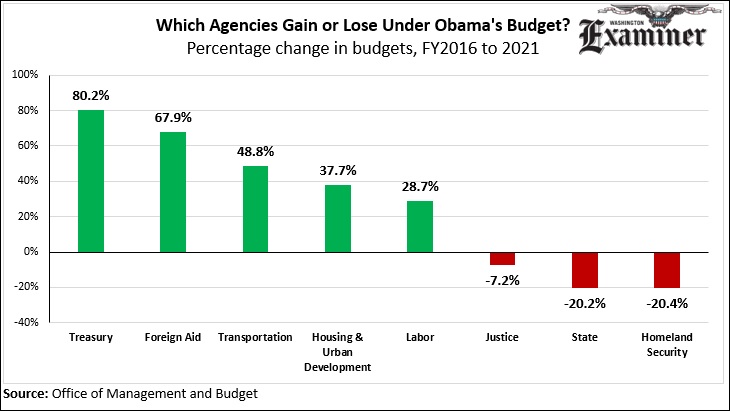
Which agencies gain and lose in the Obama budget? There’ are a lot of winners, and only a few losers. Both the Department of State and the Department of Homeland Security get their budgets cut by about one-fifth. The Department of Justice is also one of the few departments to get cut, receiving a 7.2 percent budget cut from the present to 2021. Although the Department of State gets cut, foreign aid, or international assistance programs, gets a 68 percent boost. The Department of the Treasury is the biggest winner, receiving an 80 percent boost.
Social Security
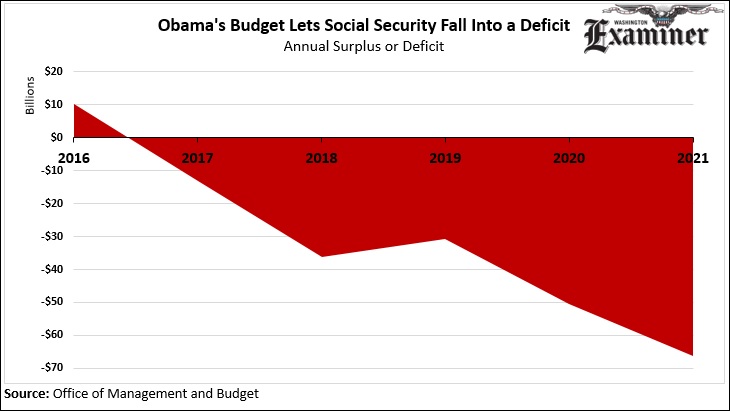
For the first time since the early 1980s, the Social Security retirement trust fund is about to fall into a deficit, and Obama’s budget wouldn’t be able to stop it. The trust fund will take in about $10.2 billion on net in 2016, but by 2021 it will lose $66.2 billion on net. The trust fund’s income will rise by almost $200 billion in that time frame, but benefit payments will rise by $273 billion. The latest projections from the nonpartisan Congressional Budget Office estimate that the retirement trust fund will run out of funds in 2030. At that time, the fund would only be able to pay out as much as it takes in, about 80 percent of the promised benefits.
Jason Russell is a commentary writer for the Washington Examiner.
