

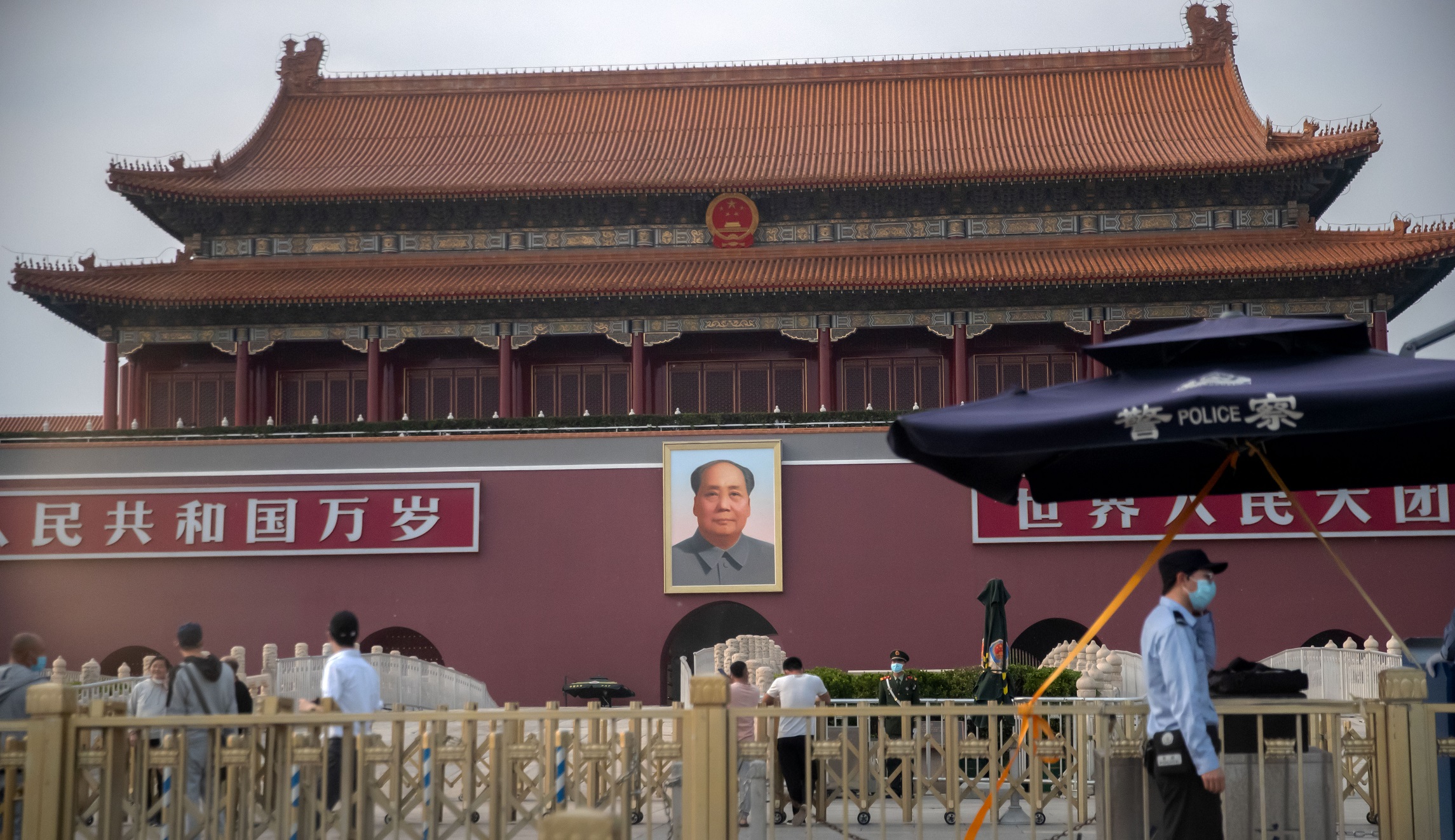
The relationship between the United States and China isn’t exactly sunshine and roses nowadays. The two economic superpowers are at each other’s throats over multiple issues in multiple domains, from cybersecurity and trade to nuclear modernization and the South China Sea. The world’s middle powers, including Australia, South Korea, and Germany, are increasingly being asked to take sides. Even the United Kingdom, the closest ally Washington has, finds itself caught between a Chinese heavyweight that is cornering the market on 5G telecommunications and an old friend (the U.S.) insisting the British not go wobbly, as the late Margaret Thatcher would say.
Naturally, with a sour bilateral relationship comes sour feelings about China in general from U.S. policymakers and lawmakers. Washington, D.C., used to be a town divided on the China question; one camp wanted to get tougher, one wanted to give the Chinese more time to inoculate itself to the rules of the road, and a third camp was a hybrid of the first two. That situation has changed markedly in just a few short months.
Recommended Stories


Politically, it now pays to brawl with Beijing, which means politicians on both sides of the political aisle have an incentive to introduce legislation that is designed to hold China accountable on everything from internment camps in Xinjiang to deceptiveness on COVID-19. With the U.S. economy cratering and close to 90,000 people in the U.S. dead from COVID-19, lawmakers wouldn’t be caught dead trying to make nice with Beijing.
U.S.-China relations, perhaps the world’s most important bilateral relationship, is only going to get worse between now and November when voters go to the polls.
Both President Trump and presumptive Democratic presidential nominee Joe Biden are preparing to out-hawk one another on China. The goal: Persuade voters that the other guy is too gullible to stand up to Xi Jinping. The Biden campaign is expected to hammer Trump for prioritizing a questionable trade deal with China over the health of the U.S. The Trump campaign has already branded the Democratic nominee “Beijing Biden,” a reference to his son Hunter’s business dealings in the country as well as his own nonchalance toward China’s economic practices. Trump is also getting noticeably more aggressive with his China policy, pressuring the U.S. government’s largest pension fund to stay away from Chinese stocks and openly suggesting this morning on Fox Business Network that he may just stop U.S.-China trade entirely.
All of these moves will play well politically. In an April Pew survey, 66% of Americans said they have an unfavorable view of China, the highest number since the organization began asking the question in 2005. Polls and the current narrative show there is no political upside at the moment for either candidate, Trump or Biden, to make nice with Xi.
Voters are afraid, angry, and blame the Chinese Communist Party for sweeping a deadly virus under the rug — they want retaliation, not business as usual.
The problem, of course, is that good politics does not necessarily make good policy.
Canceling U.S. debt owned by China may play great with an American public tired of giving Beijing the benefit of the doubt, but it’s also a decision that would have long-term consequences on the sanctity of the federal government’s credit. Slapping sanctions on individual Chinese officials may quench a thirst for retaliation, but it also does next to nothing on dealing with the present coronavirus outbreak. Scotching a $700 billion-plus U.S.-China trade relationship may set back the Chinese economy, but it will also spread like wildfire inside the U.S. Taking action without thinking through the costs and benefits does nobody any good.
Over the next several months, you can expect Trump and Biden alike to use China as a metaphorical punching bag. It’s not an unjustified tactic — the Chinese government, to put it mildly, has been grossly incompetent and deliberately misleading.
But sooner or later, the campaigning is going to end, and the governing is going to begin anew. At that point, all of the red-meat thrown on the campaign trail may spoil the appetite in Washington and Beijing for getting the relationship on a productive footing.
Daniel DePetris (@DanDePetris) is a contributor to the Washington Examiner’s Beltway Confidential blog. His opinions are his own.
