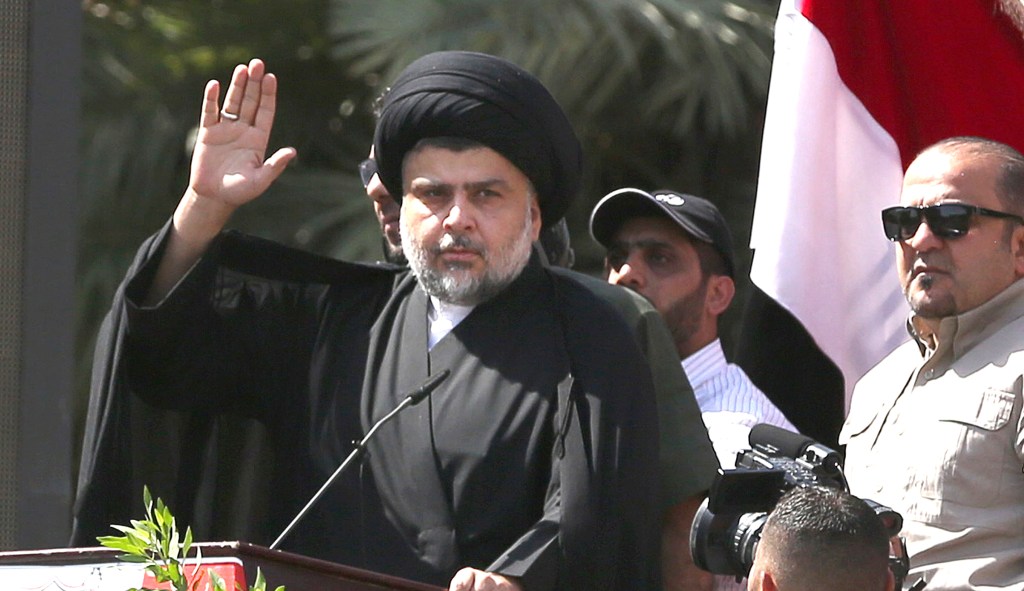
Muqtada al-Sadr formerly led the Mahdi army, a Shia insurgent force that killed hundreds of U.S. soldiers during the 2003-2009 period in Iraq. But that was then. Today, al-Sadr is the shock victor of last weekend’s Iraqi parliamentary elections.
Running on a ticket with smaller parties, including the secularist Iraqi Communist Party and others, al-Sadr has a strong hand to decide whether Prime Minister Haider al-Abadi will be able to retain power or step down. While al-Sadr has ruled out being the prime minister himself, he can make major demands on whoever wishes to retain that position. That is, unless Haider al-Abadi forms a coalition with former prime minister and Dawa member Nouri al-Maliki to stay in power. This would be damaging for U.S. interests in that it would greatly expand Iranian influence in Baghdad.