

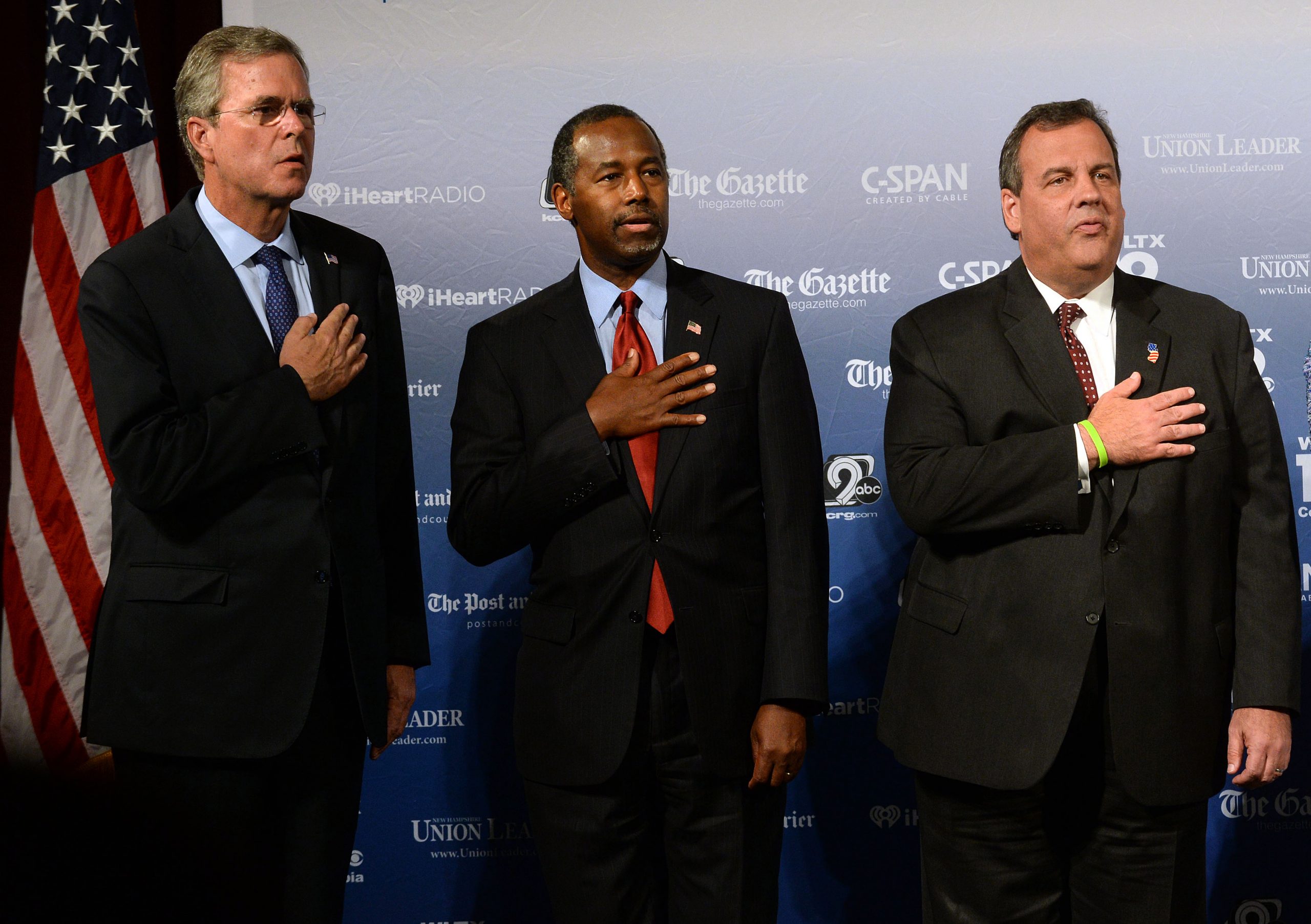
Some pundits are predicting that Thursday’s Republican presidential debate will draw the biggest audience in cable news history. With all that attention, it’s important that Fox News moderators ask the right questions. Here are six the moderators should ask:
Debt
Recommended Stories


“The next president will inherit almost $20 trillion in federal debt. Explain what the consequences are of that debt and how you plan to deal with it.”
This question will immediately separate the men from the boys on the debate stage. Any candidate who hasn’t thought about this question hasn’t considered one of the most significant problems he would face as president. Explaining the implications of the federal debt requires first understanding the problem and then being able to articulate its impact to voters. Any plan to tackle the debt that doesn’t include entitlement reform is ignoring reality.
Education
“President Obama has been controlling state education policy by using conditional waivers from No Child Left Behind. As a result, some experts have criticized the Department of Education for acting like a ‘national school board.’ Would you keep that power in the executive branch or will you promise to give it back to states?”
On its surface, this is a question about education, and the answer should be easy for any conservative: Give the states more power, where parents can have more of a say. On a deeper level, this is a question about executive power and its limits. Conservatives should agree that there are constitutional limits to executive power, regardless of whether the president is a Republican or Democrat. Once in office, it might be difficult to agree to give up executive powers, but candidates should commit to doing just that.
Ethanol
“Many of you have been campaigning in Iowa and are telling voters that you support ethanol subsidies. With people across the country watching tonight, many of whom are skeptical of ethanol, please explain how those subsidies help Americans outside Iowa.”
Conservatives shouldn’t have a hard time saying that federal policy should benefit everyone in the country, not just Iowans. On a national stage, it will be interesting to see how ethanol’s defenders try to explain how the subsidy helps city-dwellers and not just farmers. Anti-ethanol candidates can target their responses to Iowans and explain how, despite opposing ethanol subsidies, their policies will help them.
Donald Trump
“Since launching his campaign, Donald Trump has insulted Mexicans, veterans and others. Yet, he’s leading recent national polls. Why is Trump doing so well among Republican voters, and why don’t you think he is the right candidate to be the next president?”
This question may unfairly target Trump, but any candidate in the lead needs to be ready to defend himself from pointed questions and attacks from other candidates. The question also forces candidates to toe a thin line between criticizing Trump but not going so far that it backfires.
Gun Control
“Mass shooting incidents seem to be on the rise. Without infringing on the Second Amendment, what would you do to stop this trend?”
Shooting incidents aren’t going away and candidates need to have a defense of the Second Amendment prepared in response. Some candidates might focus on improving mental health so likely shooters can receive medical intervention. Others may make the case for more guns, in an attempt to arm enough citizens that would-be mass shooters are taken down quicker. Some candidates may even suggest that current gun laws need better enforcement, or that stricter laws are required.
Planned Parenthood
“Many Americans have watched the disturbing undercover videos that show Planned Parenthood officials discussing the sale of aborted baby body parts. These videos have sparked a larger debate over abortion. Please tell us which abortion restrictions you would sign as president.”
This question addresses a timely news topic but presents it as part of the larger debate over abortion. Many political activists fall on the edges of the abortion debate, but this question gives candidates an opportunity to address the concerns of the majority of Americans who fall somewhere in the middle. It also challenges candidates to take a specific stand on abortion rights, rather than just simply identifying themselves as pro-life.
