

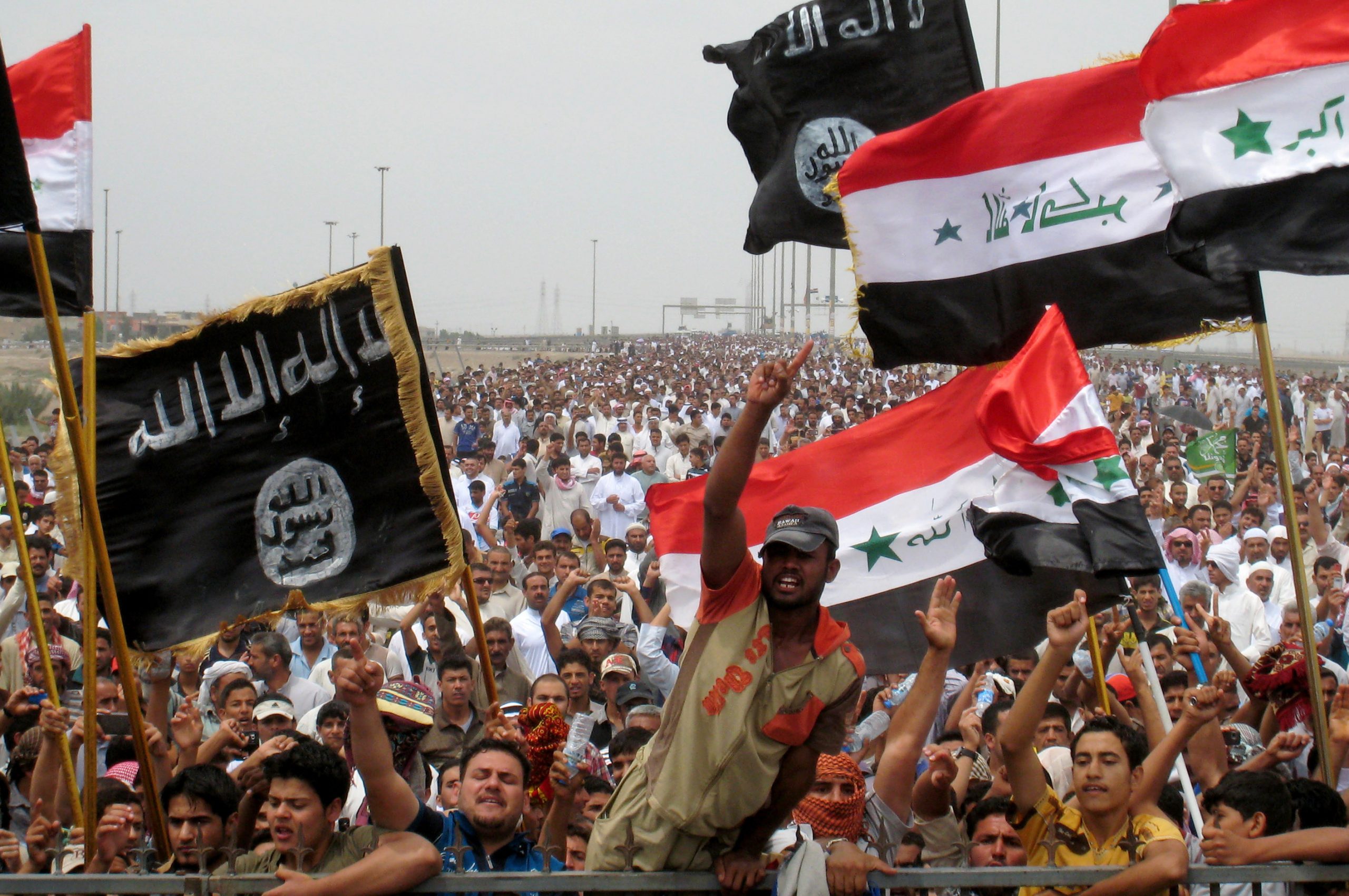
President Obama has said many times that there will be no American combat troops on the ground to wage war against the Islamic State of Iraq and Syria. Most Republicans say they don’t want to send ground troops, either, although many urge the president to leave the option open.
Recommended Stories


What few people in the debate have done so far is to both advocate sending combat troops and offer a number that might be required to do the job. But now, scholar Frederick Kagan, a key advocate of the 2003 U.S. invasion of Iraq and later of the “surge” of American forces there, has released a study which estimates the U.S. could defeat the Islamic State and related forces with 25,000 combat troops, along with supporting air and naval power. At the same time, Kagan warns the entire enterprise could end in disaster.
In “A Strategy to Defeat the Islamic State,” Kagan, along with co-authors Kimberly Kagan and Jessica Lewis, declares the Islamic State, along with the group Jabhat al-Nusra, “a clear and present danger to the security of the United States” whose fighters “constitute an unprecedented threat to our security regardless of whether those groups intend to attack us.” (Quotes in this post are from the report’s executive summary.) Acknowledging the enormous complexities of the situation in Iraq and Syria, Kagan lays out a strategy not just to defeat those groups but to “restore sovereign, legitimate states in Iraq and Syria,” limit the influence of Iran and ensure the security of Jordan and Lebanon.
But first comes military action. “This phase of the strategy will require a significant commitment of U.S. forces — perhaps as many as 25,000 ground troops in Iraq and Syria, although in roles very different from those they played in Iraq between 2003 and 2011,” writes Kagan. “The decisive effort will belong to teams of Special Forces and special mission units deployed in a dispersed footprint throughout the Sunni lands, as well as advising the Iraqi Security Forces and the moderate Syrian opposition. Those forces will likely number in the low thousands.”
Kagan’s paper describes only an initial campaign against the Islamic State. In a frank discussion of the possible downsides of U.S. troop involvement, Kagan concedes that any long-term success depends entirely on “validating the assumption that the Sunni Arab communities in Iraq and Syria are both willing and able to fight alongside the U.S.” If they don’t, the campaign will fail. And even if they do, Kagan adds, it’s still a crap shoot:
Nevertheless, Kagan urges that American policy makers “adopt this strategy despite the risks.” If the U.S. fails to act or does too little, Kagan predicts, not only will the Islamic State stay in control of much of the region, but “sectarian war will escalate, more foreign fighters including Americans and Europeans will cycle through the battlefield and get both trained and further radicalized, and al Qaeda will benefit from the largest and richest safe-haven it has ever known.”
“It is worth accepting the risks of this strategy to avoid this outcome,” Kagan concludes. It seems doubtful that many Republican lawmakers, much less any Democrats, will agree, at least right now. But Kagan has at least opened the conversation about just how many American troops it might take to defeat the Islamic State, and just how risky such a campaign would be.
