

On Tuesday, Israel announced the commencement of Operation Northern Shield. Its objective is the destruction of Lebanese Hezbollah tunnels from Lebanon into Israel.
What does this mean?
Israeli Prime Minister Benjamin Netanyahu’s legal and political difficulties are playing into his decision to conduct the operation now. The Israeli police this week recommended Netanyahu be charged with new corruption offenses. This follows other recommendations earlier this year. Netanyahu’s government is also now dependent on hawkish coalition partners such as Naftali Bennett, who want tougher action against Hamas, Lebanese Hezbollah, and Iran.
Yet in security terms this operation is also necessary, justified, and overdue. The Lebanese Hezbollah has utterly breached its obligations under U.N. Security Council resolution 1701, which ended the 2006 Israeli-Lebanese war but required Hezbollah to remove its weapons from southern Lebanon. The opposite has happened. Thanks to Iran, Hezbollah is once again well-armed.
Hezbollah tunneling operations into Israel are designed for a simple purpose: enabling Hezbollah’s slaughter of Israeli civilians. This is not a debatable point. It is proven by Hezbollah’s past conduct, its strategic interests in northern Israel, and by the basic tactical fact that these tunnels do not enable effective operations against Israel’s military. Hezbollah knows that once it launches any tunnel-based operation into Israel, the Israeli military will localize and destroy its emerging forces. The only obvious Hezbollah objective can thus be the maximization of spilled Israeli civilian blood.
That is as pure a justification for Operation Northern Shield as can be. But it’s also true that if Israel is to be truly effective in destroying the majority of Hezbollah tunnels, it will require Israeli forces to enter southern Lebanon. As my two annotated pictures below (from Google Maps) show, the Lebanese side of the border is highly populated. That offers many buildings which Hezbollah can use as tunnel starting points. The scale of the Israeli task here is likely to be significant.
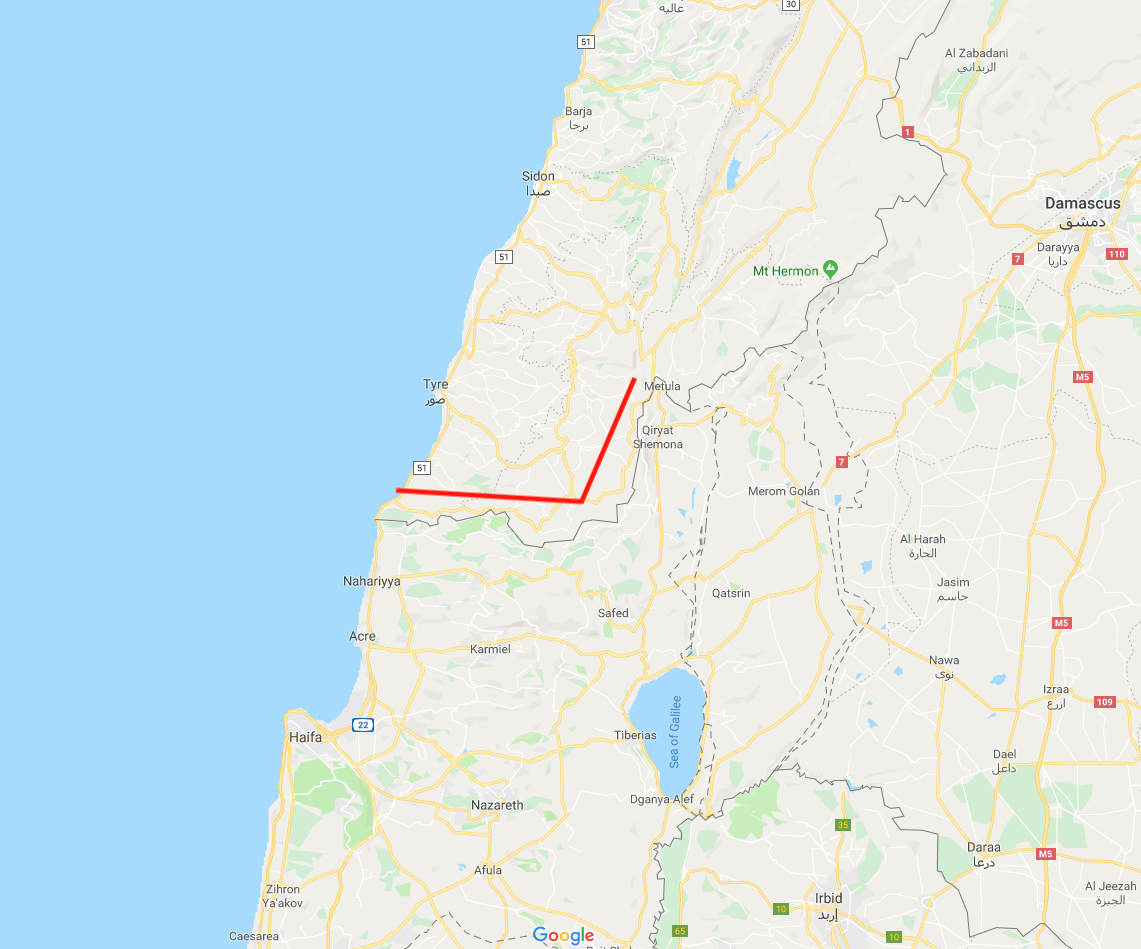
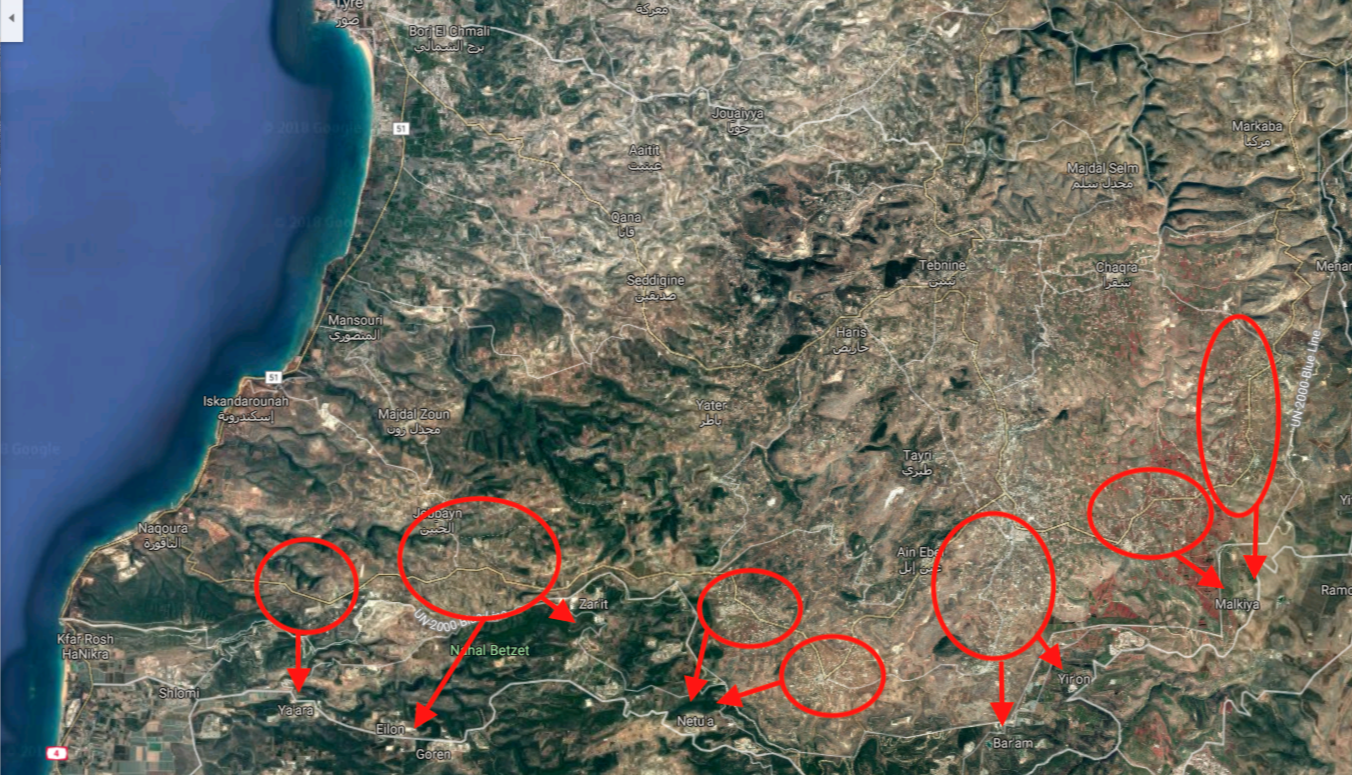
While Israel’s military could launch operations through tunnels from Israeli access points, the risks of entering that far into Lebanon through deep tunnels will be too great in many cases. It’s also possible that Israel only knows the Lebanon-originating sources of some of the tunnels, not their Israeli end points. While the Israeli air force can deal with some tunnels on Lebanese soil, some ground raids will also be necessary to enable sappers to destroy tunnels at their source. Beyond the risks to Israeli personnel, those operations also risk Hezbollah reprisals via rocket attacks and tunnel attacks on Israeli territory. Here, while Israel has effectively degraded Hezbollah’s ability to conduct sustained long-range, high-yield warhead strikes, Hezbollah has a large stockpile of smaller but still potent rockets. Another risk here is that Hezbollah might now pre-emptively launch tunnel or rocket attacks so as to make use of their tunnels before Israel can destroy them.
In short, Israel doesn’t really have a choice but to do what it is now doing. But the risks of escalation are high.
