• Sign In
  • Home
  • News
    • Politics
      • White House
      • Senate
      • House
      • Campaigns
  • Policy
  • 2026 Election
  • Opinion
    • Editorials
    • Op-Eds
  • In Focus
  • Restoring America
  • Magazine
  • Watch
  • Sponsored
    • Powering Progress
    • ASAE – Association Leadership
    • Examining Tax Reform
    • Fix TSCA
    • National Parks
    • Inside the Corn Belt
  • TWS Archive
Search
LogoWashington Examiner
Subscribe
LogoWashington Examiner
Sign in
Subscribe
  • News
    • Politics
      • Trump Administration
      • White House
      • Senate
      • House
      • Campaigns
    • Business
    • World
    • Investigations
    • Justice
    • Supreme Court
    • Crime
    • Entertainment
    • Washington Secrets
  • Policy
    • Defense
    • National Security
    • Energy and Environment
    • Education
    • Immigration
    • Finance and Economy
    • Healthcare
    • Foreign Policy
    • Tech
    • Infrastructure
    • Space
  • 2026 Election
  • Trump Administration
  • IN FOCUS
  • Commentary
    • Columnists
    • Editorials
    • Think Tanks
    • Beltway Confidential
    • Op-Eds
  • Restoring America
    • Patriotism and Unity
    • Faith, Freedom, and Self-Reliance
    • Courage, Strength, and Optimism
    • Equality, Not Elitism
    • Community and Family
    • Fairness and Justice
    • Mission
  • Watch
  • Magazine
    • Magazine
    • Quarterly Briefing
    • Archives
    • Games
  • Sponsored
    • Powering Progress
    • ASAE – Association Leadership
    • National Parks
    • Examining Tax Reform
    • Fix TSCA
    • Inside the Corn Belt
  • Newsletters
More
    Columnists

    The tale of Arthur M. Schlesinger Jr., historian

    By Noemie Emery
    Published January 30, 2018 5:01am ET

    Add Washington Examiner on Google

    The tale of Arthur M. Schlesinger Jr., historian
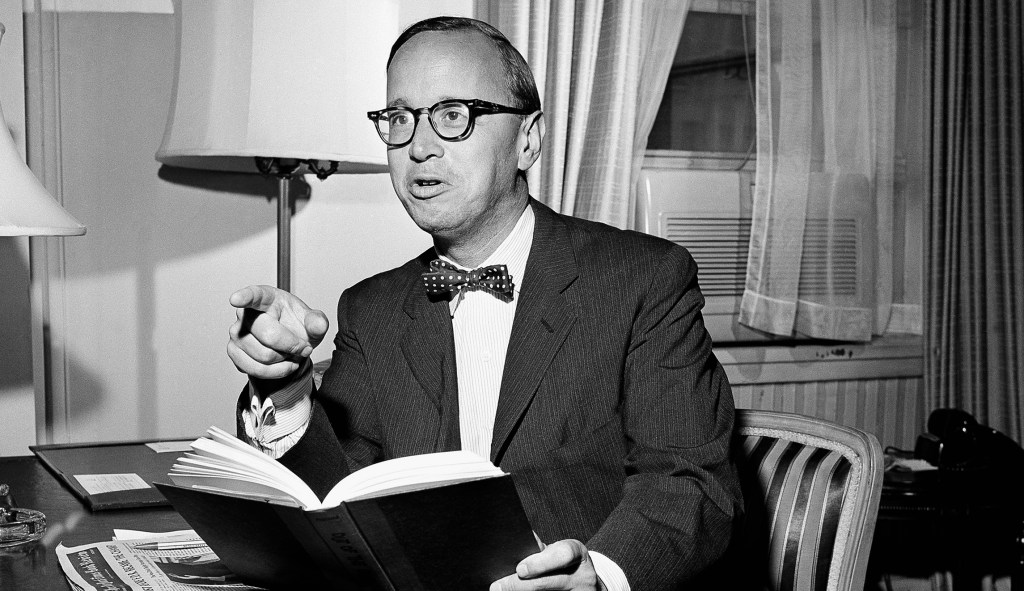
    Historian Arthur Schlesinger Jr. passed away in 2007 of a heart attack in a Manhattan steakhouse. He is remembered most for his work for and writings on Democratic politicians Adlai Stevenson and John and Robert F. Kennedy. (AP Photo/David Pickoff) | David Pickoff

    One of the fascinating things about Richard Aldous’s book about historian-partisan Arthur M. Schlesinger Jr. is its composition. Schlesinger lived to be 89, dying an enviable death of a heart attack in a Manhattan steakhouse in 2007, but only a very few of the 389 pages in Aldous’s book concern the 39 years between 1968 and Schlesinger’s death.

    That is the year the party of the midcentury Democrats fell victim to murder — in the killings of Martin Luther King Jr. and of Robert F. Kennedy — but also to suicide, in the rise of the forces of pacifism, moral equivalence, and identity politics that sadly control it today.

    Recommended Stories
    Gunman’s manifesto is anti-Trump social media come to life

    Gunman’s manifesto is anti-Trump social media come to life

    On This Day: Washington fears a ‘great deficiency’ in weapons

    On This Day: Washington fears a ‘great deficiency’ in weapons

    Steelers, civic leaders, and Gov. Josh Shapiro break records and pull off flawless Day 1 of NFL Draft

    Steelers, civic leaders, and Gov. Josh Shapiro break records and pull off flawless Day 1 of NFL Draft

    In his duality, Schlesinger cherished two things: big personalities and liberal politics. He acted as aide to three politicians, presidential hopefuls Sen. Adlai Stevenson of Illinois and Sen. Robert F. Kennedy of New York and former President John F. Kennedy, writing books on the two Kennedys after they died. But his zeal to present his heroes as successful and liberal made him present them as both more liberal and more successful than they were in reality, either ignoring some of their actions or curtailing his efforts in time.

    With President Franklin D. Roosevelt, he devoted three books to his first term and the crises before it, but he came to a halt at his first re-election, as with that historic and landslide election the good times had come to an end. The groundbreaking measures all were behind him and ahead were the court-packing debacle, stalled growth, and a brutal rebuke in the ’38 midterms. Also ahead was the war that would make him immortal, but as the head of a bipartisan war coalition, a subject that Schlesinger would find less appealing. As Aldous writes, he dropped FDR after reaching the ’36 blowout and never wrote of him again.

    Similar editing was done with the JFK saga, making a try at likening the transfer of power in 1960 to that from Herbert Hoover to Roosevelt, with a failed and exhausted older Republican handing the reins to a vital young Democrat, brimming with big and progressive ideas. But Dwight D. Eisenhower was hardly a failure, and he and Kennedy were actually not far apart on most major issues, having been part of the famous Cold War consensus since they first entered politics. The transition story was the peaceful torch-passing of pragmatic centrists, not a dramatic reversal of course. As Aldous quotes Ira Stoll, “Kennedy’s tax cuts, his domestic spending restraint, his military buildup, his emphasis on free trade and a strong dollar, his foreign-policy driven by the idea that America had a God-given mission to defend freedom, both make [Kennedy] by the standards of his time and our own a conservative.” What FDR and JFK did share was the “God given mission,” which did not fit within party lines.

    The problem for Schlesinger in the years after Robert Kennedy was that, in the late 1960s, the Democrats ran out of big men. The midcentury party was teeming with huge, flawed, but oversized people of consequence, which made for good policies and really great reading. Schlesinger seemed to expect that to continue, but instead it suddenly ran dry. By 1969, FDR was a memory; Jack and Bobby Kennedy were dead; Lyndon B. Johnson was broken by war and his vice president, Hubert Humphrey, broken by Johnson. In their place would come clueless dweebs like former President Jimmy Carter and presidential hopefuls former Massachusetts Gov. Michael Dukakis and former Secretary of State John Kerry; or embarrassments like former Colorado Sen. Gary Hart, former Massachusetts Sen. Ted Kennedy, former North Carolina Sen. John Edwards, and former President Bill Clinton, about whom Schlesinger would make the cringe-making comment that “gentlemen” lie about sex all the time.

    Faced with this, Schlesinger could do nothing more than retreat to academia and relish with his social life, which he enjoyed greatly. No one could blame him at all.

    Noemie Emery, a Washington Examiner columnist, is a contributing editor to The Weekly Standard and author of “Great Expectations: The Troubled Lives of Political Families.”


    Tag:

    Bill Clinton Books Commentary Democratic Party History Jimmy Carter John Edwards John F. Kennedy John Kerry Noemie Emery Presidents

    Magazine

    Magazine Covers
    Rahm Emanuel has a message for Democrats. But are they ready to listen?
    How Shelley Moore Capito became a West Virginia powerhouse
    Yale committee offers an encouragingly realistic report about the state of higher education

    More from Columnists

    Gunman’s manifesto is anti-Trump social media come to life
    Gunman’s manifesto is anti-Trump social media come to life

    On This Day: Washington fears a ‘great deficiency’ in weapons
    On This Day: Washington fears a ‘great deficiency’ in weapons

    Steelers, civic leaders, and Gov. Josh Shapiro break records and pull off flawless Day 1 of NFL Draft
    Steelers, civic leaders, and Gov. Josh Shapiro break records and pull off...

    When Charles III meets King Donald
    When Charles III meets King Donald

    Trump to corporate America: Kiss my a**, please
    Trump to corporate America: Kiss my a**, please

    Gas Tracker
    Updated Daily
    Today's National Average
    $4.10
    +$0.01
    Price per gallon of regular unleaded in the U.S. Change since Apr. 26, 2026  ·  Source: AAA

    TRENDING NOW

    Boebert and Sheehy prepping bills to approve Trump ballroom after dinner shooting
    Boebert and Sheehy prepping bills to approve Trump ballroom after dinner shooting

    Iran vows massive strikes if oil infrastructure ‘explodes’ from US blockade
    Iran vows massive strikes if oil infrastructure ‘explodes’ from US blockade

    Gunman’s manifesto is anti-Trump social media come to life
    Gunman’s manifesto is anti-Trump social media come to life

    Trump clashes with 60 Minutes host over shooter manifesto allegations
    Trump clashes with 60 Minutes host over shooter manifesto allegations

    Jeffries blames House GOP for stalling DHS funding over ICE after WHCD shooting
    Jeffries blames House GOP for stalling DHS funding over ICE after WHCD...

    LogoWashington Examiner
    Do Not Sell or Share My Personal Information
    Facebook
    Twitter
    Youtube

    NEWS

    • Politics
      • White House
      • Senate
      • House
      • Campaigns
    • Business
    • World
    • Investigations
    • Justice
    • Supreme Court
    • Crime
    • Washington Secrets
    • Entertainment
    • Sports

    POLICY

    • Defense
    • National Security
    • Energy
    • Immigration
    • Finance and Economy
    • Healthcare
    • Foreign Policy
    • Tech
    • Infrastructure
    • Space

    COMMENTARY

    • Columnists
    • Editorials
    • Think Tanks
    • Beltway Confidential
    • Op-Eds

    RESTORING AMERICA

    • Patriotism and Unity
    • Faith, Freedom, and Self-Reliance
    • Courage, Strength, and Optimism
    • Equality, Not Elitism
    • Community and Family
    • Fairness and Justice
    • Mission
    • WATCH
    • IN FOCUS
    • NEWSLETTERS
    • MAGAZINE ARCHIVE
    • Policies and Standards
    • Terms Of Service
    • Subscription Terms of Use
    • Privacy Policy
    • Your Privacy Choices
    • Transparency In Coverage
    • Advertise
    • Subscribe
    • Contact
    • Careers
    • Staff
    • About Examiner
    • Facebook
    • Twitter
    • © Copyright 2026. Washington Examiner. All Rights Reserved.