Conservatives often disagree about wars, but virtually no one likes nation-building. President Donald Trump has so far managed to avoid it in his military interventions.
Trump would surely like to do so again in Iran, but whether he will be successful raises the question of why the United States so often finds itself engaged in nation-building in the first place.
When going to war to topple a foreign government, political leaders generally face three options: They can help stand up a new government to replace the old one, they can overthrow the regime and let the people of that foreign country sort it out, or they can leave in place elements of the old regime with which Washington can do business.
The U.S. hasn’t proven to be especially effective at the first option, but the second can lead to power vacuums that wind up being filled by even worse actors than the deposed government. The third option can be somewhat unsatisfying and may lead to future military interventions, such as when the quick, successful Persian Gulf War under President George H.W. Bush that left Saddam Hussein in power was later superseded by the longer, unpopular, and less successful Iraq War under his son that forced Saddam’s ouster.
But the third option can work if the surviving regime is chastened and wants to avoid further hostilities with Washington. Trump pursued it in Venezuela when he removed former strongman Nicolas Maduro from power but continued to work with Delcy Rodríguez, who had been vice president since 2018. This was also more or less what happened when the U.S. facilitated the removal of Slobodan Milosevic in Serbia during the Clinton administration.
Trump appears to be hoping something similar can happen in Iran, based on U.S. talks with the Iranian Parliament speaker, but Secretary of State Marco Rubio has acknowledged there is no guarantee that the Iranians we are negotiating with will ultimately end up in charge of the country.
There is always a risk that the remnants of the government will be no better than the leaders they are replacing or will actually be further radicalized by U.S. military action. This is an acute fear with Iran, where some experts argue Trump’s Venezuela model won’t necessarily apply.
The Obama administration sought regime change without trying to form a new government with the removal of Moammar Gadhafi in Libya in 2011. “We came, we saw, he died,” then-Secretary of State Hillary Clinton guffawed at the time. Unlike Iraq, the domestic political consequences were limited, with the significant exception of the deadly attack on U.S. personnel in Benghazi, which became a major scandal.
But Libya descended into chaos, spawning terrorism, civil war, and a migration crisis that hurt our allies. In 2014, the Washington Post editorial board blamed the Obama administration and NATO for abandoning Libya “without making a serious effort to help Libyans establish security and build a new political order.” That would have involved nation-building. “Libya’s government,” CNN reported from Tripoli that year, “has been unable to impose its authority over a myriad of militia groups that have grown in power and influence since the 2011 revolution that toppled longtime dictator Moammar Gadhafi.”
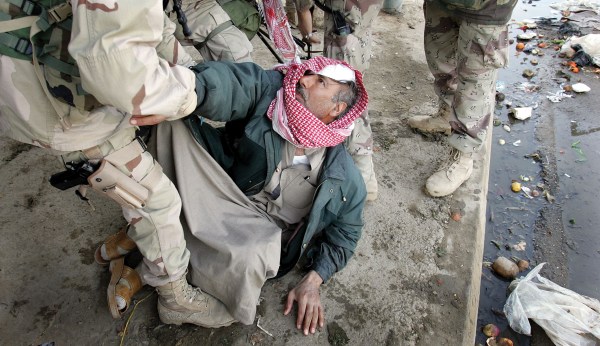
Nation-building is what made Iraq such a long and costly war after swiftly defeating Saddam’s forces. Then-Secretary of State Colin Powell invoked what became known as the Pottery Barn rule before the 2003 invasion: You break it, you buy it. “You are going to be the proud owner of 25 million people,” Powell warned then-President George W. Bush, according to longtime reporter Bob Woodward. “You will own all their hopes, aspirations, and problems. You’ll own it all.”
Nearly 20 years of nation-building in Afghanistan after the initial retributive strikes in response to the 9/11 terrorist attacks went so poorly that the once-deposed Taliban quickly recaptured power after U.S. forces finally withdrew in 2021.
HOW IRAN TRANSFORMED FROM AN ISLAMIC REPUBLIC TO A MILITARY DICTATORSHIP
But investing blood and treasure in a foreign land also gives the U.S. a stake in that country’s political outcomes, making nation-building seem attractive even though it is difficult and voters back home have little patience for it. The alternatives are less politically risky, as they often avoid “boots on the ground” or American casualties, but do not always produce desirable outcomes.
It’s why Trump will face immense pressure to nation-build in Iran, despite the failure of past nation-building projects, which have contributed to his unique political appeal.