• Sign In
  • Home
  • News
    • Politics
      • White House
      • Senate
      • House
      • Campaigns
  • Policy
  • 2026 Election
  • Opinion
    • Editorials
    • Op-Eds
  • In Focus
  • Restoring America
  • Magazine
  • Watch
  • Sponsored
    • Powering Progress
    • ASAE – Association Leadership
    • Examining Tax Reform
    • Fix TSCA
    • National Parks
    • Inside the Corn Belt
    • Examining Transportation
  • TWS Archive
Search
LogoWashington Examiner
Subscribe
Advertisement
LogoWashington Examiner
Sign in
Subscribe
  • News
    • Politics
      • White House
      • Senate
      • House
      • Campaigns
    • Business
    • World
    • Investigations
    • Justice
    • Supreme Court
    • Crime
    • Entertainment
    • Washington Secrets
  • Policy
    • Defense
    • National Security
    • Energy and Environment
    • Education
    • Immigration
    • Finance and Economy
    • Healthcare
    • Foreign Policy
    • Tech
    • Infrastructure
    • Space
  • 2026 Election
  • America at 250
  • IN FOCUS
  • Commentary
    • Columnists
    • Editorials
    • Think Tanks
    • Beltway Confidential
    • Op-Eds
  • Restoring America
    • Patriotism and Unity
    • Faith, Freedom, and Self-Reliance
    • Courage, Strength, and Optimism
    • Equality, Not Elitism
    • Community and Family
    • Fairness and Justice
    • Mission
  • Watch
  • Magazine
    • Magazine
    • Quarterly Briefing
    • Archives
    • Games
  • Sponsored
    • Powering Progress
    • ASAE – Association Leadership
    • National Parks
    • Examining Tax Reform
    • Fix TSCA
    • Inside the Corn Belt
    • Examining Transportation
  • Newsletters
More
    Columnists

    Bring back the Roosevelts

    By Noemie Emery
    Published December 26, 2017 5:01am ET

    Add Washington Examiner on Google

    Bring back the Roosevelts
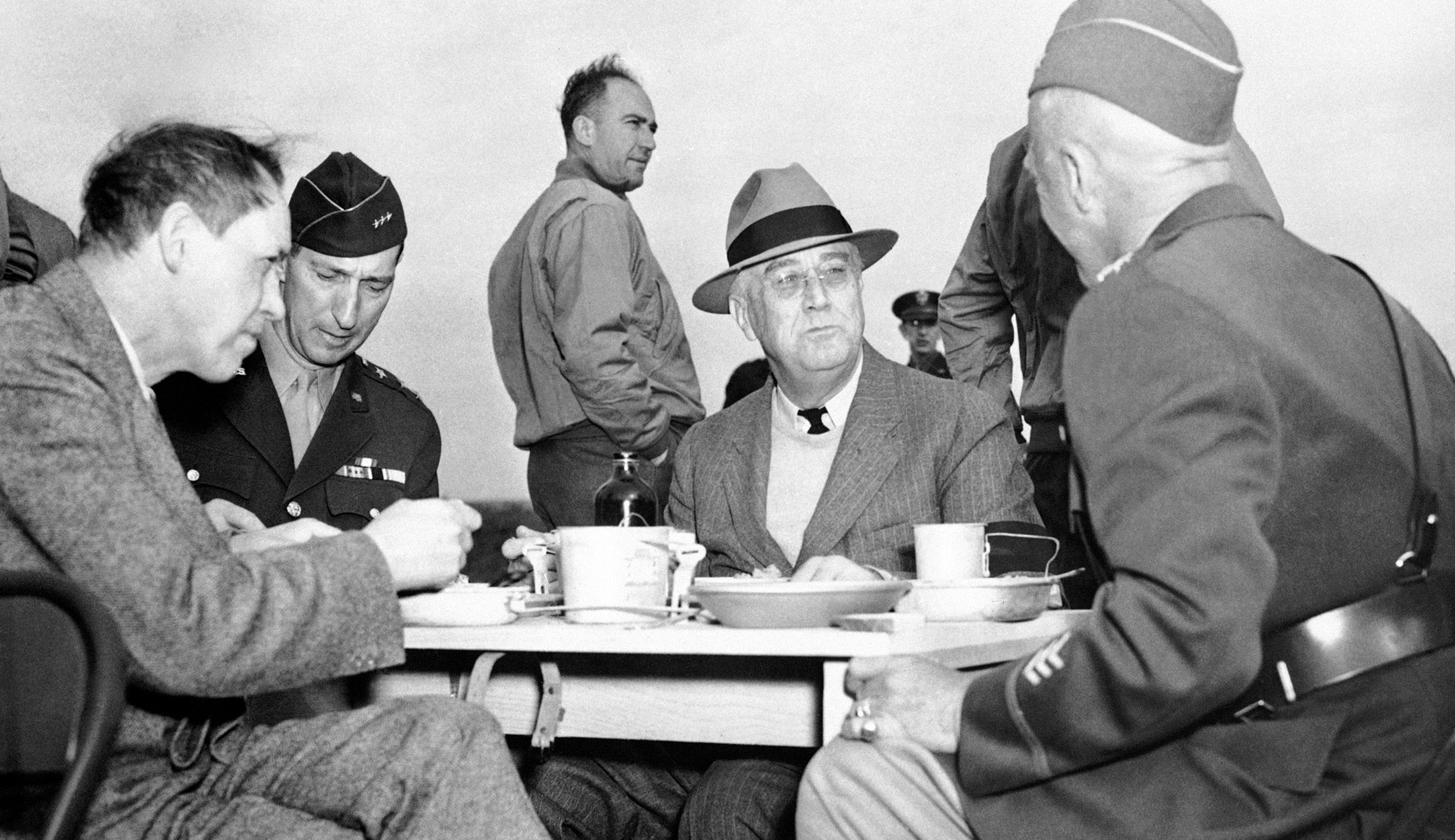
    A world with Iran, Korea, and Syria in it is badly in need of the Roosevelts' vision. (AP Photo) | Anonymous

    The first neoconservative was Theodore Roosevelt. In 1904,when Santo Domingo defaulted on its loans from three great powers in Europe, he sent in the Navy, seized control of the Customs Houses and paid off the debts, preventing the intervention of Europe in the affairs of this hemisphere, chaos, or war.

    As PBS put it, “Roosevelt recognized that it had become a very small world, and he was concerned … to prevent chaos or serious instability in any part of the world” that might threaten his own country’s interests. Paul Johnson wrote later, “It was Roosevelt’s view that America had a right, not exactly God-given…to operate as a hemispheric policeman … to uphold democratic republicanism and good government in the interest of all.”

    Recommended Stories

    On This Day: From Philadelphia’s heat to New York’s shore: The untold 250-year-old story of July 2, 1776

    On This Day: From Philadelphia’s heat to New York’s shore: The untold 250-year-old story of July 2, 1776

    Bibles, cologne, and sneakers: All the ways Trump makes money

    Bibles, cologne, and sneakers: All the ways Trump makes money

    How Mike Rowe’s ‘Build Freedom’ aims to restore the dignity of American work

    How Mike Rowe’s ‘Build Freedom’ aims to restore the dignity of American work

    The second neoconservative was his fifth cousin Franklin Roosevelt, his protégé and acolyte, who used his post as assistant secretary of the Navy to act as Theodore Roosevelt’s mole in the Wilson administration. He helped push the pacifist president toward armed intervention on behalf of the Allies when World War I arrived in the next decade.

    Advertisement

    “Franklin had been walking a thin line,” Peter Collier and David Horowitz wrote in their Roosevelt history. He passed government secrets on to his cousin, and attended secret meetings of interventionists outside of Washington, working with Adm. Mahan of Britain to form an Anglo-American “special relationship,” foreshadowing Franklin Roosevelt’s relationship with Winston Churchill during World War II.

    Certainly, Franklin Roosevelt agreed with Theodore Roosevelt’s remarks when accepting the Nobel Peace Prize for ending hostilities between Japan and Russia in 1910:

    “It would be a masterstroke if those great powers honestly bent on peace would from a League of Peace, not only to keep the peace among themselves but to prevent, by force if necessary, its being broken by others…As things are now, such power…could best be assured by some combination between the great powers. The combination might at first be only to secure peace within certain definite limits…but the ruler or statesman who should bring about such a combination would have earned his place in history…and his title to the gratitude of all mankind.”

    Advertisement

    These words most likely occurred to President Franklin D. Roosevelt in the late 1930’s, when Germany, Japan, and Italy grabbed large tracts of land with no one to stop them. And perhaps again in 1942-45, when he started to think of the world to be built when the war ended, and “police power” loomed large in his mind. The United Nations, as planned, had a debating society, and a fairly large number of soft power arms. But the heart of it was the Security Council, whose five permanent members — the United States, Britain, France, China, and the Soviet Union — would take the lead in suppressing any Anschluss-like measures that seemed to be coming their way.

    This plan came apart in Truman’s first years, when it became clear that Russia and China had become the real problem, whereas the former Axis powers were becoming our partners. During the Cold War, improvised regional alliances would serve to provide resistance and order. But when that war ended, the West lost its focus, the threats lost coherence, and th UN was no longer our friend. Serving Gerald Ford, Daniel Patrick Moynihan called it ‘A Dangerous Place;’ Jeane Kirkpatrick serving Reagan would second the motion; and Nikki Haley today says the “police” in this case are arresting the victims, and letting assailants go free.

    A world with Iran, Korea, and Syria in it is badly in need of the Roosevelts’ vision. But right now, it seems very far away.

    Advertisement

    Noemie Emery, a Washington Examiner columnist, is a contributing editor to The Weekly Standard and author of “Great Expectations: The Troubled Lives of Political Families.”


    Tag:

    Commentary History Noemie Emery Presidents

    Advertisement

    Magazine

    Magazine Covers
    As America celebrates 250 years, the Left sends its regrets
    Governing ourselves: Candidates of poor character are a problem we the people can fix
    The last Founding Father: How James Monroe paved the way for America’s greatness

    More from Columnists

    On This Day: From Philadelphia’s heat to New York’s shore: The untold 250-year-old story of July 2, 1776
    On This Day: From Philadelphia’s heat to New York’s shore: The untold...

    Bibles, cologne, and sneakers: All the ways Trump makes money
    Bibles, cologne, and sneakers: All the ways Trump makes money

    How Mike Rowe’s ‘Build Freedom’ aims to restore the dignity of American work
    How Mike Rowe’s ‘Build Freedom’ aims to restore the dignity of American...

    History can’t settle the birthright citizenship question
    History can’t settle the birthright citizenship question

    America’s multicultural miracle
    America’s multicultural miracle

    Gas Tracker
    Updated Daily
    Today's National Average
    $3.82
    -$0.02
    Price per gallon of regular unleaded in the U.S. Change since Jul. 3, 2026  ·  Source: AAA

    TRENDING NOW

    Mamdani offers socialist challenge to Trump’s vision of America with July Fourth speech
    Mamdani offers socialist challenge to Trump’s vision of America with July Fourth...

    America has the chips. Here’s what it’s missing in race with China
    America has the chips. Here’s what it’s missing in race with China

    Trump won’t renew trade deal with Mexico and Canada. He would be foolish not to extend it
    Trump won’t renew trade deal with Mexico and Canada. He would be...

    Who is your personal hero of American history?
    Who is your personal hero of American history?

    JD Vance: An isolationist sophomore who negotiated victory into humiliating capitulation
    JD Vance: An isolationist sophomore who negotiated victory into humiliating capitulation

    Advertisement
    Advertisement
    LogoWashington Examiner
    Do Not Sell or Share My Personal Information
    Facebook
    Twitter
    Youtube

    NEWS

    • Politics
      • White House
      • Senate
      • House
      • Campaigns
    • Business
    • World
    • Investigations
    • Justice
    • Supreme Court
    • Crime
    • Washington Secrets
    • Entertainment
    • Sports

    POLICY

    • Defense
    • National Security
    • Energy
    • Immigration
    • Finance and Economy
    • Healthcare
    • Foreign Policy
    • Tech
    • Infrastructure
    • Space

    COMMENTARY

    • Columnists
    • Editorials
    • Think Tanks
    • Beltway Confidential
    • Op-Eds

    RESTORING AMERICA

    • Patriotism and Unity
    • Faith, Freedom, and Self-Reliance
    • Courage, Strength, and Optimism
    • Equality, Not Elitism
    • Community and Family
    • Fairness and Justice
    • Mission
    • WATCH
    • IN FOCUS
    • NEWSLETTERS
    • MAGAZINE ARCHIVE
    • Policies and Standards
    • Terms Of Service
    • Subscription Terms of Use
    • Privacy Policy
    • Your Privacy Choices
    • Transparency In Coverage
    • Advertise
    • Subscribe
    • Contact
    • Careers
    • Staff
    • About Examiner
    • Facebook
    • Twitter
    • © Copyright 2026. Washington Examiner. All Rights Reserved.
