
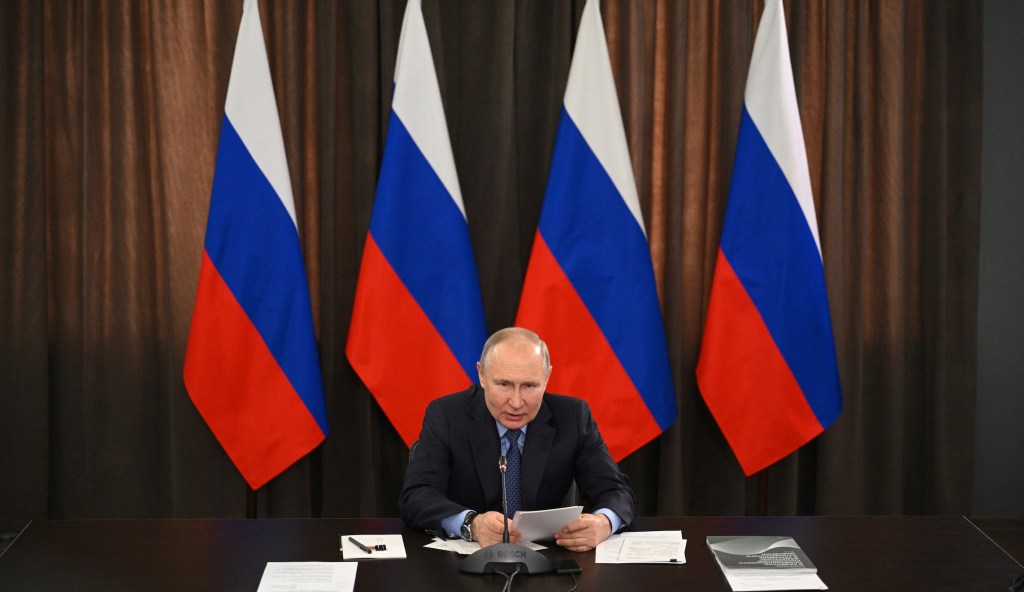
Putin isn’t going anywhere, and neither are his attacks on the West

Published July 17, 2020 3:55pm ET


In a historic “all-Russian plebiscite” (a legal loophole whereby the government can change the constitution through the direct vote of all members of the electorate), Russian citizens cast their ballots in favor of a number of proposed constitutional amendments. Now, Putin can remain in power until 2036.

Lost between reports on the coronavirus pandemic and the criminal justice reform movement sweeping our nation, it’s easy for Americans to pay little heed to Russia’s domestic policy. But on Thursday, news broke that Russian hackers had launched cyberattacks on North American and British servers, seeking to hamper coronavirus vaccine development efforts. It’s yet another reminder that U.S.-Russian relations are at an all-time low, and the public must take a moment to consider what an elongated Putin reign means for us.

The fall of the Soviet Union has plagued Russia with both a superiority and inferiority complex. Shocked by Russia’s sudden loss of prominence on the world stage in 1993, modern Russian politics are colored by paranoia and jealous anti-Westernism, intertwined with performative machismo. This duality is crucial to understanding Putin’s successful political career as a totalitarian. Putin is a czar in all but name; he dislikes both questions to his authority and scrutiny of his actions. In his opinion, the West both undermines Russian “sovereign democracy” and blocks his attempts to rebuild an empire.

An ex-KGB agent, Putin is no stranger to propaganda. Over the last two decades of his rule, he has exploited Soviet-era anti-American sentiment to cultivate resentment and mistrust of the West. In defense of the recently passed amendments, Putin claimed they would protect Russia from “foreign threats.” Though deliberately vague, his remarks undoubtedly referred to the West. He doesn’t like America very much, and he doesn’t have much of a problem with China.

Putin talks big at home, but Russia simply doesn’t have the resources to keep opposing America. Therefore, if Putin does remain in power until 2036, with the United States as his and China’s common enemy, the likelihood of a rapprochement with China is high. While the West is becoming increasingly anti-China as a result of events in Hong Kong, the persecution of Uighurs, and its responsibility for the COVID-19 pandemic, Russia would be strengthening ties with Beijing.

There’s something in this friendship for both parties. As Russia’s economy is heavily reliant on hydrocarbons, Beijing is an ideal trading partner. And even though Russia has declined from its glory days, it remains the world’s second-largest exporter of weapons after the U.S.

Of course, all of this makes for bad news for the West. Long has the U.S. relied on nuclear non-proliferation treaties and weapons control as evidence of a steady status with Russia. But those, too, are unraveling. The Trump administration is teasing a possible non-renewal of the New START program, which imposes restrictions and further reductions on the size of each nation’s nuclear arsenal.

A further breakdown of relations could result in the global spread of lethal and destabilizing weapons, rendering the world less safe. In the absence of meaningful cooperation between the world’s two leading nuclear powers, North Korea could seek to increase its nuclear capabilities, and Iran could easily resume nuclear development. What’s more, there’s the risk of newly emerging military technologies, such as biological weapons and digital attacks. Left unchecked, these could easily fall into the hands of belligerent state actors (Syria, Turkey, and Saudi Arabia) and non-state, jihadist actors.

Of course, perhaps the greatest threat a Putin-led Russia presents to the U.S. is his persistent hackers. As Putin grows closer with China, these targeted attacks against American elections and businesses are sure to increase. And an America already weakened by internal political strife will become even more vulnerable around November, when both parties are likely to claim “interference,” regardless of the election’s outcome. It could very well be a tipping point for the nation. That’s a weakness Putin is certain to exploit.

When it comes to Russia, predicting the future isn’t easy. What’s certain, however, is that Russia has an aging authoritarian leader who is not going anywhere anytime soon, a regime hindered both politically and economically, a dependence on foreign natural resources, and an unchecked hostility towards the U.S. If Thursday’s news reminds us of anything, it’s that when it comes to Russia, we can never afford to let down our guard.

Loic Fremond is a Young Voices contributor and foreign policy writer based in Washington, D.C., and London. Follow him on Twitter @loicthestoic.