

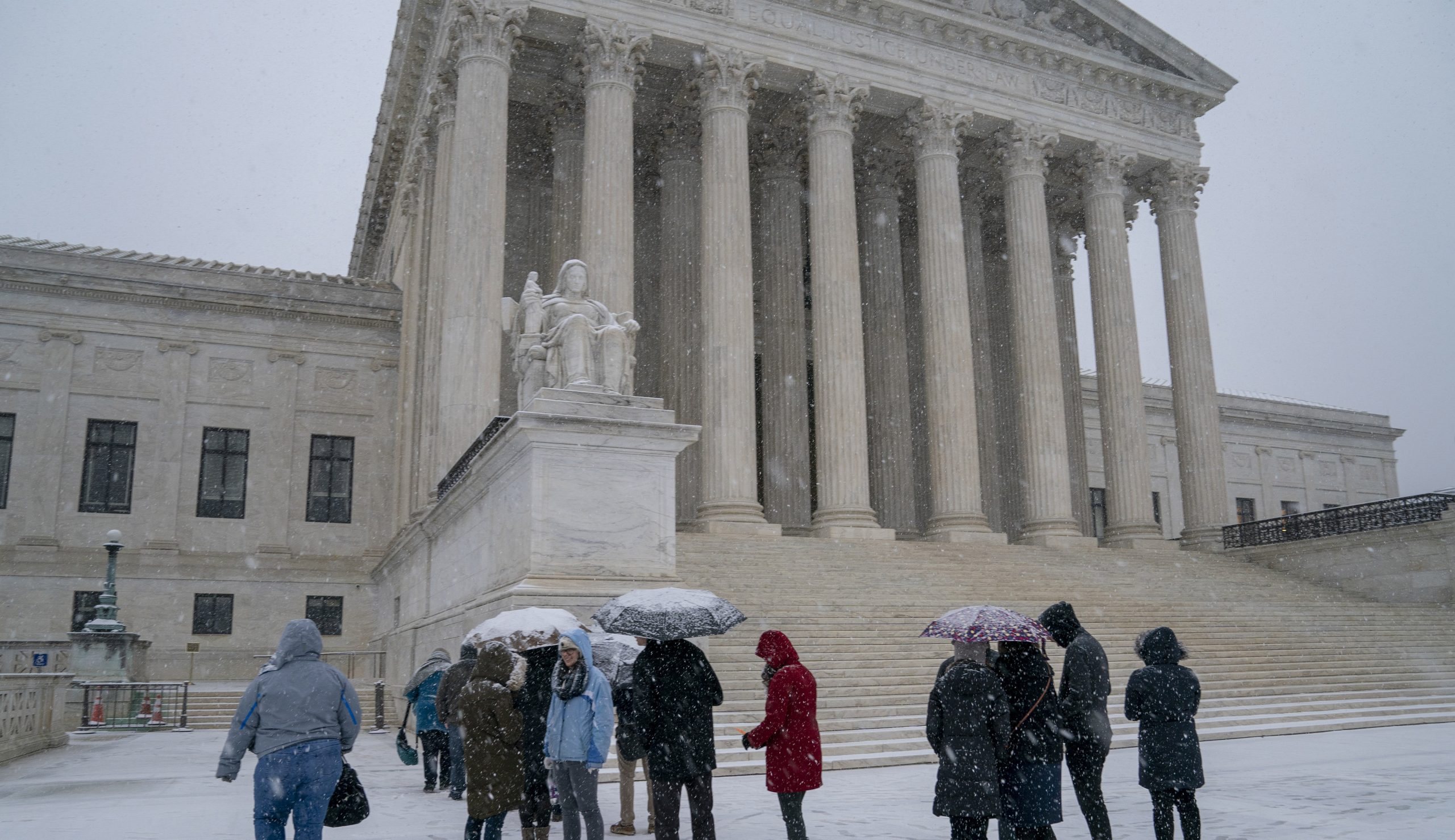
In a unanimous decision in the recent case Timbs v. Indiana, the Supreme Court took a major step toward ending legalized theft. In a sensible move that prohibits state and local governments from imposing excessive fines, the court took a step toward protecting property rights. This ruling is uniquely important because it also restricts state and local governments from excessive government property seizure using civil asset forfeiture, a practice which allows law enforcement to take an individual’s property if it’s at all related to a suspected crime. Now, if the court determines the property value is too high, state and local governments can’t take the property through forfeiture.
Yet, even after the Timbs v. Indiana ruling, the problem of civil asset forfeiture needs fixing. This process is still highly subject to abuse, and should be restricted to cases with a successful conviction, if not completely abolished.
Recommended Stories


The original idea behind civil asset forfeiture was a noble one: preventing criminals from profiting from their crimes. A suspected thief, for instance, shouldn’t be allowed to keep stolen cash from an alleged robbery. But by and large, officers justify forfeiture with extremely low standards, and there are huge benefits for law enforcement agencies who profit from it. The taking of property often occurs without due process or even a criminal conviction, and unfortunately, the burden of proof required is next to nothing. This all means that, at its core, civil asset forfeiture is fundamentally unfair and un-American.
Unlike many forfeiture confiscations, in the case of Tyson Timbs, the Supreme Court was dealing with an instance wherein a criminal conviction did occur. The story began in 2015, when Timbs was arrested for selling just less than $400 of heroin. At the time of his arrest, Indiana police also seized his Land Rover SUV, which Timbs had originally purchased for $42,000 with money obtained legally.
Clearly, this punishment did not match the crime.
Timbs eventually pleaded guilty to drug charges, and an Indiana trial court sentenced him to some jail time and a $1,200 fine. Despite the relatively small monetary amount Timbs was tasked with paying for his crime, the state tried to keep his $42,000 vehicle because they claimed he’d used it to transport drugs. Thus, they said, it was subject to being confiscated under civil asset forfeiture laws. The trial court disagreed due to the value of the car, more than four times as much as the $10,000 maximum amount the court could have fined Timbs for his conviction. But the question about whether the car could be seized or not remained, and worked its way up to the Supreme Court.
What happened to Timbs was unjust, but thankfully has led to a tremendous change. The Supreme Court’s ruling created a strong legal barrier between individuals property and government. Now, people will have precedent to fight law enforcement when they take highly valued property disproportionate to an alleged crime, and local and state governments will be forced to recognize that this behavior is no longer allowed.
But even with this ruling, civil asset forfeiture will still happen and the process will likely still be abused. The practice creates perverse incentives for law enforcement because the seized money comes back to their own budget. As long as this is allowed to continue, police will have an obvious incentive to unethically take property.
Many times, property owners don’t bother to contest forfeiture confiscations because it isn’t worth it to hire a lawyer. In Utah, for example, police seized $2.2 million in cash in 2017 alone. Most of that money was seized in amounts less than $1,000. So, for every person who lost this money, hiring an attorney to get that cash back would cost far more than the amount they actually lost. Police know this and, as a result, may be more willing to seize property in these cases, taking advantage of vulnerable people who can’t or won’t fight back.
Some states, including North Carolina, New Mexico, and Nebraska, have outright abolished the controversial practice of asset seizure, and South Carolina could be next. Eleven other states require a criminal conviction before forfeiture proceedings can occur, which is certainly a step in the right direction. But unfortunately, as was the case with Timbs, this is still subject to abuse even when a conviction occurs. Courts may allow forfeiture even when the connection between property and crime is obscure.
People should no longer be subject to legalized theft in order to provide slush money for law enforcement. While this practice continues, we won’t truly be able to say property rights are fully protected in the United States.
Molly Davis is a policy analyst at Libertas Institute, a free market think tank in Utah. She’s also a writer for Young Voices.
