

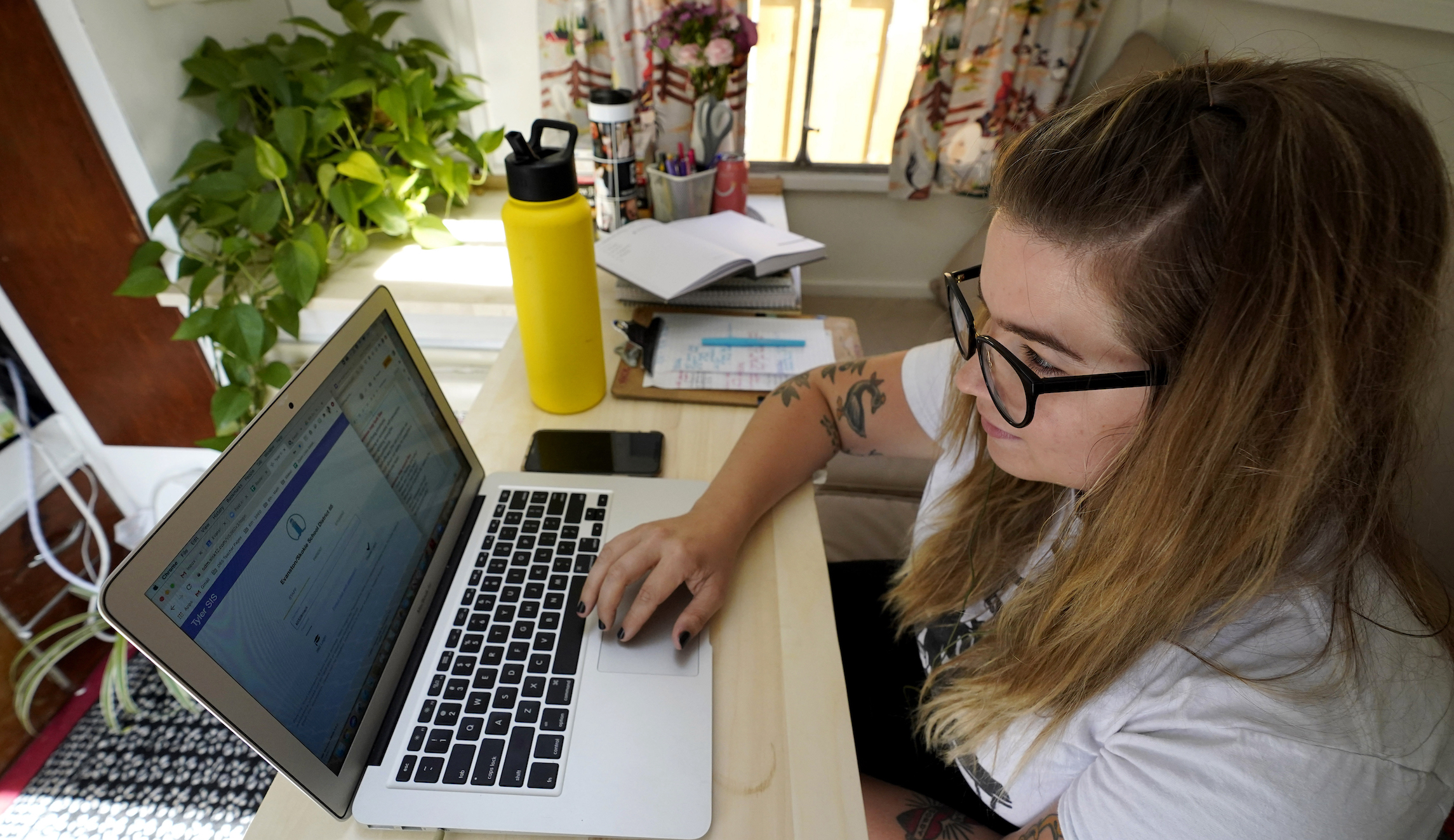
The coronavirus may have taken the lives of more men, but the resulting school closures and economic devastation have disproportionately destroyed the careers of women. Arbitrary lockdowns have neutered the service and retail industries staffed primarily by women, and the burden of aiding the sham of “distance learning” has fallen to mothers, as childcare demands almost always do.
But in the very, very long run, there could be one revolutionary silver lining of the tragedy of the pandemic. That is, the normalization of remote work.
Recommended Stories


Over at The Atlantic, Derek Thompson makes the comprehensive and compelling case that remote work, at least as an option, is here to stay. Considering that, according to a McKinsey analysis, it’s currently possible to employ 29% to 39% of the country remotely and that those most likely to be able to telecommute are based in the expensive cities the pandemic and urban unrest have made less palatable, remote work seems sure to grow. And the biggest winner of such a shift will be women.
The gender wage gap proving employer discrimination against women is indeed a myth, but the reason the gap, which is calculated by comparing the lifetime earnings of women and men, does exist is largely because of children. Women disproportionately take years off of their careers to care for children, especially before they reach school age. They don’t just lose the income that they would gain in those years. Because they miss out on a crucial period when workers increase their human capital through promotions and experience, if they do reenter the workforce, they’re far behind in their careers from the folks formerly considered their peers.
For more than half a century now, social conservatives have lamented that feminism frequently asks women to choose their careers over having or staying at home with their children, while feminists claim traditionalists want them to hamper their careers for children. It may be impossible for some women to “have it all” if they have to commute an hour to and from an office, pay for childcare, and arrange for carpooling five days a week for 50 weeks of each year. But if women in certain industries have the option to work from home, even if it’s just on days when a child needs to stay home from school because of an illness and no sitter is available, maybe far more women won’t have to choose. This would do wonders for women’s advancement in the workplace, and by maximizing the number of adults in the labor force, post-pandemic remote work could create an explosion of economic growth to make up for the lockdowns.
Of course, all of this is still a hypothesis or, at the very least, a hope. It’s possible we’ll have learned nothing from this, and until the teachers unions stop holding students hostage and the nation gets sufficiently vaccinated, it’s impossible to say what will happen. But if the shift were permanent, well, those possibilities are endless.
