

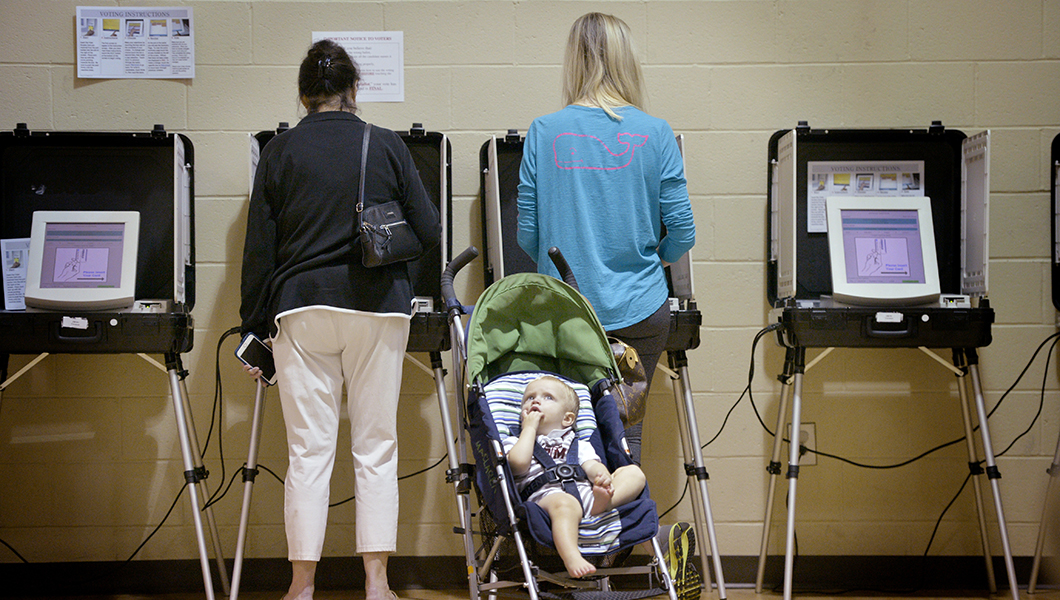
It’s no secret that U.S. elections are vulnerable. Voting machines can be tampered with in numerous ways, willful disinformation campaigns plague the Internet and even rumors that votes were unfair, even if they weren’t, could quickly erode trust in democracy.
But fixing those problems, or rather pushing the government to do so, is an uphill battle that collides with funds, local officials, and tight election timelines that make changing voting procedures difficult.
Recommended Stories



In Georgia, this quagmire meant that as long lines formed outside polling places, voting machines remained sequestered due to a pending lawsuit about election security.
Georgia uses only electronic voting machines that do not produce a verifiable paper trail. The lawsuit alleged that those machines are more vulnerable, and in September, a federal judge agreed, scolding election officials for not taking election vulnerabilities seriously: “[T]he State of Georgia Defendants have delayed in grappling with the heightened critical cyber security of our era posed for the State’s dated, vulnerable voting system that provides no independent paper audit trail.”
That same order chided offices as having “buried their heads in the sand.”
Given that elections were so close, however, her order recognized that the machines could not be replaced before Nov. 6. That same order, however, indicated that the judge would be willing to rule that a new voting system had to be in place after the election to resolve the issue prior to the 2020 elections.
When Tuesday rolled around, however, the ongoing legal proceedings meant that hundreds of machines in key counties around Atlanta were sequestered as agreed by county officials and the lawyers representing voters who brought the lawsuit. Listed by serial number, almost 700 voting machines remained locked away even as lines grew in Fulton County alone.
Regardless of the legal merits and considerations, the clear loser on election days were the voters who were stuck waiting for hours to cast a ballot. That is unacceptable.
This legal fight and its consequences in the Atlanta suburbs, however, highlights the challenge of bolstering election security in the United States. A citizen group brings a lawsuit, and the result is a court battle that hurts the very people supposedly being helped.
