

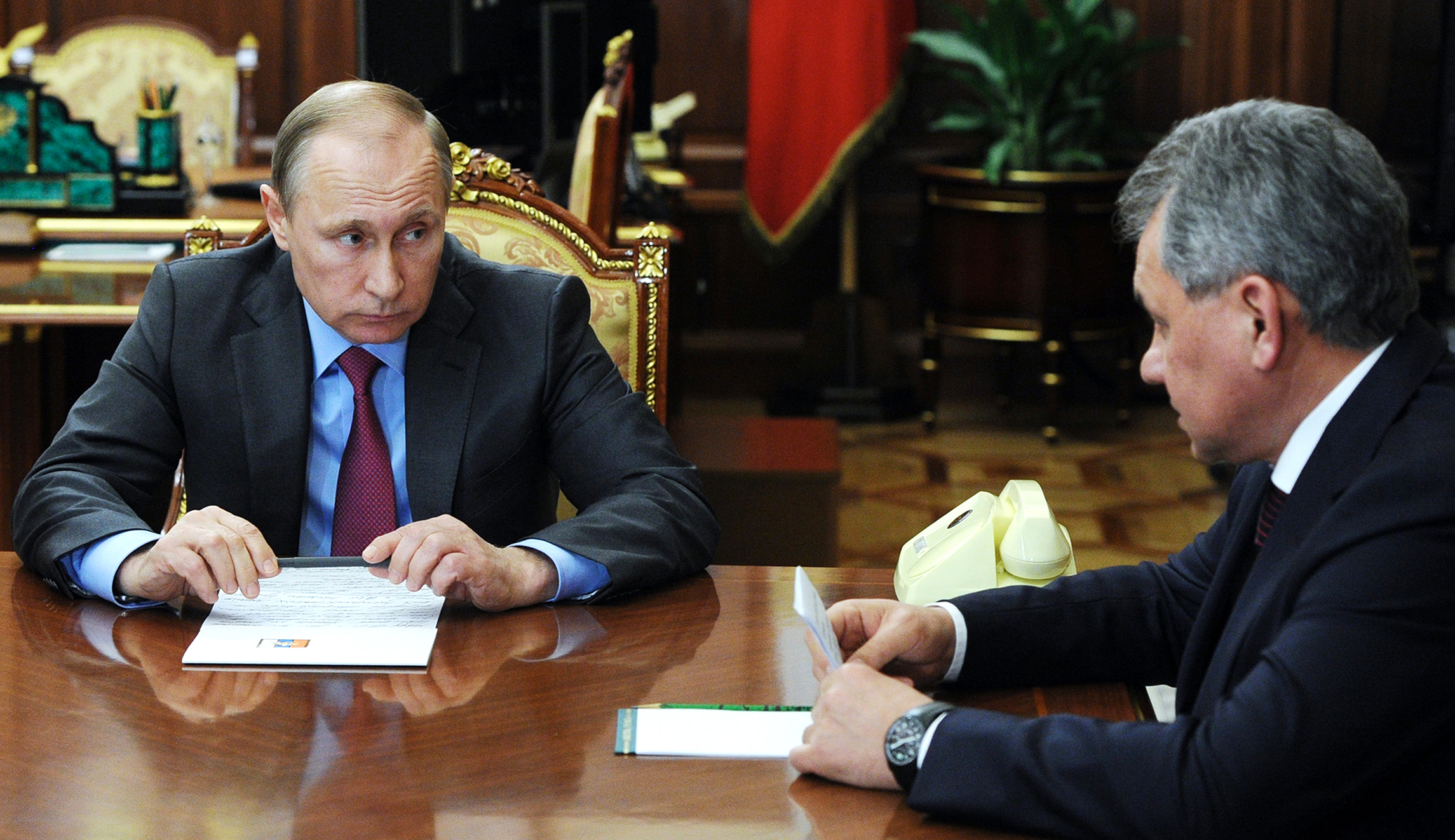
Russian defense minister Sergey Shoygu on Tuesday warned that Finland and Sweden’s increasing cooperation with NATO would “lead to the destruction of the existing security system in the world, generate even greater mistrust, forcing us to take retaliatory measures.”
While such overblown rhetoric is standard fare for the Kremlin, it does reflect two other considerations.
Recommended Stories


For a start, it reemphasizes Shoygu’s interest in succeeding President Vladimir Putin when the latter leaves office in 2024. While he’s already a Putin-favorite, rhetoric like this burnishes Shoygu’s credentials by appealing to Putin’s interest in countering NATO’s expanded power.
But the rhetoric also reflects Putin’s aggravation at (and fear of) increasing NATO-Scandinavian cooperation. Alongside NATO state Norway, which is facing new Russian threats, Finland and Sweden are upgrading their NATO partnership. Focused on developing anti-submarine warfare competencies, cyber-defense/offense, and capabilities to detect and defeat Russian insurgent forces, the two non-NATO member states are nevertheless showing that they recognize Russia’s growing threat.
And while Russia says that it is the Scandinavians that are upsetting the balance of power, the opposite is in fact true. In recent years, Russia has overplayed its hand by sending submarines into Scandinavian sovereign waters and simulating air strikes on Scandinavian military facilities.
Scandinavia’s increasing proximity to NATO is a problem for Russian war planners.
Consider that in the event of a continental war, Scandinavia could provide strategic depth for U.S. and British air forces to enable them to strike Russian supply lines and command centers. That depth takes on more importance in consideration of the unlikely but possible prospect of Germany abandoning NATO allies in any conflict by preventing their use of German territory for military operations. Finland and Sweden also have advanced air forces with the means to challenge Russian incursions into the Baltics.
That’s not all. Because Scandinavia’s geographic position also means it could help deny Russian naval forces access to the Atlantic Ocean. That would make it much harder for the Russians to win a quick victory and sue for peace. If multiple divisions of U.S. forces are sailing across the ocean towards Europe, the European desire to fight on would obviously increase.
Put simply, Shoygu is playing to Putin but also speaking to real Russian vulnerabilities. If he is truly as tough on Putin as he claims, President Trump should issue a statement of support for America’s Scandinavian allies.
