

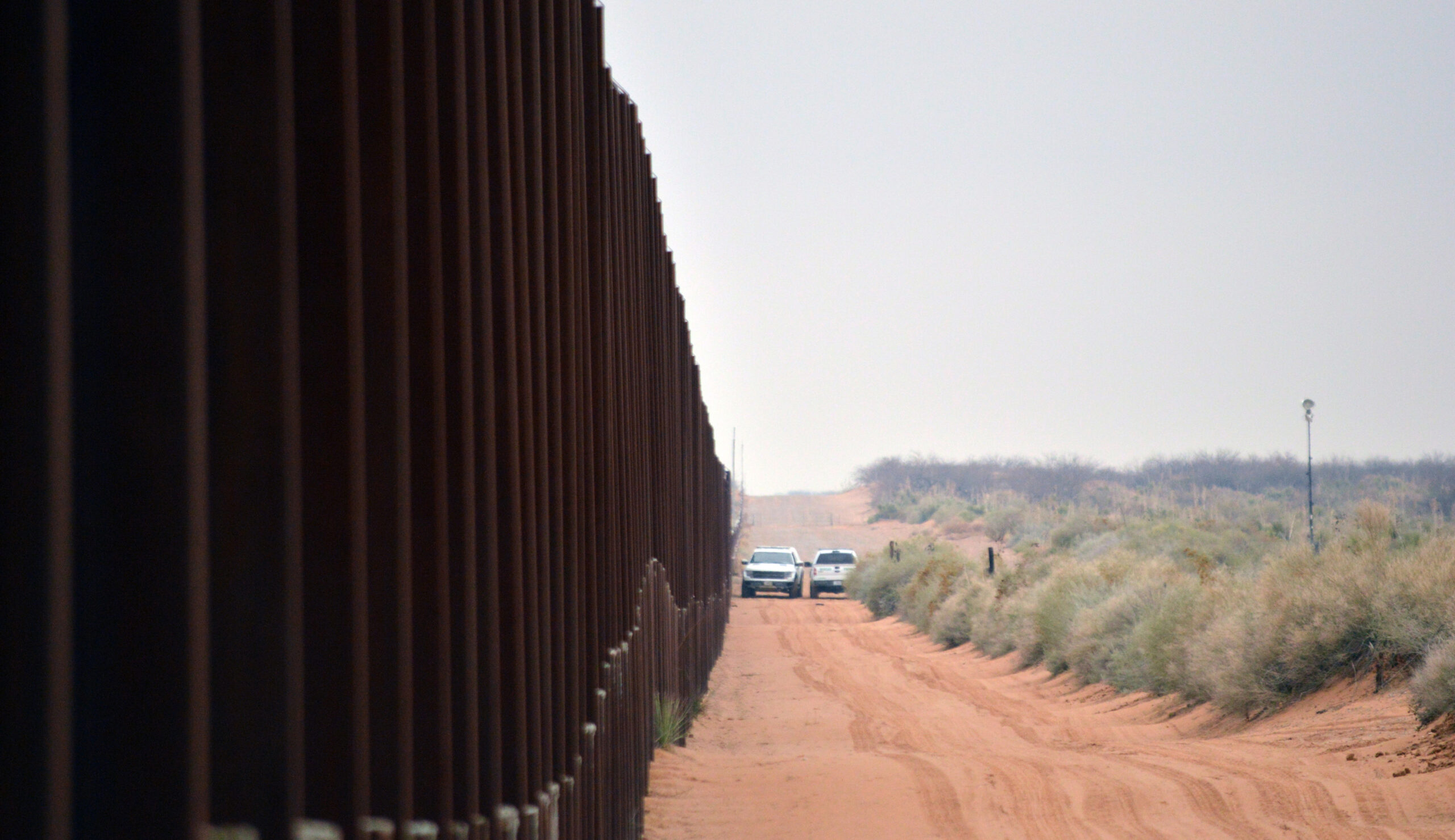
The five most conservative Supreme Court justices should not have given President Trump the big interim victory they provided him over the weekend in a case involving the U.S.-Mexico border wall.
Instead, they should have joined Justice Stephen Breyer in giving Trump only a partial victory until the full merits of the case could be argued.
Recommended Stories


In order that there is no misunderstanding: I fully support construction of a wall. Desired policy outcomes, though, should not determine one’s reading of court cases. In this particular situation, the court’s somewhat-conservative majority prematurely tipped the scales of justice.
As an end-run around Congress, which chose not to appropriate Trump’s desired amount of funds for a wall, Trump directed that $8.1 billion be spent for that purpose anyway, with the monies coming from three sources. At issue here is one source, involving up to $2.5 billion in Defense Department funds intended for counter-narcotics activities. It is certainly arguable, even by Trump critics, that this is a legitimate use of this funding authority.
A district court judge issued what amounted to a nationwide injunction against this use of funds. (Some of us strongly oppose nationwide injunctions, but for now the high court has not barred them, so that’s not at issue here.) The Supreme Court issued a “stay” of the injunction, thus allowing funds to be spent, contracts to be signed, and construction to begin — all before any court can fully assess whether the plaintiffs here have legal “standing” to sue, and well before the merits of their case can be considered.
The majority’s only explanation for issuing the stay is that it agrees with the Trump administration that “the plaintiffs have no cause of action” — in other words, that they lack standing, presumably because they lack what National Review’s David French described as “a concrete and legally-recognized injury as a result of the government’s action.”
The majority, however, issued no elucidation of this judgment. It did not provide its reasoning for agreeing with the administration that the plaintiffs lacked standing.
This is problematic. Just as with the merits of a case, the question of legal standing can be complicated. Unless the lack of such standing is patently obvious, though, commonsense standards of equity argue against foreclosing access to the court system, especially when a calendar deadline looms either for or against the would-be plaintiffs.
In this case, the administration correctly noted that the authority to sign contracts for such a use of the counter-narcotics money runs out at the end of the fiscal year, on Sept. 30. It said the injunction, if not lifted before then, would thus have the effect of deciding the case adversely to the administration’s position. It therefore wanted to stay (block) the injunction, so that the calendar would not make it effectively lose a case it otherwise likely would win.
But the same calendar considerations work in the other direction. If the administration, with an eye on the calendar, begins construction quickly, then the damage to the plaintiffs’ anti-wall interests would be accomplished before courts could fully assess whether the plaintiffs do have legal standing and whether their case itself has merit.
It is almost axiomatic that a court’s preliminary decisions on issues of standings, injunctions, and stays should not have effectively hand final victory to one side or the other if the injunction or stay would do “irreparable harm” to one side’s interests. That’s why Breyer’s proposed solution, concurring with the majority in part, dissenting in part, makes so much sense.
Breyer argued that the injunction should be lifted to the extent that the contracts for the wall be signed before the fiscal-year deadline, thus keeping the administration’s interests protected. But, in order to avoid the environmental damage the plaintiffs fear, Breyer said the injunction should stay in place with regard to actual wall construction.
That way, when federal courts do get a chance to hear the full arguments both on standing and on the merits of the case, neither side’s interests would have been foreclosed in the meantime. In other words, the case would not be effectively moot.
Instead, the court majority will allow wall construction to begin. What happens, though, if in the long run the pro-environmental plaintiffs win the case on the merits? How would they undo the environmental harms they fear will result from the prep work alone for the construction?
The court majority has unfairly prejudiced the case against the plaintiffs. True justice may suffer because of it.
