

The first week of the war in Ukraine has been a bloody mess for Russian President Vladimir Putin.
It’s difficult not to imagine Putin unleashing a barrage of insults at his security ministers, advisers, and generals for how the conflict is progressing. Putin’s public pronouncement that the invasion “is going according to plan” sounds like a man who is either lying to the Russian public to spare himself embarrassment or who doesn’t have a television.
Recommended Stories



The Russians came into this campaign thinking Ukraine would roll over within 48 hours. However, the Ukrainians have mustered an impressive defense despite their massive disadvantage in personnel and equipment. The Ukrainian air force continues to fly, air defense systems remain operable, and Russian troops have only managed to take one major city, Kherson, in the southeast (although a U.S. defense official disputed this on Thursday).
The Pentagon has claimed entire Russian units have surrendered without a fight, while others — mostly young conscripts who weren’t told they were going into combat — are prowling empty shops for food.
“It’s clear from a spate of POW interviews I’ve seen the troops themselves had no idea they were going to launch this op and were completely unprepared for it, including officers,” Michael Kofman, the director of Russian studies at CNA, tweeted on Tuesday. “Morale is low, nothing was organized, soldiers don’t want to fight & [they] readily abandon kit.”
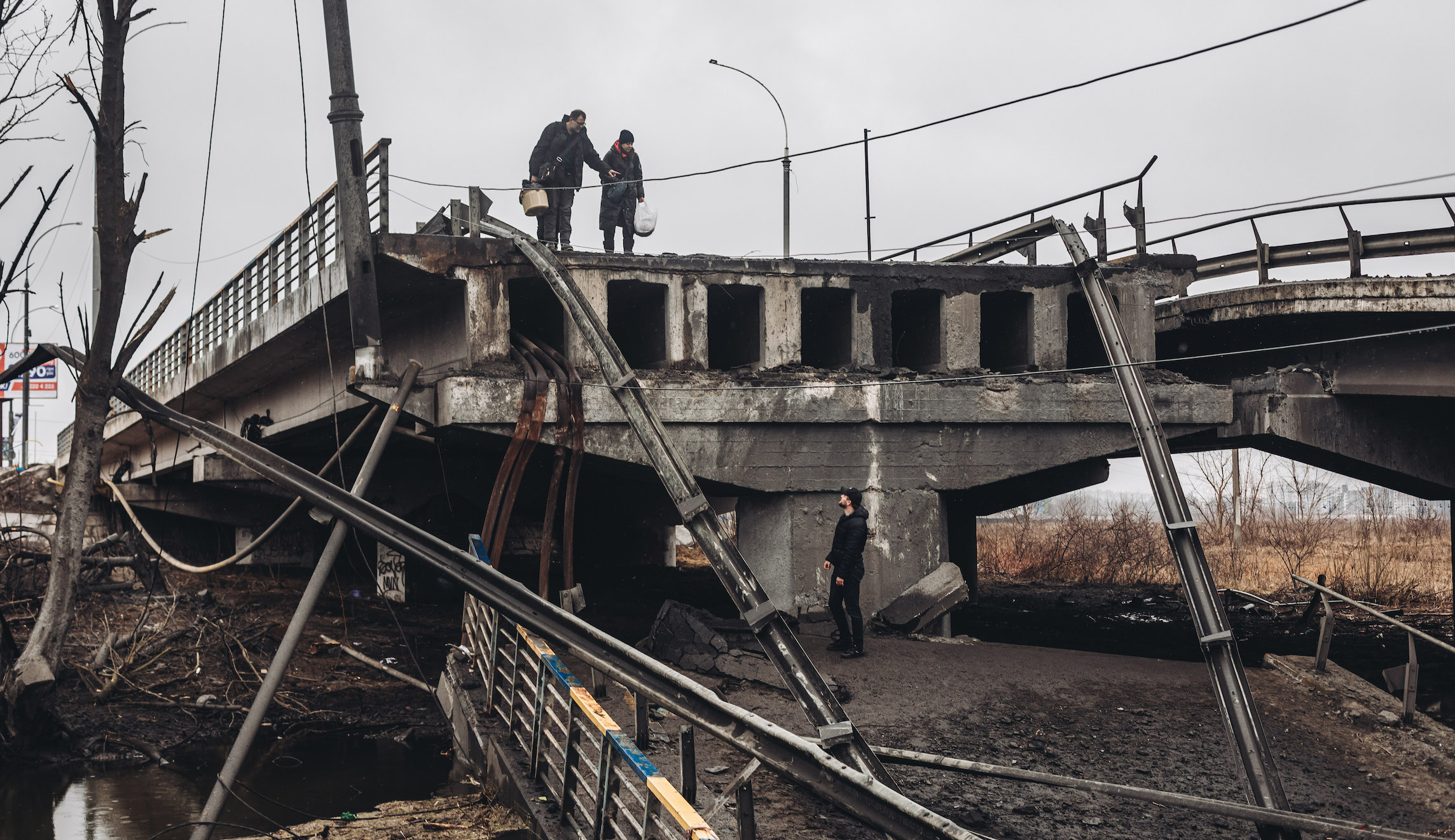
But wars are rarely decided in their first week. The Russian military, like any military, is a learning organization. It will adapt. Unfortunately for Ukraine’s civilians, this will entail a bloodier fight ahead with a more intense, indiscriminate pace of operations across a larger set of targets. We’re already seeing Moscow shift its approach. Apartment buildings, railway stations, communication towers, and water plants are all being hit. The Russians are dusting off some of the plans they’ve used in places such as Grozny, Aleppo, Idlib, and the Damascus suburbs.
Mariupol, a critical port city along the Azov coast, is now surrounded, with civilians unable to get out and food unable to get in. An airstrike in the Ukrainian city of Chernihiv, a two-hour drive from Kyiv, killed more than 30 civilians, according to Ukraine’s State Emergency Service. The war is going to get worse before it gets better. Relaying a call between French President Emmanuel Macron and Putin on Thursday, a French official said the Russian leader was adamant Moscow’s military objectives would be met whatever the cost.
The Biden administration and its allies in Europe are responding to the Russian offensive with massive economic sanctions. Russian oligarchs (and their families) have watched as their mega-yachts are seized and their assets are hunted down. Russia’s foreign exchange reserves, totaling $630 billion as of late January, are in the sights of the U.S. Treasury Department and European financial authorities. Sberbank, one of Russia’s top banks, lost 95% of its value on the London Stock Exchange. The value of the ruble is plummeting on the exchange markets.
Nobody knows whether any of these sanctions will push Putin into negotiating a political settlement. News of a tentative agreement between Moscow and Kyiv on establishing humanitarian corridors, where civilians can evacuate areas under fire, is a positive step in the right direction. If these corridors are actually enforced, it would be the first diplomatic breakthrough of the war.
But making the war less unbearable for civilians isn’t the same thing as ending the war diplomatically. The former requires some basic decency, without the combatants having to compromise on their core positions. The latter, coming to a mutually acceptable arrangement on those core disputes, is exponentially more laborious.
Daniel DePetris (@DanDePetris) is a contributor to the Washington Examiner’s Beltway Confidential blog. His opinions are his own.
