

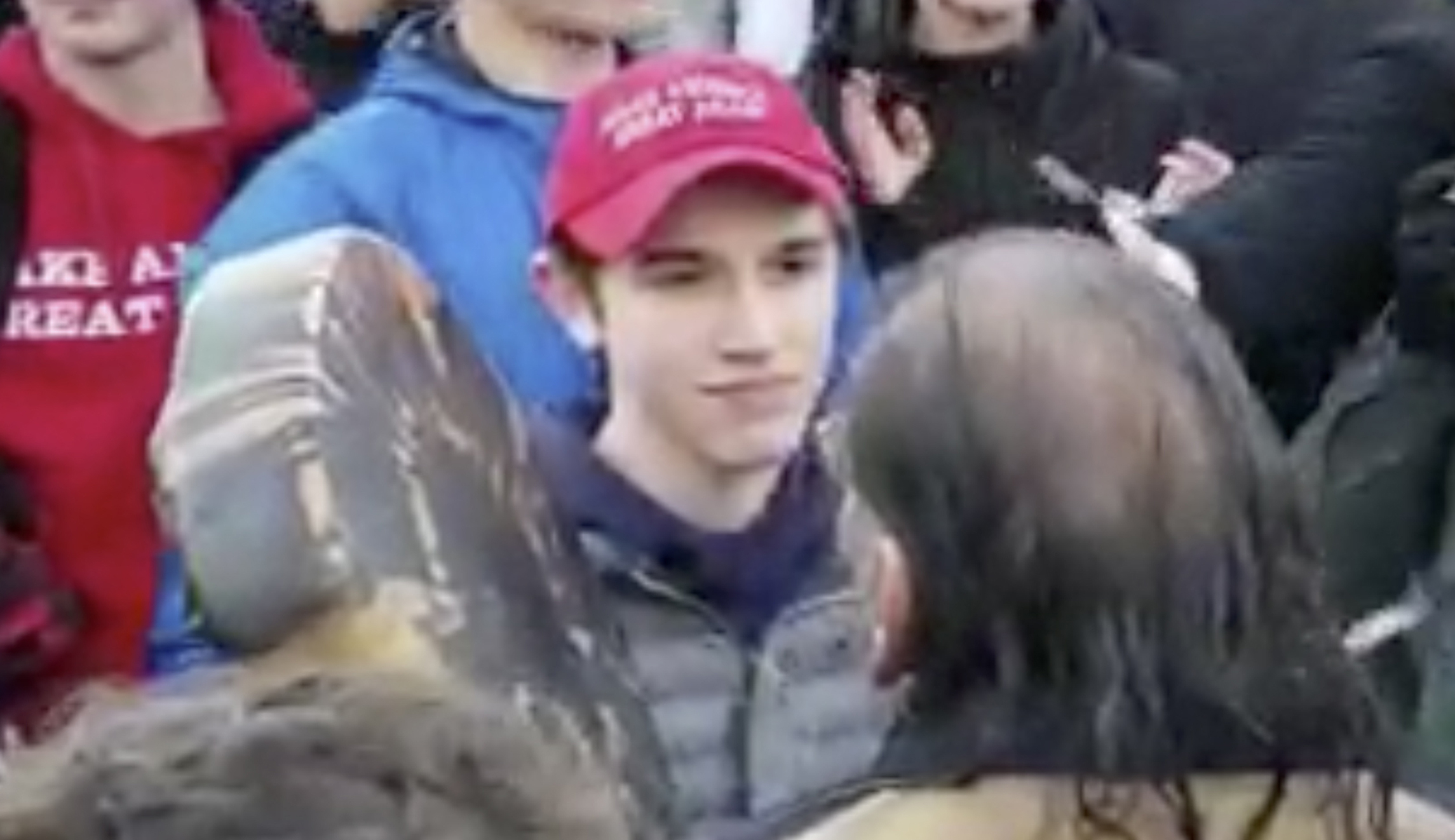
It’s one thing for liberals in the media to make up excuses for why they pushed a fake story about the Covington Catholic kids. But you’re dealing with something truly special when they start inventing absurd alternate realities about what would happen if the students had been black.
The non sequitur became common on social media within the last few days, but now author Michael Arceneaux has brought it to print, writing an impressively delusional piece for Essence magazine. Arcenaux argues that if Nick Sandmann had been a black boy, he wouldn’t be getting the sympathy that he did after his infamous scene with the old Native American protester turned out to be the opposite of what the media and the liberal Twitter mob said it was.
Recommended Stories



“I’m inclined to think that if a Black Nick Sandmann did dare such to do such a thing, he would have been harmed if not flat out killed,” wrote Arceneaux. “And if that did happen, yes, it would be overwhelmingly condemned, but I can’t help but believe that if there was a video of a Black Nick Sandmann displaying that degree of disrespect and arrogance surfaced not long after, some would go out of their way to promptly victim blame.”
Arceneaux also laughably accused the national media of “[protecting] those who yield (sic) the most power — white men — and the white boys who will soon grow into the fullest extent of their privilege.”
Arceneaux apparently does not read national newspapers, which have worked diligently either to downplay their original narrative that a white male was physically harassing a minority, or make up new reasons why the initial coverage and reaction to the scene was justified.
The New York Times’ Frank Bruni on Tuesday questioned whether conservatives were guilty of smearing the press because they were “gleeful” that the initial narrative on Sadmann was inaccurate. The paper separately ran a story on the fringe Black Hebrew Israelites who had first taunted the school kids with racist and homophobic slurs. In earnest, the paper of record referred to the Israelites, a fringe hate group, as “sidewalk ministers who use confrontation as their gospel.”
Well, that’s one way to describe a person who calls you “faggot.” There goes the minister, simply spreading the good word!
The Washington Post’s Jonathan Capehart actually blamed the the students and their chaperones, who were visiting Washington from Kentucky, for failing to know to avoid the Israelites — who presumably don’t have much of a presence in Northern Kentucky.
“If the ranting and raving Black Hebrew Israelites are the kind of folks who necessitate my crossing the street or altering my path before I make it into their line of sight, why would the Covington kids and their minders think it’s okay to engage crazy, hateful people raising hell in a national park?” wrote Capehart in a comically self-justifying and victim-blaming piece. “They should have ignored the Black Hebrew Israelites the way most everyone else does …”
In his piece for Essence, Arceneaux also faulted NBC’s Savanah Guthrie for what he described as “softball questions” that she posed to Sandmann in an interview Wednesday.
Here’s an example of those “softball questions” Guthrie put to Sandmann, a teenager still in high school, and who remains the subject of online harassment for a fake story that the media and a Twitter mob shoved him into just because he stood there smiling in a hat:
— “Do you feel from this experience that you owe anybody an apology?”
— “Do you see your own faults?”
— “Do you think if you weren’t wearing that [Make America Great Again] hat, this might not have happened or it might have been different?”
— “There’s something aggressive about standing there, standing your ground.”
— “Do you regret hitting your girlfriend?”
Okay, that last one didn’t actually happen, but the sentiment is the same — that Sandmann should feel guilt about something he didn’t do and shouldn’t be held to account for.
If Sandmann had been black, this would have never been a national controversy at all. We would have never heard about it. It doesn’t fit the tiresome narrative of intersectionality — that of white privilege vs. minority victims — which the news media and liberals eagerly embrace and weaponize to divide the nation with every new story that has even the slightest connection to race.
Sandmann isn’t black. His life would be a lot easier right now if he were.
