

Democrats are practically foaming at the mouth over an idea being floated by President Trump (which is hardly news — that’s been said almost every week since Jan. 20, 2017). What has the opposition party riled up now is the possibility of Trump accepting the Republican Party’s presidential nomination at the White House. With the COVID-19 pandemic upending plans for both the Democratic and Republican national conventions, GOP strategists are scrambling to come up with a Plan B for the acceptance speech, the traditional grand finale of the once-every-four-years gatherings.
Using the White House, Democrats growl, would violate the federal ban on conducting political activity on government property.
Recommended Stories


Even the media are piling on the outrage. An Aug. 6 piece by Deb Riechmann of the usually reliable Associated Press wrote, “Using the Rose Garden, the Executive Mansion or even the Oval Office as the backdrop for his speech capping the Aug. 24-27 convention would mark an unprecedented use of federal property for partisan political purposes.”
Except it wouldn’t be unprecedented at all.
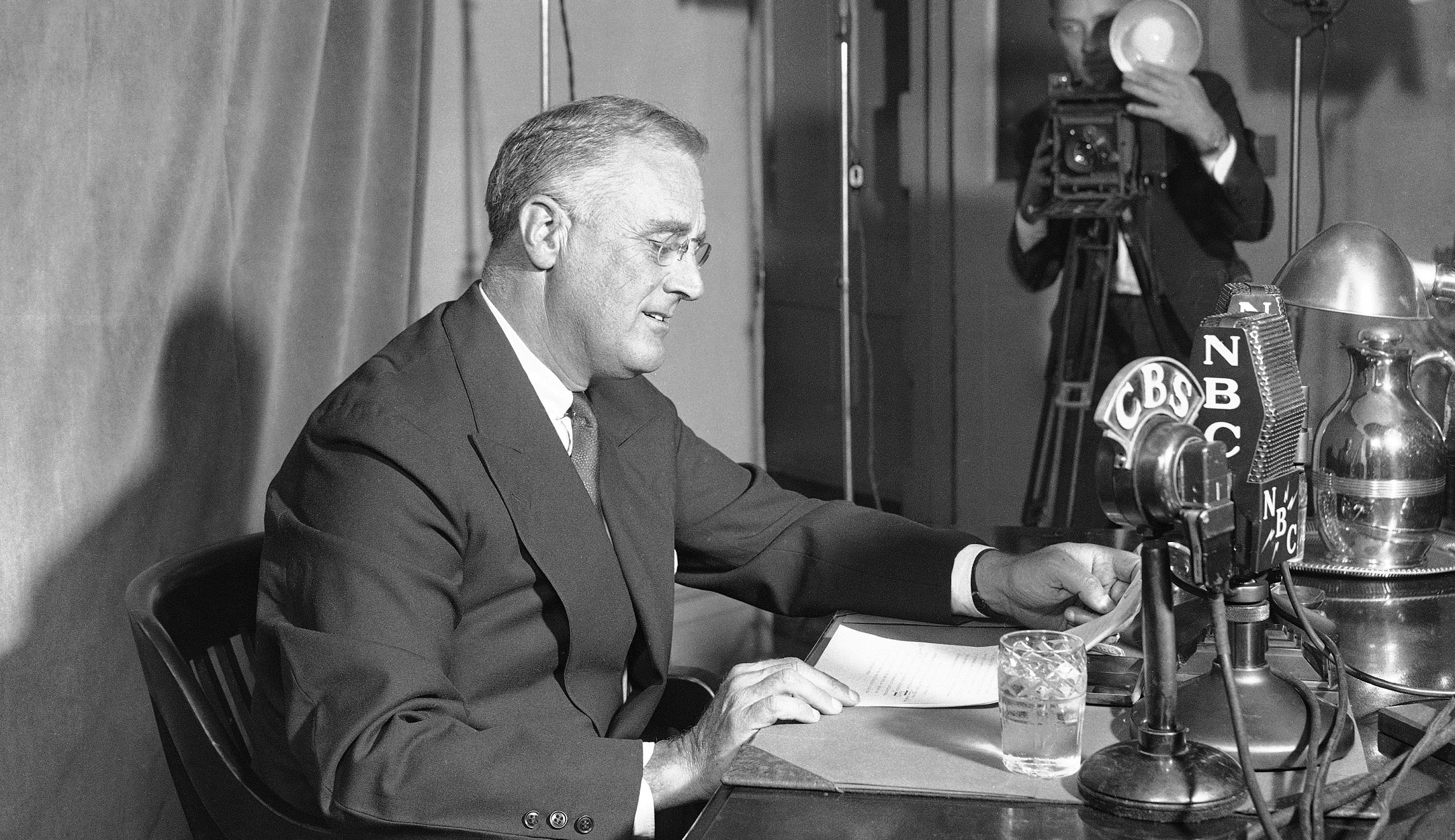
Just past midnight on a muggy Thursday night in July 1940, Franklin Roosevelt was wheeled into the Diplomatic Reception Room on the White House’s ground floor. His chair was placed before a large, silvery microphone. Roosevelt felt comfortable speaking in that particular spot. It was where he had delivered many of his famous “fireside chats” and where, four years later, he would lead people in prayer on the evening of D-Day.
But Roosevelt wasn’t performing an official duty at the moment. Sitting in his shirt sleeves, he thumbed through the papers in his hands, scanning the words typed on them one last time. At 12:14 a.m., a producer pointed a finger toward him indicating that it was time to talk. Franklin Roosevelt took a quick breath and spoke these words: “Members of the Convention — my friends …”
He then spent the next half-hour accepting the Democratic Party’s presidential nomination for the third time and laying the groundwork for his upcoming reelection campaign. And he did it inside the walls of the White House.
There was a reason why Roosevelt wasn’t speaking to the convention delegates gathered in Chicago in person. Just eight years earlier, he had made history by becoming the first person to ever accept a major party’s presidential nomination at a convention. Now, he was making history again by becoming the first sitting president to be nominated for a third term.
While the party machinery was firmly in Roosevelt’s control, Democratic leaders were jittery. Would rank-and-file delegates vote to make it official? Outgoing Vice President John Nance Garner had sought the nomination, giving them an alternative. And Roosevelt himself had been coy all spring and summer about running for a third term. The president’s advisers had him stay home in Washington, just to be on the safe side. But in the end, there was nothing to worry about. Roosevelt was easily nominated on the first ballot.
Which was how Roosevelt became the first (and to date, only) candidate to ever deliver this most political of all speeches from the White House.
Incidentally, Roosevelt also gave his fourth and final acceptance speech by radio to the 1944 Democratic National Convention, meeting once again in Chicago. With World War II raging, the commander-in-chief didn’t have time to spare for politics. So, he once more spoke by special radio hookup during a break from inspecting military bases in California.
Every subsequent presidential nominee, Democrat and Republican alike, has delivered their acceptance speech in person at the convention — until 2020.
So, as the Democrats howl their heads off about a possible Trump convention speech given from the White House later this month, they would do well to pause and remember that one of the most famous presidents from their own party did it first.
J. Mark Powell (@JMarkPowell) is a contributor to the Washington Examiner’s Beltway Confidential blog. He’s the vice president of communications at Ivory Tusk Consulting, a South Carolina-based agency. A former broadcast journalist and government communicator, his “Holy Cow! History” column is available at jmarkpowell.com.
