

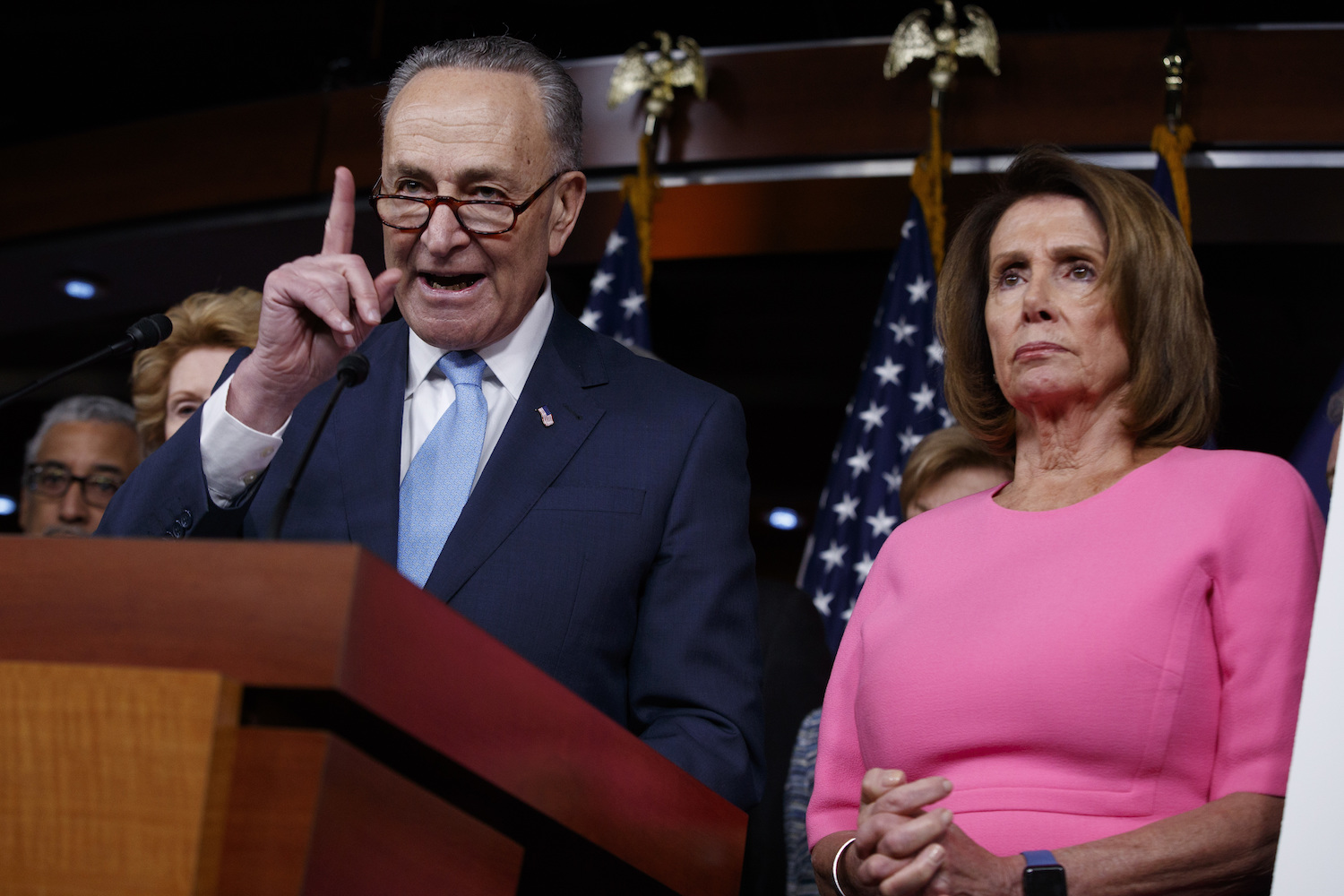
On Oct. 28, Sen. Tim Kaine, D-Va., was still the Democrats’ vice presidential nominee. Angered by Republicans’ peevish refusal to let President Obama fill the vacant Supreme Court seat of the late Antonin Scalia, he talked smack to the Huffington Post about his plans once he would preside over the U.S. Senate.
Kaine described how, after winning the upcoming election, he (as president of the Senate) and Minority Leader Harry Reid’s expected successor, Senate Majority Leader Chuck Schumer, D-N.Y., would cut off the Republican minority at its knees if it tried to obstruct Hillary Clinton’s Supreme Court nominee. In the name of fulfilling the statute that says the Supreme Court has nine members, Kaine said that Senate Democrats would end the filibuster for Supreme Court nominees, just as they had ended it for lower court and executive branch nominees three years earlier.
Recommended Stories



Around the same time, Reid also predicted the need to expand his “nuclear option.” “[I]f the Republicans try to filibuster another circuit court judge, but especially a Supreme Court justice, I’ve told ’em how and I’ve done it – not just talking about it,” he said. “I did it in changing the rules of the Senate. It’ll have to be done again.”
(Prior to that, Reid had even hinted at abolishing the filibuster for legislation. You can tell he was pretty confident about the election.)
For his own part, Schumer was a lot wiser and guarded when asked about whether he would abolish the filibuster for Supreme Court nominees. He merely told CNBC’s John Harwood, “I hope we won’t get to that. And I’ll leave it at that.”
Today, Schumer probably wishes his colleagues had handled the question with similar discretion, because the election didn’t quite turn out the way any of them had hoped. Today, Schumer says he regrets Reid’s decision to “go nuclear” and abolish filibusters for most nominees below the Supreme Court level. But he says he accepts its consequences – or perhaps only some of the consequences. As Reid put it, he created the precedent for expanding the nuclear option. Not only does that precedent remain, but Schumer was among those who voted to create it.
On Tuesday night, Schumer hinted to MSNBC’s Rachel Maddow that his 48-member minority caucus will try to block a vote on President-elect Trump’s nominee to replace Scalia, unless he appoints a “mainstream” nominee. In fact, he framed the standoff as something almost inevitable: “It’s hard for me to imagine a nominee that Donald Trump would choose that would get Republican support that we could support,” he said. And asked directly whether he would try to keep the seat vacant to prevent an “out of the mainstream judge,” he responded: “Absolutely.”
If you’re familiar with Schumer’s career on the Senate Judiciary Committee, then you know his idea of a “mainstream” judge is basically Ruth Bader Ginsburg or further left. More than a decade ago, Schumer was also involved in obstructing President Bush’s appeals court nomination of one of the judges Trump is viewed as likely to elevate – William Pryor of the 11th Circuit – along with several others.
So the first question is whether Schumer actually has the 41 votes he would need to prevent the Senate from voting on someone “outside the mainstream” – like Pryor or any of the other candidates on Trump’s shortlist. The last time Democrats tried to filibuster a Supreme Court nomination was 2006, when Schumer (and then-Sens. Barack Obama and Hillary Clinton) was among just 24 senators to vote against cloture on the nomination of Justice Samuel Alito. Of those 25, only 10 still serve in the Senate today.
Perhaps Schumer knows he doesn’t have 41 votes to back him up, and just wants to show as much fight as he possibly can, to stave off any progressive rebellion against his leadership. Or maybe he feels he has a shot. Maybe he discounts the possibility that Senate Majority Leader Mitch McConnell would expand the nuclear option to Supreme Court nominees, as Reid had hoped Schumer would be doing now to pave the way for a Clinton nominee.
But if McConnell, R-Ky., does at any point feel tempted or pressured to do such a thing, expect to hear more about Kaine and Reid and all of their loose pre-election talk about abusing power they hadn’t even won yet.
